

Anar Ali: Beyond Boundries
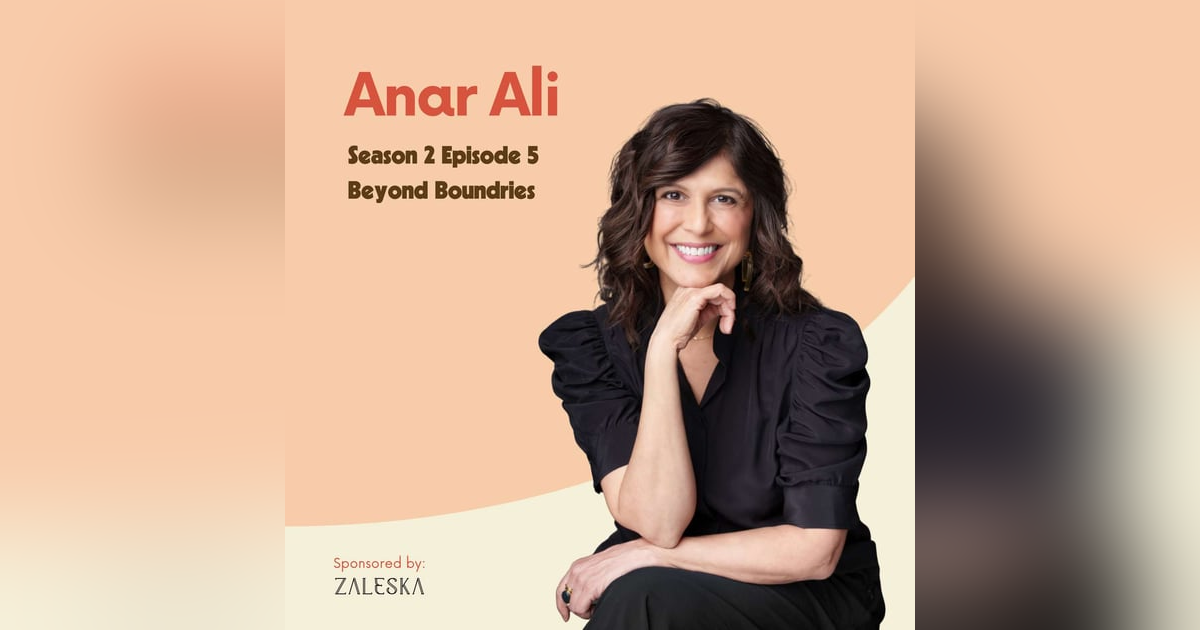


For this episode of Half Betty, Andrea and Krista are joined with Anar Ali an award-winning author, TV creator, and Executive Producer of CBC/NBC Universal’s Allegiance (now on the tail end of Season 3), as she traces her path from Tanzania through small-town Canada, Mexico, the UK, and Toronto. Anar talks through guiding values like freedom over security, kindness as power, collaboration, compassion, and a curiosity that fuels wonder.
She reflects on power amplifying character, “sharing it” through politics, incremental community change, and circular storytelling that honours ancestors. As well, the very raw and real moment she left her Procter & Gamble corporate life and first marriage to pursue writing a debut novel (Night of Power, Penguin Random House), as well as TV, sparked by CBC’s Diverse Creators Program.
Bio
Anar Ali is the Creator & Executive Producer of the hit police drama, ALLEGIANCE (CBC/NBCUniversal), and a critically acclaimed short story writer and novelist. Her first book, BABY KHAKI’S WINGS, was a finalist for multiple awards including the Commonwealth Writers' Prize (Best First Book), and her debut novel, NIGHT OF POWER, was recently published internationally by Penguin Random House. She started her TV career when she won a development deal with CBC’s Diverse Creators Program for her 1-hour serialized dramedy, RUBY'S TURN. Soon after, she was a writer on the hit medical drama, TRANSPLANT (Netflix/NBCUniversal/CTV). She left a successful career as a Business Development Executive at Procter & Gamble to pursue her dream of becoming a writer. Anar was born in Tanzania to Indian parents, grew up in small-town Alberta, has lived in Mexico and the UK, and now makes her home in Toronto. She's represented by Altas Literary and Atlas Artists.
Anar’s Words - freedom, kindness, collaboration, compassion, fearless, adventurous, curiosity and wonder.
References
Allegiance (Procedural) - A rookie agent working in Surrey, her hometown, who faces the limits of the judicial system as she battles to exonerate her politician father. Now in its third season and can be watched on CBC and NBC Universal.
Sponsor Information
Zaleska size-inclusive jewelry
Use the code HALFBETTY and receive 20% off your first purchase
Connect with us
Website link here
Instagram link here
LinkedIn link here
Facebook link here
Leave a voicemail for us
https://www.halfbetty.com/voicemail/
Guest: Anar Ali (Screenwriter/ Author/Executive Producer)
Founder/Host/Producer: Andrea Rathborne
Producer/Co-Host: Krista Gruen
Editors: Andrea Rathborne & Krista Gruen
Audio Engineer: Ryan Clarke
Episode sponsors: Zaleska size-inclusive jewelry
S2 Ep5 Anar Ali
[00:00:00]
Anar: Welcome back to the Half Betty Podcast. I'm Krista Gruen, producer and co-host by my side, as always, is our founder, host, and producer Andrea rbo. Together we're ready to welcome a new half Betty into our community. Our guest today has lived a life that spans continents and careers, both in Tanzania to Indian parents, raised in a small town in Canada with chapters in Mexico and the uk she now calls Toronto home.
She's an MFA graduate from the Creative Writing Program at UBC, university of British Columbia here in Vancouver, and a critically acclaimed award-winning short story writer and novelist whose work has been published internationally by Penguin Random House.
These days she's lighting up television as the creator and executive producer of the hit police drama. [00:01:00] Allegiance and Friends, if you haven't seen it, please do not delay. It is such an important and incredible show. She began her TV career after winning a development deal through CBC's Diverse Creators program for her one hour Serialized Dramedy, Ruby's Turn, and soon after joined the writing team on the hit medical drama Transplant. Another incredible show that you must check out.
And fun Fact, before she was writing for television, she was a business development executive at Procter and Gamble. So clearly she knows a thing or two about reinvention, storytelling, and following a creative calling.
Let's jump right in. Here's our conversation with Anar Ali.
Anar: Well, you know, so lovely to be here and what a wonderful welcome and, and set up. So do you want me to start with the five words maybe? Is that what you're thinking?
Krista: Sure. That would be
Anar: Yeah. So it's like the Colbert questionnaire Do you know, when [00:02:00] he does that on the show, which I love.
Um,
Krista: I love Colbert so much
Anar: yeah, he's so awesome. So I think, some words that have kind of guided me in my life and then somewhatconnected to my values are, freedom. And I think freedom works really with security. So as an artist and in fact it's very connected to my whole life of like having a life that was.
I think what our families want for us, and especially when you come from an immigrant family, and actually all parents want this for their children, right? They want a sense of security. So my life has been trying to achieve security for my family and then also reaching for freedom.
And so my life has really been that and I think I'm now at a point where I'm trying to balance both. Um, which is actually one of the reasons I also wanted to work in tv because it's the one place where as a writer you can really be creative and get into it, but at the same time, it offers security of so many things, including as simple as, 'cause I'm a novelist who became a [00:03:00] screenwriter and, started in film at the CFC and then, um. right after I graduated, switched to tv. So, TV does give you that, that sense of an automatic community of people you're with, um, it gives you, a paycheck, um, all those things, you know, union benefits and so on.
So there's that security. But really, if I have to choose between the two, I will choose freedom. So that's my kind of go-to heuristic. Um, not always, but often. And I think the other ones would be, and these are kind of all together too, kindness, collaboration, and compassion, which is very much what Allegiance is about.
Sabrina is a cop who, beyond being a woman of color, she's also someone who reaches with her heart, um, before reaching for her gun. You know? So it's an aspirational show that way. In terms of where policing can be, and it has changed and is changing. Um, but really I think for me, so much of it [00:04:00] is, about circles and sharing.
And I think so much of it required is kindness, um, whether you're working with people or not. So I think that's really important for me, which is tied to community and collaboration and circles And just a kind of a fun fact that, you know, Sabrina is Punjabi, Sikh in the show and I'm Ismaili Muslim.
And you would think those are really disparate, but they're not. They both have this sense of Seva is very important for the value of the culture, which is about service to others. Um, this idea of oneness, meaning one God, but also oneness in terms of we are all one, which is such a great way to think about the world, right? Especially at a time when we're being encouraged to divide ourselves, in tribal ways. There's so many things that bind us together. So that idea of oneness as human beings is really also important in that, a thing of community. Um, I would say [00:05:00] also another thing that's defined me in my life is being fearless and adventurous.
You know, I've lived in a lot of places, I think that's really important, even when you're a creator, is to try. It's not, I say that to say as if I'm not fearless. I am, I mean, I am fearful, uh, about things, but I'm also fearless and I think I try to go there, And I think I get that from my dad who's now passed.
But he was someone who was a real adventurer. He was an entrepreneur, you know, he's really struggled when he first moved and then went on to build the second biggest, uh, sportswear company, uh, in the country.
So that idea of being fearless and not letting rules stop you, because so much of the rules are about the system, and that's so much also about what allegiance is, is like systemic issues that women face. Women of color, uh, what it is in the police class, and the bigger thing more than [00:06:00] anything, I think is power.
And I say that because, and I really think this is an important thing, is that we kind of sometimes, and I've seen it in the industry and my own show too, which is we tend to think that all people of color are gonna vote Democrat, liberal example. So untrue. There are just as many Conservatives for better, sometimes for worse.
Uh, on, the other side, like, you know, if I can call it the Archie Bunker types. You know, on, but they're brown or, or are of color. And I think that's not to say they're not other things that we have to think about, uh, racialized people experience things. But I do think power is something that really fascinates me too, in terms of, um, again, it, it ties back to the fearlessness or wanting to be fearless, because I think you have to be when you're faced with, and so many of us, and all three of us here as women in different ways, we've experienced it.
Right. So [00:07:00] I think that's important. And I think the last one would be, and they're tied together, is curiosity and wonder, And I think, Maybe Andrea, you used the word wonder in terms of how you are describing listening to story. And I recently heard a quote by, Sika Jo Jihad, who's, a wonderful writer.
She's, John Baptiste's, partner. And she had this beautiful saying, 'cause you know, she's was dealing with cancer and I've also been, I'm done. I'm okay now, but I was dealing with cancer. And, she was just saying that, so many people will say carpe diem, like, you know, just seize the day.
And she goes, but that felt like so much pressure, you know? And instead what shetries to do is treat every day as her first day. So it's like treating the world with wonder, like a way a child would. And it's kind of what you were saying too, Andrea, this idea of hearing something for the first time or, you know, even as simple as getting up and.
Just feeling the sun, what you, you know, we [00:08:00] talk, sounds so simple, but it's true. Like if you think to yourself, this is the first time I am seeing the sunrise. Wow. what a concept. Right. So I think those are the things that I would say are generally my, things that I kind of have as my values or words that I try to use as my guides in life and almost everything.
So, yeah.
Krista: Well that all pulls through your writing, that's for sure.
Anar: Mm-hmm. Thank you.
Krista: thanks for sharing all of those. They're, all very powerful and I, I wanna talk about power and how that came into your life and how that showed up. And then about politics as well, because I feel like that's a lot of what's.
present in allegiance? I mean, it's so layered, but, I'm curious to know if you can look back and find a time where that became really clear to you, that those subjects [00:09:00] that you wanted to speak about and write about. when did that happen? Were you always curious about power and, politics?
Anar: Yeah, I think I was, and you know, I'll share what the Allegiance part was, but in terms of me as a kid, I, I remember like early days Canada, this is small town Alberta, Red Deer. I went to a county school because my parents owned a motel, but it was outta town, so we had to be bused into the, you know, so all my friends were from farms and ranches and acreages. So the rodeo was the highlight of the year. And it was how I grew up, you know? Uh, and one of the things I remember, and I was sharing this with my partner recently is that, you know, it was in social studies class.
And Mr. Lemke was my teacher, And, there was this thing where we had to do a project on a country and I think I either was assigned Nicaragua or got Nicaragua. And so I'm doing my thing and we had to talk about the country, but what our thoughts were, you know, we're so little, but still, and I was grade four actually.
And, I remember [00:10:00] talking about the Sandinistas and the government in Nicaragua and really actually talking about. How actually communism and socialism works and that, you know? And my teacher was really surprised and he was like, but you don't, you know, he was talking about some of the negatives, and it's true they are, but I was more focused on the fact that there was a sharing of power.
And I didn't use those words, but I think any child, you know, we're always telling children to share. We're always asking, but we don't, you know, we never do. We barely or not never. We don't do what we ask children to do. And so I think for whatever reason, that was what I was feeling. And it's not like I grew up in a family that's socialist at all.
Like far from very business oriented and, um, but very about civil society too. It's a community. I come from Ismaili Muslims and the Aga Khan has always been about that. Like, giving back, you're not thinking about what you're taking, you're often thinking about what you're giving back. [00:11:00] So I think that idea was somehow in me, maybe my culture, maybe my parents, that this idea of sharing and equality, and I have to be honest, even until very recently been naive about that.
If I can say naive, I'll tell you why. Because I think I just assume, well, that's what everyone would want. But the thing is, if you have power, some people I often think power and being tipsy are very similar in terms of how you react. Michelle Obama says that when, Barack Obama won the presidency, she was really worried about would that change him having this much power.
And she said that what she found is that it brought, all his things that he was so amazing at, who he really was just got dialed up. And in the same way as like someone who's like gets tipsy can be like either a fun drunk, [00:12:00] um, or maybe sometimes, you know, people can go violent, some people can, I really think power does that.
And I've seen that like, you know, people who seem X and then when power positions, they're not. And I want to be conscious, like, not to say I've been perfect far from 'cause you know, now I have more power. But it's the thing to really. Be hyper conscious of. And I think my feeling is, and I, I don't think it's only women, but I do think the women sometimes in power have come up under men who in a patriarchal, it's not only men, but patriarchy and women are subject to that too, where being the head honcho is important.
Uh, making the most money so that we know we do have like the people at the top making money instead of sharing. Even though everyone who does the work, they're putting hours and hours, same amount of hours, sometimes more and laborious with your hands, but we don't value that. And so for me, those [00:13:00] ideas are built into our society.
And how do you shift that? And I think if I originally felt I was gonna shift it a lot with my show, I haven't internally or externally, but I've shifted it a little, you know, and for myself, uh, for, you know. The people I've really kind of tried to champion for the show. And, um, I say it publicly very openly, more, I try very hard to champion women in particular and even when people have the best intentions.
There's so many biases that come through from the women as well. And I think, uh, it's not because people are bad people, they just like me too. I'm sure there are things I'm not aware of and I think power works that way and I think the big shift will come. I hope as we continue to do these things or I'm forgetting her has, who's the ex prime Minister of New Zealand?
Uh, CIN. Jacinda. Jacinda,
Andrea: Jacinda, Your. Right.
Anar: Jacinda, right? And [00:14:00] she has, this great book about, I don't know the title, but it's something about compassionate power. And I do think it's like, yeah, like thinking in. Holistic as a circle instead of as a, a triangle. And I think this is patriarchy and this is matriarchy,
Krista: Oh,
Anar: I hope we get to go to matriarchy more.
And men included, like many men are very
Krista: of course.
Anar: uh, and very women are very patriarchal. So yeah, that's, that's kind of my feelings about power in terms of my learnings
Krista: Mm-hmm.
Anar: and so much more to learn, but yeah. Yeah. Yeah.
Krista: always going to be things to learn and how we move through and with each project, with each, creation that you bring forward. Whether that's a book or a show, I'm sure there's a theme, right? There's something that you take away, there's something that you learn and you take that and move forward.
it's interesting to hear you talk about power and that [00:15:00] circle and thank you for that. It's really beautiful
Anar: that's great. That's great. Yeah.
And In the West, stories are very linear and, um, not always, but they can be. And in other parts of the world, culturally, stories can be told very differently.
And it's funny when I'm breaking story, even for TV. Even, for instance, I was in the Transplant room. The way you're supposed to do it is, let's say you have
Krista: a good show.
Anar: such a good show, right?
Krista: Such a good show. Hmm.
Anar: Great show. I learned so much and really proud of that show and everything that the creator and everyone did.
Um, but I would say, you know, even when you're breaking story within a collaborative process, most people learn to break down. So act one is this way, and then you start at the top, act two, and usually TV will have five acts. So you're going like, I can't, actually physically do it. I have to go this way.
And then the best I can [00:16:00] do is snake it. Or if I'll go down and then, it has to come full circle. So it's not a circle, but it's almost this continuous snake and ladder thing and ask me to do it this way. I, I actually can't I my mind, I mean, I can. Sort of do it, but I'm not very good at it, but ask me to do it.
And then other people can't do it this way. So it's tricky. Butmy strength is when I do it like this, 'cause I can make connections and I'm like, oh, that's up there. And when it's over here, it's over physically here versus up and down, if that makes sense then. So I find it fascinating, these differences and that too is connected to power and the way things are done, and this is more story, is linear, is more hierarchy.
It's like you have all of this, even when you look at the story charts that you learn formally here, it's like stuff happens, there's an inciting incident, there's complications, you get to [00:17:00] the climax. But that is a pyramid. And then the
Krista: Mm-hmm.
Anar: the af
Krista: Mm.
Anar: even our structure. Is power-based.
Whereas, again, circle, I don't know, like, I don't know if that's related, but that's what's coming into my head. Yeah. Yeah.
Andrea: It feels like maybe it's even brought on by wonder and curiosity, and that is what if we don't do things the way we have always done things? what if we. Instead of using language that describes, uh, you know, breaking things or wrecking or dismantling or all of these words that suggest that there's somehow a misuse of power or a power struggle.
Uh, if we apply a perspective of simply coming to things, all things with a sense of curiosity around what, if this was given to [00:18:00] me, how would I design it? How would I build it? How would I make it come to life without the constructs of what has already existed?
Anar: Mm
Andrea: And I wonder what would happen if, we apply that to, everything, to how society is structured, how rules are built, how stories are told, how.
schools are designed education system. if we, come to everything with that sense of wonder, I, would be curious to see how much we do move away from,what's perhaps the least resistant path forward, which is a linear path, and how much more we might find that we work in these more organic kind of patterns and shapes and styles of discovery.
I don't know the [00:19:00] answer, but it occurs to me and when you describe the way that your vision or your kind of spirit builds story in that veryorganic shape, it deeply resonates.
an example of something that resonated deeply was when I was working with a visionary and, storyteller.
Anar: Hmm.
Andrea: We built film from a locked soundtrack, picture to sound as opposed to sound to picture. And I didn't know that there was another way
And
Anar: hmm.
Andrea: when I left that world and went into a corporate world of designing film and video content, I was faced with, oh, this isn't the way that it's done. And
Anar: that interesting? Wow.
Andrea: it was so interesting to [00:20:00] recognize that everything does not have to be done the way that it has been done if we approach it with curiosity, with wonder, with inclusivity.
and what you were saying so beautifully, ties into that as it relates to power. Because when you have the power to lead with wonder and curiosity
Anar: Mm mm
Andrea: the shape that it takes may be very different than what we experience.
Anar: Yeah, I that's beautiful
Andrea: So it's really beautiful.
Anar: That's beautifully said. Well, and you, what you also shared is so beautiful also, and I think the challenge is also. Because that's such a beautiful thought and part of it, I mean, I'm thinking about in the context of business and when you said corporation and uh, the work we do on TV, which is so speedy once you're in this thing, right, it's the old way becomes the way. 'cause that's the thing that people [00:21:00] are used to. like if you're cross country skiing, it's like the tracks are already laid, even though there's something more beautiful over here and more interesting. This is where the tracks are laid. So the hard thing is the changing the system it's true.
Like what you're saying is if you could lead those values, but then the challenge is people who that has benefited the most and disproportionately some than others. Or as we're now talking about in our world, the Epstein class, you know? And I think it's always been there. We're just now. consciously talking about it, you know, or our Prime Minister is so thankful for him.
And, but even the things he said at Davos really speak about, you know, we kind of knew the system was not fair, but we kind of accepted it because we got benefits for it. And, I kind of thought that's great. He's saying it. And so it's a real reckoning also. Like, yes, we need to come together. [00:22:00] But it also kind of said, well, it's, we've been feeling sometimes, but people be like, no, it's like justice and fairness.
And it's like, no guys, not always, you know? And so he actually said it that,we would look away and you see that all the time, even within corporate, you know, we've worked in different places or my corporate life and even in my current world of TV and Film, people will look away. Because guess what?
It costs them. And the thing is, there's a benefit to them. And so, I don't say that with judgment. I've done that too. Um, but the problem is how do you change it? When we ourselves benefit not always often from these power systems. it's tough, right? I don't have the, solutions either, but, um, it's, it's something really to, yeah.
Yeah. I'll leave it at that.
Andrea: you said [00:23:00] something along the way that, speaks a little bit to what you're, saying now, and that is when something has been in place, like those cross country ski tracks, um, it's not overnight nor is it just in a moment that those tracks change.
And you said something earlier that's so appropriate and important to say out loud, and that is, it's incremental but, but persistent steps. And even though those changes may not feel grand and they may not feel as though they reach as many people as we want it to reach. If we reach one person, if those stories or those incremental shifts in behaviors and in thinking and in wonderand curiosity, if it touches people every single day, every moment and incrementally makes those changes.
That's,[00:24:00]
Anar: Yeah.
Andrea: That's the way to the change being in place and having traction, and permanency in, its energy. And so I love that you identified that it is the little, tiny changes that can make the biggest difference over time. and and that's what I think so many of us are doing.
And there are days. Where I sit with Half Betty, and I think, is this what I, I, I want this to, to be impactful for people. I want this to, reach people. I want to include everybody possible that feels aligned with this space to tell story. And some days I'm like, oh gosh. it's hard.
I feel like I'm we're not, you know, it's not grand. And I remind [00:25:00] myself it's not grand, if we stay the course, and if. I get up every morning and I think about that small thing that I can do today, contributing to this continued space of storytelling and of women telling their stories and sharing, and perhaps reaching a woman wherever in the world, then that is a change, and that is an influence, and that is a difference.
So it's just such a good reminder.
Anar: Yeah. It's,
Krista: I think you touched on it before and you were talking a little bit more insular about the impact potentially that you have within the crew, within, your immediate circle of where you're working with the show. But it's hard to tell.
And just like Half Betty, it's it's hard to tell what's happening on the outside of that world, and we only get little slivers of it. Okay. For us, maybe [00:26:00] it's a review for, you and Allegiance and the show, it's awards, it's acknowledgement, it's nominations, and I suppose it's also, the media coming in and being like, wow, that episode is really impactful.
You know, little things like that, but you truly will never know how much it's impacting those people that are listening, watching relating, learning these moments. I mean, I've learned so much watching Allegiance. there's so many things that,I never knew before, that now I'm looking. at my neighbors, my community, I'm looking at people with a different lens, and that is impactful and that is what you are doing and the team
And those are the things that we don't see every day. We don't feel every day. We know and we have to believe it's happening. we wouldn't keep going
Anar: It's so true what you just said. And, the other thing in TV, 'cause of course [00:27:00] the whole business thing, right? Like, there's also our numbers, but what you said is even more impactful because, you know, the other day I was talking to my book agent who's in New York, and she was telling me, so she's also does some screen, uh, representation.
she doesn't represent me, I even other reps. But, um, she's telling me that her client sent her the pitch deck and he's from Chicago. One of his comps was, you know, Allegiance like comps, meaning comparables. Yeah.
Krista: Yes.
Anar: So, yeah. And I was like, what? And then she told him that she knows me.
So he's like, what? And I remember thinking what people are using, I mean.
Krista: Wow.
Anar: not many, but that I learned about it was again, what you said, Krista, it's like we don't actually know. We don't actually know. And you know, in the same way as I quoted Suleika Jaouad earlier or we've been talking about different people, it is something I think about treat every day with wonder.
Not as your [00:28:00] last. It's not my last day, it's my first day. And it just shifts everything. And then I don't have to be panicked about doing, you know, the bucket list, it's not about the bucket list. I can sit and look at the sun all day, you know? and in many ways, I think for me anyways, as an artist and a writer, it was this hope of doing something, you know?
And we do our stuff for different reasons, but I think fundamentally, whatever it is, there's some purpose. So for some people it might be that, listen, I'm really not that into. The actual TV shows, but I need to make money for my family. and I think that's okay. Like, whatever that purpose is, 'cause how amazing that they get to provide for their kids, and their families.
So there is that. And I know a lot of people, women in the industry who are the sole, um, providers. So it gives them that avenue to have purpose to do that. And, then money can, in our society anyways, be power.
Krista: that's such an honor. And how cool that you were able to know that, because I'm sure sometimes, [00:29:00] I bet you there's lots of people that are using Allegiance as a comp now, but maybe you would never know unless you had that connection with somebody, right?.
Anar: Yeah. And that makes me feel like, yeah. It's that, and okay, this is a bit cheesy, but the other thing that keeps me going, that's a really sweet thing. Like, you know, despite my first, you know, my book's doing okay and getting critically whatever, it's, um, my dad's past now, but my mom, you know, I think, 'cause I left the corporate world and I left the, the perfect life like money, the perfect hus, supposedly the perfect husband.
Krista: Yeah, the stereotypical
Anar: stereotypical from the outside.
Krista: Yeah.
Anar: And it was fine. It wasn't like, you know, tragic things happened, but it wasn't the life I wanted. But, you know, I have never seen my Mom more proud of me when she came to set. And it was like she couldn't believe. I mean, set is already so fun if you've never been, but if you come and you're seeing [00:30:00] like she got to see the studio where the cop stuff is and the jail.
And then we were actually at the Sohal house, the Sabrina's house. So she saw that and then every Thursday morning I get a call. I mean, I speak to her every day actually. But Thursday morning I get a call 'cause it's Wednesday night and it's like, doesn't matter what episode it is, they're all amazing.
And I'm like, okay, but which one is your fav? Oh, well, the first course, the pilot and I've written another one, but she's like, no, no, but all of them. And even when the episodes are maybe not our very best, she's like, oh, it's the best. And she's just, and she's like, says things, you are gonna get renewed for season four.
I said, well, I don't know Mom, but she's generally being right. So I'm like, okay. but it's really, I know that sounds really small, but like the fact that my Mom
Andrea: That sounds huge.
Krista: It's
Anar: to say that her daughter, who took a road off, the beaten path
Krista: Mm-hmm.
Anar: saying, you know what I mean?
And, um, that feels really satisfying for me, [00:31:00] obviously, you know? Yeah,
Krista: What do you, what do you think your dad would say? What do you think your.
Anar: You know.
Speaker: how would he, um, be with all of this?
Anar: Yeah, it's so sad for me. He's not here. I was, um, Ajeet the character of Sabrina's Dad and her really based on my relationship with my Dad, his four girls. I'm the youngest of four, but you know, like Sabrina and Ajeet, he kind of like favors her over the son. I mean, there's no boys in our family, but he just was that guy who like made us change tires and, you know, do sports and, and you know, stereo.
It's not what you expect stereotypically of a brown dad. But my dad was that guy and I know that he's not the only one. He would be so proud. And, you know, I energetically feel him in my life still. I really do. And um, you know, we had some, we had, even though we were close when I took this turn into writing, it was really hard for him.
And so I think for him to have, he would [00:32:00] be like, he would be just really proud and I think in many ways. What I always used to tell him, although I didn't have quite the level of success I have now, I'd always say to him, but you know, dad, look how long it took you to, you know, really hit your success.
Like in the typical ways. And I said, you know, I'm an entrepreneur too. It's just I'm not building businesses even though it is a business too, I'm building. You know, I feel emotional talking about it, but, he didn't really buy it. Um, but now I think if there is such a thing of like afterlife and they get to see us if that happens,
And um, yeah, I think he'd be really proud. And that's satisfying. Even though he's not physically here, I think I'm hopeful that there's a weird thing that allows him to feel it. I feel it. I feel it, you know?
Andrea: If you feel it, then it's true.
Anar: Hmm. That's,
Krista: it absolutely. Yeah. [00:33:00] Yeah.
Andrea: Will you,
Krista: people, those loved ones in our lives, can show up in all kinds of different ways. You know, my, um, I talk about this a lot. My, my dad passed away when I was really young, and my Mom and I, when we see hearts or when we see numbers. Certain numbers.
There's two numbers that we see that we're like, oh, there he is. I know I'm, I'm on the right path. I know exactly what I'm doing. This this is good. so it's good to acknowledge that and, and it's also okay to be sad and to, have those moments when we think of them and go, I wonder, you know, I
Anar: Hmm.
Krista: what they would say or how they would think, or, maybe sometimes too, it's a healthy way to, you know, make up and create something in our heads and our minds about what they would say, even though we just don't know.
Right.
Anar: We don't know,
Krista: sure, I'm sure he is.
Anar: but it's true. Yeah, thank you. And there is something really like, you know, I mean it's, it's a whole other topic, but I do think it's [00:34:00] connected to what we've been talking about. Like if, you know, we're talking about circles and how Chloe Zhao talking about, we've been talking about it and it's like, you know, it's just not something in our culture here in the west, we believe that much.
Or if you do, it's considered very new agey or woo woo. And yet many cultures do. Like I used to live in Mexico for three years and during the day of the dead, it's like, yeah, that was the idea that you'd go to the graveyard and you'd have all, it was not like, you know, how we do it here, like Halloween, it's a really like, um, solemn thing, you know, of four days of really remembering your ancestors.
And there's so many stories that you hear of people talking about this idea of their. Whether it's their parents or before that coming to them. And so, you know, going to the graveyard and having meals with the dad sounds crazy if you think about it from our perspective. [00:35:00] But why not? And you know, if you actually experienced it or, and if nothing else, at minimum it's an honoring of where you came from.
If nothing, if you don't believe in all of that, then it's like, well, still this honoring of, um, where we are now, so, which is quite beautiful too, right?
Speaker: and so, so much of how we've come to where we are now is, is about the people in our lives. You know, maybe someone who's just come, through our life for a day. Others, you know, family who's been with us the whole entire time. we experience these things and we are who we are because of the people in our past.
Andrea: Mm-hmm. Mm-hmm.
Speaker: to honor them. It's important to remember them and thank them. And even for the hard times too, right? Because those hard times make us, better for it if, we can have that perspective, right?
Andrea: Mm-hmm.
Anar: Yeah. Not always, but yeah, if you can. For sure. For sure.
Andrea: I [00:36:00] feel, um,
Krista: go.
Anar: oh,
Andrea: oh,
sorry.
Krista: So many Go Andrea.
Andrea: I was just going to layer in, I I appreciate the story of both of your, dads and the influence and the carrying of them through, where you are now. And, you know, I think that's a topic that is for, for many, very touching because of what we've talked about, which is, legacy generations, where we come from, the influences of our families and,how we carry, that forward.
Whether we take the influence of those, that we truly believe have, helped us be who we are in a great way and how we carry those things through. But perhaps how we leave behind some of the things that maybe didn't sit with us or didn't, work for a world that we're in now.
And, it's very touching to hear of both of your [00:37:00] stories of your dad's because you, because you've both lost your dad's. I still have my dad
Anar: Yeah. Yeah. No, it's, it's
Andrea: and I'm very grateful and I'm very grateful. Sorry.
Anar: take your time.
Andrea: but it is touching because my dad he's almost 83 and he's had enormous life challenges,
Anar: Hmm,
Andrea: um, that he's been so incredibly resilient and strong, and
Anar: hmm,
Andrea: he's so aware of Who he is.
And so launching Half Betty, digging back into writing, doing my art, um, doing all these things that were brand new and full of complete risk and [00:38:00] wild, like, what are you doing? My Dad over a game of crib, which we, or backgammon and whichever one that we were playing, he had just heard, uh, a Half Betty episode that Krista and I had launched and he, just had a look on his face and he just said, I'm so proud of you.
Anar: Wow. Wow.
Andrea: I Feel so grateful that there are parents like your dads and parents like my Dad, moms, who are those people for their, children at all stages of their lives and that we can learn from them and we can take from them whether that's something that's been really hard to learn because [00:39:00] perhaps they weren't able to show up the way that we wish that they had
Anar: mm
Andrea: or that they had shown up the way that they did.
But one way or another, I feel very, drawn to this story of carving out our paths. And recognizing that what we're doing pulls along the stories and the threads of those that came before us, and that we have the opportunity to continue the good and to shift the things that didn't work and that we're not coming from a place that supported people.
So I really appreciate that both of you channel your dads, um, and your moms and your families, and that we are in places of reimagining this part of our lives, [00:40:00] this second coming of age.
Anar: Yeah, it is.
Andrea: And I would love to know more about your own story of shifting from that corporate world into where you are now and, and what that path looked like.
Anar: sure. And, uh, thanks for sharing too, Andrea. That was really so moving and how Beau, how beautiful. You know, just how beautiful about your Dad.
Andrea: Thank you.
Anar: really? Yeah.
Krista: Yeah.
Anar: Um, I mean for me it was, you know, I kind of touched on it a little, but in a nutshell it was, I was in the corporate world. Uh, I would say unhappy, but this seems too extreme of a word, but a little bit, no, this is not extreme numb in my life.
You know, I was just thinking this morning about something, 'cause my partner and I laugh a lot about [00:41:00] and I was like, oh yeah, you know, and my, we're not married but we've been together for a while. And, but my marriage, I was married to someone, uh, my childhood sweetheart actually. And um, you know, it's a fun, even that's a fun story.
'cause I was the nerd and he was the hot guy and it was Red Deer and of course I was never of interest. And then, you know, I, I lost my glasses and my braces and suddenly he was interested. So, and then we got, we years later we got married. So it's kind of a fun story. You know, it was a kind of a numbness that I just, I think you just kept at bay.
And the thing is, or you just thought, this is just what you do. Like, you know, Iwe had the right house. I was making a lot of money. Um, he was becoming a chartered accountant. I was working at Procter and Gamble. Of course, the natural next thing is kids, um, all the things.
So we're on that track, you know, and um, and of course from the outside it's like, [00:42:00] oh my God. It's like the perfect life and. when I first got married, I'd written as a child, but it was discouraged, right? 'cause what are you gonna do with writing? Even though my math teacher was so wonderful and would like we do separate math problems.
'cause she thought I was good at it. But she'd also was a poet. So she'd introduced me to Robert Frost and she also encouraged me to write poetry.
but it's, I always put it down to this. I was walking home from my corporate job climbing the corporate ladder, all of that. It's about a year since I've been married, maybe a little longer, I can't remember.
And I see a pamphlet on the, sidewalk and it had a brown face and I have quite a dark brown face. And, it had Alberta Writer's Union or Writer's Guild, I guess. And I picked it up because of that face. and it was Shyam Selvadurai who is, um, the writer of Funny Boy and you know, such a key novelist and his, it [00:43:00] became a movie through Deepa Mehta and, um,
Krista: Also so good.
Anar: so good.
And. He has this, there's this conference in Banff for the Writer's Guild. I decide to go. My husband was, I remember thinking, this is weird. What are you doing? And I was like, I know. I don't know. Just feel like I need to go. And he didn't wanna come. So I'm like, okay, I'm gonna go. And I remember being there, I didn't know anyone and it was just emotional.
I was just crying the whole time. And it was like, not publicly, but I would go to the room and be like, oh my God, this is like some, like I could, I couldn't even evoke that feeling of, it was like touching something for me. And Shyam at the wine and cocktail thing, you know? It was like, he came over to me, he's like, well this is boring, right?
And I said, well, no, it's fine. And he's like, oh, it's boring. Let's go for a drink. And I said, okay. I'm like, oh my God, the, the writer asked me for drinks. So I'm like, okay. And we just connected and I told [00:44:00] him that I was thi I don't know, I just feeling like maybe writing. I want to try it. And he wrote in his book that I had bought from him, you know, it says, "Dear Anar, take the plunge, it's worth it."
Love Shyam . Well, well that was Saturday. No, he wrote that on Sunday. I went in on Monday and tried to quit and it was like, you know, and it was like, just 'cause I was like, and of course my partner, my husband thinks I'm crazy. I think it's just, and, but p and g 'cause I was doing so well and it was a company from promotion from within.
They thought I'd just lost it for a minute. So they're like, you know, and so they, we did this thing where they gave me one day off. A week to write and then it went from there. And then a year later I decide no. And I also decide, you know, the marriage really shifted. there were already things that were off in the marriage in terms of us, uh, and also my childhood [00:45:00] sweetheart.
We were young. Um, but then I chose to leave him. So, you know, for my family, this immigrant family, I have the perfect husband.I'm making a lot of money and I'm leaving all of it. And, um, p and g convinced me again to take just a year off and come back. 'cause they're sure that it's just some sort of thing I'm gonna work out.
And, you know, in truth, looking back, when I tell young people now, it's like, hold onto it if that's the situation. 'cause I didn't realize, you know, I was like making all this money. I had money, but. I wasn't thinking like writing was going to one take forever, how hard it was and you make no money. I was becoming a novelist.
So that was what started me on this path. And it was really a little bit of getting to a cliff and seeing the view you wanted, you [00:46:00] know, but it is terrifying. And so sometimes I think, oh, I maybe should have taken slower. Like actually probably wasn't fast enough, you know? And the thing is, I jumped and I jumped without any protection, you know, because my family was against me.
Of course, I'm getting divorced, so I'm lost my partner. Um, I'm now trying to, you know, a new world of friends and much more liberal open spaces. So I'm kind of having a coming of age, you know, in every way. Um, so yeah. And this was like. Late. Um, and then it went from there. You know, that eventually I write my books.
I then go into the CFC 'cause I'm like thinking, oh, maybe film encouraged by friends. And then I realizing, 'cause I'd been living in Mexico, that TV was a thing. I had no idea. And so I was like, oh, 'cause it's film is a director's medium. [00:47:00] I hope that's gonna change and be more collaborative. And TV is, is where the Writer is Queen, and I don't need to be Queen.
But it's nice to be feeling that you can have influence and be part of something that's not dictated to you. And um, and that's kind of how I landed here, you know, um, to, to Allegiance. Uh, yeah. Yeah. So. So
Krista: I'm sure you could dig in so much more into that story too. Um, uh, that is, it's really inspiring I, I know from the amount of people that we have, I mean, the amount of people that we've talked to on Half Betty, they share these moments, right? Where it was like, oh. No, I have to do now.
And they just turn their heads and they start walking. [00:48:00] You know, it's
Anar: Wow.
Krista: I mean, Andrea has had that story, you know, it's really fascinating to see how things change. And as a storyteller myself, it's also interesting to look at how many coming of age stories there are, but they're all focused on young people and it's great and those stories need to be there and they need to be told. I'm really interested in the stories of the second, and realizing that. Oh, hey, we have, an entire lifetime of experience, knowledge, education, friendships, networks of people where we can turn and be supported and say, Hey, I wanna do this, and if you can help me, that'd be great.
that would ease the load. But I'm moving forward, who's coming with me? Like, let's go.
Anar: That's awesome.
Krista: It's so exciting and so [00:49:00] powerful when, we kind of drop that sense of what we're supposed to do and who we're supposed to be. it's just so beautiful and inspiring.
So thanks for sharing.
I'm really curious, stepping into Allegiance with all that you've learned and who you are, what kinds of things are you now or were you able to do at the beginning To change perspective, to change the system, to
Anar: Hmm.
Krista: alter the way in which this,kind of story has been seen in the past. How it hasn't been told how, you as a person in your midlife, have different ways of moving through these kinds of jobs and shows. I'm curious as to what are the [00:50:00] little pieces that you brought into it that perhaps you got a little bit of pushback on or questioned about?
Anar: Yeah, that's a good
Krista: you could talk a little about that.
Anar: it's a longer story of the inception and the story to it, but in a nutshell, it was a combination of George Floyd. Happening and having friends, including myself, having really not great experiences with the cops, you know, particularly black men in, in my life.
Um, stereotypical but true. You know, it's like for all the people who are now worrying in the states about going out, whoever you are, does race Doesn't matter anymore. Well, black moms have been dealing with this since their boys were little, you know, not to take away or be a scolder.
Not at all. Just like, yeah, that's been the experience. And um, that combined with, I am not naturally going [00:51:00] to procedurals. That's not my natural place for TV. But after I was on Transplant, I understood the power of the procedural 'cause, at least in Canada, or at least in network television, the procedural is the bread and butter of the business. So I was like, oh, how do I build a Trojan horse? You know, how do I tell the story I wanna tell and shape it into a procedural? And I knew it couldn't be a medical show. I mean, I've always been interested in justice, even as a young person.
That's always been something that's driven me and power those things. And not that I was conscious until as an adult. Um, and so it was this thing ofputting it together on that. But some of the things, this was when I was building it, and in season one, the understory is as her dad is arrested for treason, um, and being connected to some sort of group, she undercovers this [00:52:00] domestic terrorist group, right, connected to white supremacy.
And when I was first putting the show together and taught. I didn't pitch it around, which, you know, maybe I could have, but it was, uh, the, the pandemic. And so basically this was literally a few weeks before January 6th. And I remember saying to my producers, I don't know if anyone's gonna buy this idea, I mean, like, who's gonna believe that there's white supremacist in the police force?
Even though all my research had showed it's been happening for a long time, that David Duke had specifically asked his followers not to have skinheads, but to do something called entry and blend in, blend in, get into positions of power. So it's kind of like the playbook of project 2025. But I was reading about this and honestly even I was not believing.
I was like, no, really? And that this is for every time we think it's America, it's not. It's America, it's India, it's in Europe, it's all [00:53:00] this, right? It's like AltRight. Um. It's not necessarily about just white supremacy, it's about supremacy of a group in a Hindus for Indi only Hindus for India, you know, only white Christians for America, you know, that kind of thing.
But then Jan 6th happened, and I remember thinking, I genuinely thought it's now gonna be okay. And I don't wanna take away from it because I think it was really well built. Um, and the characters, I always come from characters, but in our theme of timing, and a lot of people don't like to say timing is important, but because that takes away something from them.
But I think if it was a year later, yes, it would still have sold, it would still have sold now. And everyone here wanted it. And we chose CBC, I thought that was the right decision. there've been a great partner. but through that process, a couple of key things that happened.
So the white supremacy [00:54:00] thing was a challenge until the world fixed it unfortunately. Um, and then, you know, because I'm not Sikh, um, but I'm Indian and there is this kind of gaze that happens about stories and who can write them. And I think it's really interesting that we don't question white men when they're writing about tran doing, creating shows like Transplant or the many, many, many, many shows in America now even.
But I do find it interesting that when it's a woman and a woman of color, I was asked about that in a deep way and wanting to change it to Muslims, and I'm like, but you can't just take. A story built about a community who's been here forever, who have served in the war and are a warrior class of people, and shifted into, if I'm gonna write about Ismaili Muslims like I have in my books, it's gonna be set around business, you know, in the same way it [00:55:00] makes sense, like, you know, so I got pushback and I sometimes still do.
And here's the great, great, great irony, and it's again about how people understand things. So an example is on Transplant. I'm Shia Muslim, I'm Ismaili, which would be considered the United United Church of Islam. And, um, it's a very esoteric religion. You know, you don't wear hijab. Uh, the aga con says things like, if you only have, uh.
Enough money to educate your daughter or your son. Make sure you educate your daughter because it, we live in a world man's world. And she will also excel really, like she will educate your, the, the children. So in other words, that's how you build strength and resiliency. And so that's been his focus. And you see even all a lot of the schools and hospitals or around women and so different from some, some communities of Islam.
but people never [00:56:00] saw that difference. They just assumed I knew all of it. They knew because I was Muslim, so I must understand Syrian and Sunni Islam. I had to study it. I didn't know it. But ironically, I know Sikh Punjabi culture because it's closer to Indian culture. And Supinder, who's a friend of mine for a long time, she was in my first sh uh, um, film.
It's not like. I'm not saying I can do all of it, but certainly you need consultants. But I think authenticity was important. So I think that this box that we sometimes wanna put some people in, but other people get lots of freedom. I'd like to continue to push and question that and yet still making sure, for instance, in season one of my show, I had a lot of men on the room and I really had to fight to like get women back into the room, you know?
So I think, again, it's not always a bot, it's not always like Ill intent by anyone. Sometimes it's circumstance, et cetera, [00:57:00] that pushes it. But sometimes you need someone to advocate and push, and that has been how I've seen it and on these things I've, it's been important to me. And it's tricky for a woman of color, a person of color, because if you're pushing for that, then it's like, oh, you're just like being the cultural consultant.
It's like, no, no, this is actually just part of the story and pushing it forward. So again, there are these ideas about how we think about things, and whereas it gives people a feeling of safety. You know, I don't think a show like Heated Rivalry and, uh, Brendan, um, Brady, who's the producer who went, I went to the CFC with him and Jacob Tierney would've succeeded if they hadn't been like, steadfast of keeping their budget slow, low.
It's a brilliant story. Jacob is amazing, Brend, everything, but they kept it really, like, they had, they had fights to have, you know, they were fights [00:58:00] and I don't know, but I can, you know, they've talked about it publicly, like how, you know, to keep making sure that all the sex stayed and, you know, like, you know, yes it can veer towards soft porn, but keeping it because it's a, it's the community, right?
And that's also the story. So I don't wanna talk for them, but at least that's my understanding. So. It's like, again, the theme of what we're talking about is how do you push and yet understand that I'm not gonna change everything. But I know that there were some things that were absolute deal breakers for me.
I just couldn't, unless I changed the complete show, I couldn't shift it from being, the only thing I could maybe do is maybe, and this doesn't, is, is the other community that was connected to the war and has been in Canada for the same length of time as the Sikh Punjabi communities, the Chinese Canadian community.
So, but I don't know that community. I know the Indian community, [00:59:00] um, at least northern, Northwestern, part of India. I know. You know, so Hopefully that gives you a perspective of The, the cha, the cons. I have been surprised that I had to do this much. Um, but I now see it as part of my job that this is part of my job is, um, championing, advocating, and then also at the end, understanding there's so many factors at play and you can only do so much.
And, um, everyone's doing their best. You know, for the most part everyone's just trying their best, you know? So,
Krista: Yeah, going, back to those incremental changes, those little steps that, you know, might not feel like a huge change, but over the course of, three seasons and hopefully four, we can make these kinds of impacts and ask for the things that we want to see and who we want to be beside us and keep moving forward.
Hmm.
Anar: it comes down to that. And sometimes what [01:00:00] we like to do is bring people in as consultants or like, just as the side thing. And so when, you know, you look at Jacob Tierney, he has all that power and good for him to be, have to done what he did with his show. And that's not to say he wasn't collaborating or doing all of that.
It's just where we tend to feel sometimes comfortable putting power. Right. And it's traditionally not been. With people of color. And so that is something that I think is really important to do, you know, um, because it does shift things, you know, so, or it, it gets more authentic maybe on some things.
Andrea: Yeah, very much so. Yeah, that is true. such a good point.
Anar: Yeah.
yeah.
Speaker 6: And that's why I think the more we have this kind of, the circular way of trying, you know, one person doesn't have all the power and the more of the [01:01:00] sharing.
Anar: Um, and just traditionally because of the power structures, some people have not been had access. So there's access. But then to your point, um, Andrea is like representation. 'cause you know, inclusion isn't always just 'cause you include them as a consultant doesn't mean they have power or representation
Andrea: Mm-hmm. Mm-hmm.
Anar: making the choices is not, so it's like how do you do that? Which comes down to like. Pulling people in, also giving people positions of power so that they have that. And, um, I mean, it's of course more simple to say than to do right? But,
Andrea: Yeah. Yeah.
Anar: but it's, it's something
to aim for. So,
Andrea: Mm-hmm.
Anar: Yeah,
Andrea: I love that.
Krista: Well, it's truly beautiful what you've been able to do with Allegiance and, and all the work in your past as well. and I am so excited about watching the rest of season three and. it's on every Wednesday night,
Anar: Yeah. and then [01:02:00] hopefully we'll know about season four soon.
Andrea: Wow.
Krista: Oh my gosh. Well, fingers, toes, legs, everything crossed
Speaker: crossed
Krista: for season four.
Andrea: Well, your mom already said that season four is happening, so,
Anar: Yeah, she did. And she's been really like, good at predicting so far but we'll, we'll see.
But this was wonderful too. so lovely what you are doing and,
It's so brave to leave that and start your own business, your own creation. And,
Andrea: Mm-hmm.
Anar: it's, and the name is fantastic too. I love the name. it's unforgettable. It's unforgettable. So,
Andrea: Well, that's good. Thank you. Yeah.
Krista: Well, there'll be more conversations in the future and we'll be following your career and see where it's going.
Anar: Yeah. Well, so much of the work you're doing right now is gonna color the work in the future. I, I would
true. So true.
Krista: Just to be present and in the moment see, where you're at right now what that looks in the future. I mean, [01:03:00] the future is bright.
Keep being brave and bold, and keep bringing all these incredible people along with you.
Anar: and Vancouver is, such a wonderful place for community and it's what we started and the film industry and TV industry in general, I find across in the country is just generally speaking. So, um, just really people take care of each other and they really,
Andrea: love hearing that.
Anar: Yeah, I feel that, you know, not always, of course, but generally speaking, I find Vancouver being a smaller space and people arekind and welcoming and so good at what they do and such, you know, like feel really lucky to be shooting in Vancouver because, um, it's been a joy to have the crew from there and so many of our key people including our cast, uh, from there.
So it's been, really been impressive and I feel very [01:04:00] privileged to have access to that. So, it was really fun to do this with you and I'm looking forward to seeing all the good stuff you are doing too, um, as you continue to grow.
Andrea: Thank you so much.
Anar: Yeah.
Krista: Thank you so much.
So for our listeners, if this is a new person in their lives that learning about, they wanna learn more. So is there somewhere that they can follow you and, you know continue their journey with you?,
Anar: Yeah, they can.
so my handle is my first name and my last name with a WH in the middle. So @Anariwhali And so it really is Anari Wali. So you know how in India they'll do like Chai Walla or like taxi Walla, but when you use change, the A to an I, it's feminine. So it's like my name, but an Ali. So that's, that's the handle. Yeah. And, um, thanks for asking. Yeah,
Krista: Yeah, of course. Yeah. We're always learn and, and [01:05:00] yeah. And grow and support each other along the way.
Anar: I can do to help you guys, let me know, you know, if I can, I will.
Speaker 2: Thank you, Anar. That's very kind. Um, Andrea and I believe in helping others share their stories too. So thank you for carving out this time and your busy schedule.
Krista: And to our listeners, thank you for spending your valuable time with us too. If this episode resonated with you, we invite you to share it with a friend and use it as a conversation starter.
You can find us on Instagram @halfbetty or our website, halfbetty.com, as well as our personal LinkedIn pages. Andrea and I know that the best conversations are the ones that keep going long after these microphones are turned off. However, we must pause the conversation and pick it up again one day soon.
Friends keep talking, keep asking questions, and keep making space for stories that shape us all. Until next time.