

Dr. Lucky Sekhon: The Lucky Egg
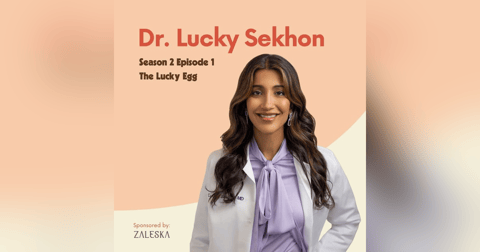


Welcome to Season Two of the Half Betty Podcast with Founder, Host and Producer Andrea Rathborne as well as Producer and Co-Host Krista Gruen. We’re thrilled to welcome Dr. Lucky Sekhon, a board-certified OB-GYN, reproductive endocrinologist, and fertility specialist based in New York. In this episode, Dr. Lucky shares her story from her education at McGill University and the Royal College of Surgeons in Ireland to her practice at RMA of New York. She touches on her personal IVF journey, the vulnerabilities and challenges of motherhood, and how it influenced her professional path. The conversation highlights the importance of building relationships, community, and leveraging intuition. Dr. Lucky also talks about her book, 'The Lucky Egg,' which is available to purchase on January 13th 2026 and aims to be a comprehensive guide on fertility. Our conversation with Dr. Lucky explores the complexities of midlife, the pressure of balancing professional and personal life, and the impact of generational influences. Dr. Lucky's profound insights into self-advocacy, mental health, and her organic journey in medicine and social media inspire listeners to find their purpose and navigate their own paths.
Bio
Dr. Lucky Sekhon is a board certified OBGYN, Reproductive Endocrinologist, Infertility specialist and the author of THE LUCKY EGG - a comprehensive guide to understanding your fertility and how to get pregnant. Born and raised in Toronto, Dr. Lucky Sekhon earned her undergraduate degree at McGill University, her MD at the Royal College of Surgeons in Ireland, and completed residency and fellowship training at the Icahn School of Medicine at Mount Sinai. Now practicing at RMA of New York in New York City, she has guided thousands of individuals and couples through their fertility journey, combining cutting-edge science with compassionate care to help them overcome infertility, preserve their options, and build the families of their dreams. She lives in Brooklyn with her husband and two daughters.
Dr. Lucky’s Five Words/Descriptions for herself - passionate, mission driven, caring, confident, knowledgeable, and ‘owning it’.
References
Book The Lucky Egg
Sponsor Information
Zaleska - beautiful, size-inclusive jewelry
Enter code HALFBETTY for 20% off your first purchase
Connect with us
Website link here
Instagram link here
LinkedIn link here
Facebook link here
Leave a voicemail for us
https://www.halfbetty.com/voicemail/
Founder/Host/Producer: Andrea Rathborne
Producer/Co-Host: Krista Gruen
Editors: Andrea Rathborne & Krista Gruen
Audio Engineer: Ryan Clarke
Episode sponsor: Zaleska size-inclusive jewelry
S2 Ep1 Dr. Lucky
[00:00:00]
Krista: Hello and thank you for joining us today on the Half Betty Podcast. My name is Krista Gruen, producer and co-host alongside Andrea rbo, our founder, host, and producer. We are feeling very honored as we welcome Dr. Lucky, a board certified O-B-G-Y-N, reproductive endocrinologist and fertility specialist based in New York City, and the author of The Lucky Egg, which is a comprehensive guide to understanding your fertility and how to get pregnant. Born and raised in Toronto, Dr. Lucky earned her undergraduate degree at McGill University, her MD at the Royal College of Surgeons in Ireland, and then moved to New York to complete her OB GYN residency training at Mount Sinai Hospital. Now practicing at RMA of New York in New York City, she has guided thousands of individuals and [00:01:00] couples through their fertility journey, combining cutting edge science with compassionate care to help them overcome infertility, preserve their options, and build the families of their dreams. She lives in Brooklyn with her husband and her two daughters. Welcome to the Half Betty Podcast, Dr. Lucky. We're so happy you're here.
Dr. Lucky: Thank you so much for having me. I, I feel like it was so fortuitous that you and I met. At the Shine Away Conference and had such a wonderful conversation and now I'm on your podcast
Krista: I love that it's all about building relationships and a community where we can all share our journeys and our insights and our knowledge, and just feel like we really belong in this world that can sometimes feel really disconnected.
Dr. Lucky: Absolutely. I mean, that, that was such an incredible meeting. I feel like I was a hot mess. I started crying within the first 30 seconds of you talking. I mean, it was just a very vulnerable place to be in. So I love conversations like this where you can just have your guard down.[00:02:00]
Krista: Yeah. And for me, I think the reason that I connected with you so deeply was because I have been through IVF, my husband and I did IVF to have our twin boys who are now nine. So it was like an incredible, you know, story. And I think I said to you, just thank you, you know, thank you for being the kind of doctor that you are and being there for everybody who's willing to listen, whoever finds you,
And we're gonna get into all of the good stuff about your book too, but we also really wanna get to know you and, um, where you came from. So I'm gonna hand it off to Andrea though, and let her kind of do a little intro and where we can go from here.
Andrea: So wonderful to be here and, to light touch on the experience of being at the Shine Away Conference where Krista and I were, having the opportunity to listen to different speakers and we had just [00:03:00] come out of a session together, and then I thought Krista was right behind me to go to a another session.
And, I turned around and Krista was, was gone. And I realized that she had found herself back into the session that we'd just come from, And the reason Krista had turned around was because she just knew, she needed to go back into that space.
And when I caught up with Krista she shared the experience of how powerful that was to be able to just have a conversation.
And it really got me thinking about, the simple act of tapping into our intuition, and listening to those stories and intuitive guides that we all have. what we're doing with Half Betty, is creating a space for those conversations and for those stories to come to life.
Those personal stories where it's about the person who's sitting there [00:04:00] and hearing their own journey. And allowing that to be heard by so many others who now perhaps will hear something that reminds them of their own story and to break them out of that isolation that maybe they've felt that they've been in.
And with the work that you are doing with all that you've done with what all that you'll continue to do in so many ways, your advocacy for sharing conversation, sharing education, removing that gatekeeping or that block for people to access all that, both personally and professionally feels like the most amazing and beautiful and profound opportunity for so many people.
And if we can be part of helping to share your story that just gives us the greatest [00:05:00] joy.
So thank you so much And we want to, hear, your story of where you are now in this time of your life, in this midlife chapter, the Sandwich Generation, where we are between, aging parents and parents who are, navigating health challenges and navigating all that comes with being seventies, eighties, nineties and beyond.
And we are also raising children, trying to have children saying goodbye to children as they maybe leave for their own adult lives. So we are in this incredibly fraught, wild chapter and we would love to hear your story
if you could start by sharing a few words, you think that really grounds you with where you are now, [00:06:00] and then leads us into hearing something that perhaps has created this transformative path that you're on, this new space that you're in, and share that with all of our listeners.
Dr. Lucky: That sounds wonderful. Um, that gave me chills, by the way. Um, I love how we met Krista because it feeds into something that has been a theme recently in my life and it's brought me a lot of joy and it's kind of like. Being in a flow state, right? Um, where it feels like everything is aligning and I'm figuring out my purpose in life.
And I feel very lucky, no pun intended, that I can actually say I have figured out my purpose in life. And, um, it just organically happened. So I would say the words to describe me right now in this place that I'm in, I'm passionate. I am mission [00:07:00] driven.
I am caring, confident and knowledgeable, and I'm owning it. Um, so those are my words right now. Um, in terms of where I'm coming from? You know, I think it's, it's a good question. Not a lot of people ask me that question. I think people focus on like the here and now and, and what I'm doing now and I think the book cover, the perception is this is someone who is passionate about what they're doing, which is true.
Um, always busy, always doing something. And it seems like a very curated, put together plan couldn't be further from the truth. Um, I never set out to be a doctor that's on social media or in the media. I never set out to be a first time author with a book that now I think is going to be the next fertility Bible and I think it's gonna make a huge difference in the world.
[00:08:00] It all happened organically and I know that sounds so farfetched 'cause how can you do all of this without having a clear goal? I think my goal has always been. What can I do to solve a problem? I'm a problem solver. A fixer. That's the role I've always tried to play in my family. That's the role I try to play in my friends' lives.
And now as a physician, I have just seen, you know, the major cracks in the foundation of knowledge that people have about their bodies. I started seeing patients in private practice when I, you know, moved away from like obstetrics and sub-specialized. That was in 2018, just to kind of set the scene.
And in that two first two years I saw a lot of patients. I was like busy from the get-go and I felt like I was doing a good job. Um, I was really compassionate. I was listening to patients, I was giving them my email, communicating with them openly, and everyone was, would give me this feedback that was really positive.
Like, wow, I've never felt this great, [00:09:00] you know, in, in a doctor's care. I just feel very like, plugged in with you and it was great. Um, and then COVID hit and that was a huge change for me. It was the combination of, um, I, I actually, before starting seeing patients when I was in training, I froze embryos with my husband just as a preventative thing because I started seeing how you can't plan for everything.
And women in medicine have a one in four chance of having infertility versus one in six people in the general population. And I was 34 and I was like, I know I wanna have potentially two to three kids and I had a daughter. And so right after I finished breastfeeding, I said to my husband, let's freeze embryos 'cause I feel so overwhelmed. This is so hard to be a working mom and I just don't see myself being able to do this back to back and I'm really worried about my ability to do it, because of the biological clock. So he said, yeah, let's do it. And that was in 20. I can't even remember the year now, but it was when I was 34 in 2019, I was like 37.
Okay. [00:10:00] Um, at that point I had frozen embryos, but it wasn't straightforward. And so that transformed me. That was the first transformation is that I ended up doing multiple rounds of IVF. I had a canceled cycle 'cause of a low response. I had a cycle where I got two eggs, nothing turned into embryos. That affected me far more than I anticipated.
'cause I was kind of like, I work here. I could look up my own chart if I want to. Like, I'm in control and I know exactly what to expect. And when those things happened, not only did I not feel in control and felt very upset and felt destabilized, like, oh my God, if I feel like this, how do patients feel?
But also, um, I was embarrassed. That was like a whole different type of emotion that I didn't anticipate. Like, I felt like embarrassed, like. Ugh. People are like, I, I don't know why, why I felt embarrassed, but I felt embarrassed and didn't wanna talk to anyone about it at work and felt like this sucks.
Like, I didn't think about this aspect of cycling where I work, that everyone's like whispering behind my back maybe, or they weren't. It was all in my head. That happened. And then I finally got to [00:11:00] where I needed to get where I had embryos frozen and moved past that. Several years later. Now we're talking like 2019.
My husband and I were like, okay, I think we're in a good place. my older daughter was like three and I had gotten a handle on things at work and I was like, okay, we're gonna start trying. And it was hard, you know, it was just harder and it wasn't happening and I didn't freak out too much 'cause I'm like, well, this is why I did the thing, so I'm gonna, I'm gonna use the embryos.
So I did my transfer in November of 2019 and that was like such just a surreal process. It went well. I was successful. I was so grateful for that. Um, and then I was about 18 weeks pregnant when like New York City shut down. And I went from being someone that was super busy in person with my patients to being someone that was isolated, um, making kind of unpopular decisions.
Everyone at my work was very supportive, but like no one knew what COVID was. And very early on I was like, I have asthma. I'm pregnant. We don't know what this does. Like I have to make this difficult decision [00:12:00] and work from home. And no one even knew like, how do you work from home as a fertility doctor?
And so that first two weeks was really tough for me because I made that decision electively, like my O-B-G-Y-N, who I love. I had said to her like, can you give me some sort of reasoning as to why? And she was like. I mean, there really is no like indication that you have to stay home. We don't know. And like it just was, I didn't, I had to make this decision for myself and it was tough.
And I felt so guilty for my patients. And then it was a really isolating time and a scary time in New York. And I was alone. Like, you know, my family lives in Toronto, my husband's family's in Toronto, my siblings are in other cities. And we were used to traveling a lot, even with our little one. We would go all the time, like once a month, twice a month sometimes, and all of a sudden we can't do that anymore.
And I fell into a very deep, dark depression and felt very, very, um, helpless and felt guilt about my colleagues that were on the front lines and all of the things. And that's when I [00:13:00] started actually doing stuff on Instagram. And that's when I started, like I created a webinar to try to give people information about what did it mean that their cycles were on hold because now all the IVF centers had stopped doing cycles and, what did it mean to try to get pregnant and what do we know? What do we not know? and then that kind of shifted to like talking about vaccines towards the end of 2020 when they started coming out and becoming available. And very quickly people were like, it might cause infertility.
And I was like, wow, I can't believe this is in my wheelhouse and I feel compelled to talk about it because. I got, I was delivered, my daughter was safe, um, in August of that year. And, you know, I was breastfeeding and I got my vaccine. I was like, I, I'm not even thinking twice about it. And here's why. let's use our rationale.
And it's one of those rare times in clinical medicine where we don't have all the data and yet we have to make time sensitive decisions. And in my mind I started to draw a parallel between that and the world of fertility medicine. 'cause there's a lot of stuff we still don't know, yet [00:14:00] we have to make time sensitive decisions and we have to do the best with the information that we have.
And I think of myself as a really analytical critical thinker I don't fall for gimmicks, but I'm not too discerning to the point where I'm like paralyzed by perfectionism. I'm like, I think I have a good way of striking a balance. And that's been a strength for me in clinical medicine.
And that was a strength for me in the nuance of communicating public health messaging in the face of conflicting messages from the government, from everywhere. And so I began to realize, like very quickly people started listening to me and I was like, oh my God, I'm not like just screaming into the void.
CNN came into my house with their N95's and they were like interviewing what I thought as a fertility doctor about the vaccine. And I was like. What, and then like all of these national news media organizations, 'cause no one was talking about it. 'cause they're like, well we don't have the data. And I was like, I understand, but if someone told me while I was pregnant there was this vaccine available, like I would've done it and here's why.
And I think that really resonated with [00:15:00] people. And when I realized the impact, I was getting messages from all over being like, I'm 22 weeks pregnant and I decided to do this because of your content. and people were really happy to get nuanced information that wasn't perfectly packaged.
It was like, just here's the facts, here's what we think we know. And I started then applying that to other topics in fertility medicine. And then I just grew a following and people were really feeling like it was helpful to them. And now I feel like I've gotten to a point where I've cultivated this community, but certainly thought it was cringe for doctors to be on social media doing like TikTok dance dances and all that.
I was like not into that. Um, I just didn't see myself doing it. I almost was a little bit like, it's not professional. And now here I am, you know, on Instagram, TikTok, have a blog, but it's been such an amazing ride and it's been very organic because now I'm realizing, hey, I can help way more people than just what I do during my day job.
And it's being able to scale the good impact you make in the [00:16:00] world and being able to also make my life easier. You know, patients come to me and they're like already with it. They already know like so much and I can have a high level conversation with them. And it's just been a really beautiful thing in my life that is like the prime example in my adult life of just leaning into a purpose and everything unfolding the way it's supposed to unfold. And not having a grand plan, but just leading with intention and the plan, finding me, and then out of that coming so many amazing things like you wanna talk clinician burnout and you know, people feeling like it's a hard time to be in medicine.
Well, the thing that makes me happy are a lot of these outside projects and things that I pursue because they fulfill that need to be creative. And creativity is the antidote to burnout. So I've never been so fulfilled and happy and tired in my life. Um, but that's how I got here. That is really how it all happened.[00:17:00]
Krista: Wow, that's, it's so much and you're so amazing I'm sure at any point you could have gone on to another path and just exploded with even more detailed information. Thank you for sharing all of that, and thank you for being literally an open book, no pun intended, but maybe, um, because I think it helps all of us, and you even said it right, it, it really allows for people to know you, who you are, and to trust you
Dr. Lucky: Yeah.
Krista: That you've been through something yourself. You are a doctor, you're educated, you know what you're talking about.
And that, hey, we may not have all the answers, but I'm gonna move forward with this decision and feel confident in it. And if tomorrow it changes, I'm gonna update you, let you know. So my question is what happened as you were growing this community? What were the things that were popping up for you?
talk to me a little bit more about your family, maybe your family back home in Toronto and how all that was playing a [00:18:00] role.
Dr. Lucky: yeah. so what's interesting is my husband's always been a hundred percent supportive about it. He's like, oh, She's got things to do. Like, he just, I don't know. I don't know. We never really have talked about it. I've never said, like, did you think ever at one point that I was crazy? Um, even when I started, I, I mean, if you could scroll, I, I'm not too proud to say, like, you could scroll all the way down to the bottom of my grid and see what my earliest posts were.
Like, they're so bad. Um, just bad. Like, I didn't know how to edit videos and I was just playing around with audios but it's like you, it's a muscle that you learn to flex. But even back then, I'd be doing like, lives in my bedroom and like, you know, 50 people might tune in and like, you know, it probably has like eight likes and like, whatever. I had friends and even colleagues of mine who were like lovely people, but they like ribbed me about it a little bit. Like, ooh, look at the influencer or the influencers here, like, watch out. And I'd be like, shut up guys. Now those same people They're [00:19:00] like, oh, nevermind. You actually did gain a following.
But, um, my husband never made fun of anything. He never thought it was cringe. I think he understood that he just needed to get outta my way and let me do what I need to do. and I think he saw like something about. What it could potentially become. And he always encouraged me. So, um, that's made it easier because as you know, I have a busy day job and like
Andrea: Mm-hmm.
Dr. Lucky: you have to carve out time, to be able to make content at the kitchen counter at like 10:00 PM I'm like, can you turn off the hockey game and stop chomping your cashews loudly because I'm trying to record something so like, he just like understands me.
Um, I'd say work has been very supportive. They didn't always understand it and they were just kinda like, what are you doing? But they see the benefits, you know, they see that. it's pretty remarkable that people find me from all over the world, on Instagram and like I've had international patients, people come see me and like that I think got their attention, like, wow, you're [00:20:00] really reaching people,
Um, and in terms of friends, I have a lot of great supportive friends. Um, balancing it with, with having kids, I don't know. I don't. I, I feel like the concept of balance is a fallacy. Like there's times where I go on great vacations with my family and I'm like fully locked in with them, and I'm not like checking anything else.
I'm not looking at Instagram. And then there's days like today where I'm just like constantly doing my own thing and busy. So it's like it ebbs and flows. It's never perfect. Um, but you know, you have to like always keep sight of what's important to you and carve out the time. And that's kind of my motto.
But I have no illusions that there is this perfect, idyllic, balanced life. And I think it's, 'cause my mom growing up was a workaholic. And I think everyone says like, I am her, um, that I got her gene because her and I are like so similar in every way, even the way we dress, like everything about us. Um, but she was in real estate.
[00:21:00] And she was like the most prolific person, like in terms of advertising. And she was just always out, always making deals, like working way harder than my dad. But my dad's a hard worker. It's just like no one could match her energy. And every like quarter, she would have like a little mini physical breakdown where she would just like sleep for like 48 hours.
And I do the same thing. It's so bad, you know? But I, I grew up watching her and just realized like some people operate on a different frequency and then they take their breaks when they take their breaks. And that's just how I am. And I think I had a role model like that. So I don't try to normalize it. I don't try to be something I'm not, I just work with the energy that flows normally for me.
Krista: I love that so much. And I think you might be the first person to describe the balance idea as actually not balance. Like, you just take it as you go and you find your breaks. And that really registers with me too. And also, getting back to midlife and the lives that we lead, the sandwich generation, the things that we were [00:22:00] multitasking we're multi hyphenates, we're doing all of these things. And I don't think the word balance is like a healthy word, to be honest. Like, we're all just trying to do our best Right.
A lot of women are waiting until later to have children, and so I would love to hear a little bit about what that world looks like and those people that are coming to you in their midlife what kinds of questions are they asking you?
where are they coming to you from?
Dr. Lucky: Well, as a fertility doctor, I mean, most of them are coming to me because they want to have children. But the thing that's interesting is that that is possible in, perimenopause and menopause and in, in the midlife, right? Like it's possible in your forties, even your early fifties. I mean, it depends on what you've done in terms of, preparation in advance.
But, you know, if someone has frozen eggs or frozen embryos or they're open to using donor egg, you know, even when you're pushing the limits of your reproductive biology [00:23:00] and you know, egg quality and things like that, that can really limit the age at which we can do this without treatment. There's treatments that can allow you to overcome that.
So I think, um. It's complicated. Um, but when women come to me in their mid forties or even older, they're coming to me pretty self-assured. Like, they know what they want. they're kind of bad asses, they're like totally have it figured out 'cause they've lived life and they understand things that their 30 something year old self wouldn't.
So they're coming to me like usually very self-assured and they've got it together and they know what they wanna do and I think the tricky thing that I see hormonally is like. Navigating all of the hormonal fluctuations and shifts that can start to happen at that age. Um, I think everything becomes a bit more pronounced from what I see and what I'm now experiencing myself.
you know, the come down from hormonal, treatments, when you're progesterone levels are dropping right before you get your period. I find like PMS can be worse as you get older. Like, [00:24:00] I now have menstrual migraines. I never had that before. Um, people have told me like, after they deliver like that postpartum shift or transition, it's just a little bit more triggering.
And I think it's 'cause our physiology changes as we get older and we have less flexibility in terms of how our body responds to hormonal shifts. And so we feel things a little bit more intensely. Um. I think a lot of it's like external too. Like a lot of women as they get to their forties are, uh, climbing up the ladder in their jobs.
And so, you know, it's like, when people are like, I girl bossed a little too hard. Like, I think a lot of my patients in midlife feel that way. They're like, ugh. Like, sometimes it, it can suck to be too important at work and to feel like everything is resting on your shoulders. And I think a lot of women, you know, and it's a, it sounds like a, a humble brag or like, you know, um, something you should be grateful for, but I think.
With great power comes great responsibility. And a lot of people who are like climbing up the ladder at work, [00:25:00] uh, they're dealing with young children, especially if they start later in life and ailing parents and then they have this high powered job and then they're trying to maintain their relationship, which may just be hard at baseline because hello, like marriage can be hard, especially like when you're 10 years in.
So I think all of that and then trying to maintain adult friendships, which is so much easier when you're in school or in training programs. It's like now, getting anything out of the group chat into reality trip dinner, whatever. It's like so much effort and work.
Um, and I think all of that can lead to. Feeling like you're never good enough. And I do think the word balance shouldn't make you feel that way, but I think it does make you feel that way because there's this illusion that being balanced means you're checking off all of the things you're doing everything, You've got your like, exercise, self-care, making sure you know your closet's organized and turned over for the new season. That's a New York problem, um, that [00:26:00] you're spending time with your kids, your spouse. It's like, you know, it's too many things.
Andrea: Perhaps we should, um, ask if. The word balance might be reconsidered and perhaps changed. maybe we go back and ask for the word balance to be, um, redefined or find a new word to apply to something that is much more attainable.
Dr. Lucky: I'm, I'm trying, instead of saying I'm balanced, I'm trying.
Andrea: I feel like you should be able to just make up a word and we'll all just like run with
Dr. Lucky: Yeah.
Andrea: As soon as you put it out there, um, I think we should run with it. you touched on so many wonderful things that I'm so curious about. One of them was, your story about your Mom, as it relates to relationships, and generational relationships.
And then you mentioned you have two girls.
I wonder if you draw on those generations in your work and in some of what you're doing.
Dr. Lucky: Yeah, [00:27:00] for sure. I think our mother's generations, weren't as good at self advocating, let's put it that that way. Um, my Mom was like an anomaly, like she was someone that got like fired from her doctor. I remember that when I was a kid. Our family doctor fired her and it was probably just because she was standing up to for herself and refusing to be gaslit, to be honest. Now looking back, I'm like. Yeah, he was like this, like old white-haired man and you know, he just was like, I'm sorry, I can't deal with this anymore. And like, so then we got a different doctor, you know, and I remember that being like a big upset, like we're talking about it at the dinner table.
And she was just like, whatever, like unapologetic. And my brother growing up was extremely sick. He was born very preterm. And so he was in and out of the hospital for the first five years of his life. And so that. That really affected me, um, because I was eight when he was born, so that's like from eight to 13 I was like living with my grandparents a lot of the time.
I was, really seeing my [00:28:00] parents go through this extremely stressful time. And my mom was still working, my dad was still working and, I think seeing her advocate for my brother, they'd always be trying to transfer him to the different hospital and she'd be like, Nope, I'm driving downtown Toronto.
I'm going to the best hospital. Like you guys are gonna keep him. And I think I learned how to advocate for myself just by watching my Mom, do it
Andrea: Hmm.
Dr. Lucky: and over and over for herself and for the people that she cared about. And I also remember observing, even though my dad cares so much, like he's just a more passive person
and I saw the difference in their approach to things and I thought it was remarkable that my Mom, a woman, not just a woman, but also I should mention an immigrant. Like she grew up in India
Andrea: Hmm.
Dr. Lucky: and she moved to England. There was like a wave of immigrants, right?
Everyone kind of followed each other. And in England, she got married at 17, an arranged marriage. Met, my dad on her wedding day, my dad and my mom have like high school level education. That's it. [00:29:00] Not college. And they grew up in like rural northern India and were part of this immigration.
They worked in like factories. they moved to Canada a few years later. That's where I was born. But my two sisters were born in England. They're, 10 and six years older than me. so we are first generation and as a result, my Mom and Dad were like such hard workers 'cause they had to be, and my mom. Self-educated herself where she was like able to do real estate 'cause that doesn't require a postgrad degree. And, she built herself up where all of a sudden she became like so notorious and known for being good at her job and it was like such an incredible transformation to see her do that.
And my dad is like my, my husband, like, I know it sounds so gross, but like, I married my dad because
Andrea: not at all.
Dr. Lucky: guy that was like, do what you need to do. Like, I'll get outta your way. And that's the exact dynamic we now have sort of, uh, just in a different framework. but I learned from her how to self-advocate.
I learned [00:30:00] that, gender roles can be thrown out the window. and what I might throw away and try to unlearn is deprioritizing, the little moments. and that's no knock on my Mom, but I think especially immigrant mentality is very much survival. like you just gotta do what you gotta do.
And I think I need to learn that, it's important to clear my schedule in the middle of the day to go to my daughter's Thanksgiving performance. You know, I need to do those things. Not that I felt bad that my Mom was never at those things, my dad was never at those things. But I do think it's important.
I always understood, I was always a very mature child. I got it and was like, they gotta do what they gotta do. But I feel like I can make different choices and I can be the parent that shows up and still is ambitious in doing all the other things, but I need to realign the priorities a little bit.
Andrea: That's beautiful. Wow. It's that interesting.
Dr. Lucky: if I answered your question by the way.
Andrea: You No, you[00:31:00]
Krista: Yeah. You, you
Andrea: yeah, you did. You, yeah, you absolutely did. And you shone such a light on, um, a word that seems to show up so frequently, and that is advocating or advocate. and I know others have referred to you as an advocate
for women in, in all aspects, but in particular as they look to, navigate their own fertility. So, talking about your Mom, really shines a light on such a big influence and your Dad. And so I love that you were able to also paint the picture of, perhaps non-traditional roles in your parents, which, shouldn't be the way that we even approach life in general.
But yet you were able to shine that light on, both your parents in their own way figuring it out, your Mom pushing away the traditional ways that she should have perhaps behaved [00:32:00] to advocate for herself and to advocate for her family and your dad's support of that role as opposed to perhaps him saying, whoa, this is not how you're supposed to behave.
And even though society creates a script by the nature of history, that does not mean that that's the script moving forward.
Dr. Lucky: Yeah. And I think it's the gift it's given me. I have a lot of female colleagues that I think have so much mom guilt. And don't get me wrong, I have moments of mom guilt for sure. But I think that I have far less than the average person because I have a good role model that really had no guilt at all.
Like if she had guilt, she didn't show it, she'd always be like, I know you understand I had to do that deal. I I know you understand though, right? And I was like, yeah, I understand. And I actually did 99% of the time. So, I think it makes me look back to my childhood and say, you know what, I was totally fine.
So like the times when I can't be [00:33:00] there, there are some nights where like I have an event to go to, or there are sometimes I have to step away from dinner and make calls 'cause I have to call a patient about something urgent. I don't stress those things. and I wonder what their perception is and like what they would say one day sitting in this chair, like when they're an adult, how that influences them.
But I hope by being able to take a little bit more time to smell the roses and devote time to family vacations and make sure I am showing up to the little things, I hope I'm like somehow striking a good balance that's my goal. Ugh, that word again.
Andrea: But it's your definition of balance, and I think that's the
Krista: Yeah. Yeah,
Andrea: We get to define what balance means. not taking what balance means to society, but what we need it to mean.
Dr. Lucky: Yeah, that's true.
Krista: And I think what I love too is that you're showing them with your action and whether they understand truly what's happening right now, they will soon. And for me, on my end, I end up rephrasing things. Like instead of [00:34:00] saying I have to go to work, I say, I get to go to work.
I get to go to work. Right. And I think that that's shining through in your life too, where they're seeing you do something you love and also somehow making sure that you're spending time with them too. So it's really beautiful and it's not easy. And I'm sure with the support of your husband too, it's all one day at a time, right?
Like.
Dr. Lucky: Yes, totally. Survival mode.
Andrea: Mm-hmm.
I have two young adult daughters and your description of this period of time where women are trying to do all the things that you described, I just felt this click where I was like, oh my gosh, yes.
Because it's so relatable to be, very determined and really wants to pursue things that they're passionate about and that are meaningful to them. And also pursue and do [00:35:00] really well being a mom at the same time, I am reflecting on that period of time where I was deep in my career working in a very, very demanding role with a very big team that relied on me and having two young daughters and a husband, and trying to find what that all could mean
And what it also meant, not in that moment, but what it would mean 10 years and 15 years down the road. And now I'm sitting in the 10 and 15 years down the road and it has not been lost on me. And I've done this with the girls now who are 22 and 19. I've said to them. What do you recall of that time? How did I occur to you as a mom?
Were there things that you felt like I, that I could have done better? Um, and both girls are incredibly capable of being articulate and also [00:36:00] very, open. And some of the things that really stuck with me was that they both saw a very human person who had moments where I was not performing well, whether it was professionally or personally, or I was crying or I was snotting all over the floor in the bathroom.
Um, and they remembered those moments. And then they also remembered all that I was able to do for them, for the family, for work. And they have this perspective of me being the most human person that they could possibly imagine as their mom. And so for that, I feel as though whatever I did all the stuff where I was like, oh God, that was like the biggest parent F up ever. [00:37:00] I now get to hear. And there were lots of those. I now get to hear that that was okay. And
Dr. Lucky: love to hear that, that, that, I'm just laughing
Andrea: they're thriving.
Dr. Lucky: I'm thinking about all the current moments. Like I have a million examples in the last week where my kids are like, you always get lost. You never do this, you don't do that. And I'm like, maybe these will be like the human moments later that they reflect fondly upon.
Andrea: They are, as much as a person can promise something 'cause we can't, but I can. And that's what I've found comfort in. When I'm feeling still that tug of did I do enough? Was I, was I good enough as a parent and I will continue to parent 'cause I am a parent, but I'm just a parent in a different phase.
But in those formative and those really crucial years, you know, Krista's deep in that with her boys and [00:38:00] you with your girls. Like, was I enough? And it's through little things now that either are directed through like a conversation or by observation of how the girls are thriving in their own lives.
I can take away that even if I sometimes don't feel like I did a good job. I did. I did. ,
Dr. Lucky: Yeah, but isn't that kind of like a prevalent theme? We always do a better job than we thought we did.
Andrea: totally, totally.
how do you see now this beautiful space of the chaos, the wild chaos of what you're in? How far do you look forward in your own path?
Dr. Lucky: Maybe like max three months. I'm not joking. I, I really can't
Krista: That's really healthy actually. I think
Andrea: Yeah, totally.
Dr. Lucky: like. Three months is a stretch, like I'm thinking like a month at a time, a month and a half at a time [00:39:00] realistically. Um, and I don't think I'm always like that, but I've been like that for quite some time. 'cause it's been a really busy, two years.
Um, I've never written a book before and I have never slowed down. I continue to see patients. So, you know, it's like you find hours in the day that don't exist and you just live in survival mode. So during the writing phase, I did not really do anything outside of working and writing. and my husband was really good.
He's like, do you want me to take control? And I was like, I need, I never say this, but I need you to take control. And he'd be like, alright. So anytime I would forget and be like, so and so wants to do dinner with us on Saturday, he'd be like, Nope. Nope, nope, nope, we're not doing it.
And I'm like, okay. And it actually kind of took me back to COVID, but in a less scary way where the people that could work from home all the time and like that was supposed to happen for them. They had no guilt about it. They were like, this is kind of nice. Like, of course it's not great that this is happening, but I'm kind of loving quarantine life.
To me, it felt like my version of quarantine [00:40:00] life because the weekends I was just in pajamas for like 48 hours straight. And I, I was just writing and I didn't go to any, uh, soccer games, tennis games. Like I just completely took a step back and just had to have laser like focus. Um, so in some ways life was simpler then, but it was kind of like boring, you know?
Like it was just like me and my own thoughts alone by myself and I felt kind of isolated. Um, and. Didn't have that much enjoyment in life 'cause I just didn't have room for it. Then I had a wonderful summer. I mean, we traveled a lot, we like made the most of it and it was like so good for my soul. And now I'm in a different zone where it's like I'm never alone with my thoughts.
I'm always talking to people. I'm always like doing interviews or doing outreach and I'm like packing my schedule with a zillion things a day and I'm still seeing patients. So, uh, it's like I went from being introverted to extroverted. That's what it feels like. Um, but this part's definitely more fun. I mean, I had so much fun writing the book, but I think I [00:41:00] am by nature a social person and it's been fun getting out there and meeting people and collaborating and sharing ideas.
Krista: When you look towards the near future, what is going to happen? It's hard to predict the future. I know, but I'm looking at from an outsider's perspective and the timeline
Dr. Lucky: Tell me what's happen.
Krista: I, I don't know, but I think it's gonna hit really hard and awesome. what, if anything, do you think you could do to prepare?
I remember when we were talking at Shine Away, you were mentioning, maybe there's a system in place where the community that you've already built can have a chance to talk open on a forum type situation where, they can talk about chapters of the book and start to communicate that way.
is that something that you've had a chance to think about?
I believe actually that once this book comes out, your community is gonna grow even bigger. I'm gonna predict that people are gonna start really [00:42:00] talking and leaning with each other. And maybe a little bit of the pressure of you always having to share is gonna be shared between the community.
Dr. Lucky: It is such an insane process. the book thing, I will tell you really quick, I. put it out there in an Instagram post on January 1st, I think it was 2024. Uh, I was like, life goals, I'm just gonna throw it out there and be vulnerable. I wanna write a book. I've decided, but I had no plan, no strategy.
I was like, I say I wanna do a lot of things, and then they fall to the wayside. 'cause you have a zillion other things to do. But I just put it out there. And then I also said I wanted to like, contribute in media because I think I'm good at communicating and, I did that and then like three months later I was having a random conversation with a patient who's now a very dear friend of mine who was talking to me about freezing her eggs and she'd already done it.
And so she was coming to me kind of like for a second opinion. Already knew everything. So like our conversation was pretty, like there was everything that we needed to talk about was like done in 20 [00:43:00] minutes. And then we like, were just shooting the shit for a while and just talking
And I said, I think at a certain point, like the goal will be maybe to write a book. I don't know. Um, so I kind of put it out there again. And then someone she knows who is a serious book agent, she works at CAA, she was going through infertility and she was like looking at my Instagram and getting more information from me than her fertility doctor.
And then she contacted her friend who she saw also, we followed each other. And she was like, how do you know her? Do you think she would wanna write a book? Because I honestly can't find a single book out there to help me. And that woman goes, yeah, she actually told me she wants to write a book. And she was like, can you connect us?
So she connects us. I walk into her office within one hour, we have a whole outline written for the book. And she's like, this is what you're gonna do. You're gonna write your proposal, we're gonna shop this around. We'll get a deal. And then you're gonna write this book by. And then by the way, like she went through a failed transfer.
She then, um, was like, is it weird if I'm your [00:44:00] book agent and I'm your patient? And I was like, my whole life's weird. Let's, let's do this. And so she went into the IVF process under my care, while I'm writing the book under her care, she's asking me at all the follicle check visits about like what I've finished, what I haven't done.
And I'm like, you need to stop. We're here to talk about your ovaries. Like it was the whole thing. The week that I got the book deal, basically she found out she was pregnant. then I basically write and she grows the baby. The weekend she delivered, I finished the manuscript and delivered the manuscript.
Yeah.
Andrea: gosh.
Dr. Lucky: Like talk about being in a flow state. This is just like, it just unfolded and happened. I didn't even knock on any single agent's door. It just happened. And then my editors also like an IVF patient and she like came to the first meeting. She's from McMillan with a full book of notes from all of my lives that I used to do
Andrea: Um.
Dr. Lucky: her during her time doing IVF.
So my whole team are [00:45:00] people that are so mission aligned and focused and it's just such a beautiful thing. That's what I mean when I say I'm in a true flow state and I never want it to end. Like I'm like, how do I stay on this forever? 'cause it's a great feeling. It's like no matter how hard you're working, no matter how tired you are, no matter how like messy, it all gets, at the end of the day, you can say like, the universe truly has conspired in my favor and is making this mission possible.
Krista: Literally full body chills. Like I can't even tell you how incredible it is to hear that when you put those things out there to the universe and you say things out loud, how things can shift and change so quickly.
Andrea: Mm-hmm.
Dr. Lucky: Yeah. And all I did was have a goal or a mission, but it was very much broad. And I'm like, so I, I wake up every morning and I'm like, how is this my life? How did this happen? Like, sometimes I walk down the street and I just [00:46:00] start, I burst out crying 'cause I'm just so happy
Andrea: Mm-hmm. Hmm.
Dr. Lucky: You know,
Krista: Awe, I love that so much
Dr. Lucky: feels, it feels really good, you know, to, to um, to be, to be where I'm supposed to be. And that's what it feels like.
Andrea: What a beautiful place to be, where we're supposed
Krista: you are, yeah. Exactly where you need to be. Yeah, you are. And you're affecting so many people around the world, which is gotta be a hard thing to comprehend sometimes. And, and maybe there's some pressure in that too. But I think overall, what I'm getting from you is the joy of being able to share your knowledge, your compassion, your care, your motivation.
it's such a gift. And, I'm so glad that we met. I'm so glad that you
Dr. Lucky: That was another moment,
Krista: and vulnerably with us.
Dr. Lucky: that's why I, I started crying right when I met you because it just fed into that for me. You [00:47:00] know, it was like, this is why I'm doing what I'm doing, and it's so meaningful and It makes a difference and it's really important to me. It's like really, um, something that has made me truly happy and fulfilled, and it's just like a win-win, you know?
Andrea: it's so awe inspiring to hear the stories that people have and that they carry and how impactful it is for so many, and also how impactful it is for people to hear their own stories said aloud. Um, and to have people witness. And hold those stories. it's not lost on me or us for sure that creating the space for people to be able to be heard, whether that's in their fertility journey or in what's important to them in life and their story [00:48:00] is profoundly impactful and
Dr. Lucky: Yeah.
Andrea: it leads to a kind of fulfillment or a kind of joy or maybe I, I mean these are the words that I would use for myself, but perhaps they're universal, but there is, there's something that kind of transcends I'm happy or I feel good, or some of these other descriptions to what you've just said so beautifully, which is that. You are so moved by where you are and what you're able to be able to be in every day and how you're connecting and how you are able to be in this world, that it moves you to tears and to [00:49:00] expressing that aloud, which is it's such a gift for others.
Dr. Lucky: Thank you for giving
Andrea: beautiful.
Dr. Lucky: an, an avenue to share. I mean, it feels like I just had a therapy session.
Andrea: we feel like that, Because it's, it just doesn't happen very often where we have those spaces to share
Krista: Especially in our midlife. 'cause you know, we are busy, we are, you know, doing all the things. And on your side to take a minute to carve out that time for us and anyone who's listening it's really thoughtful and caring.
Yeah. and for you too. I hope it's nice that you can take those times to reflect back and see where you've come from. Talk about your parents, your mom, and, really appreciate and Calling that part of their life in and your life and acknowledging, and it's so important to acknowledge how our family plays a role too,
Andrea: It sure
Krista: we are.
Andrea: It sure is.
Krista: Mm-hmm.
Dr. Lucky: It's part [00:50:00] of who you are.
Krista: Mm-hmm. Yeah.
Andrea: And how we got where we are. Um, can I just like inject a tiny little moment and it's perhaps, it's so in contradiction to like how beautiful all of this is and how moving this all is. But I just realized that what's sitting in front of me, this is maybe part of the story, is I'm gonna hold it up. It's an egg cup.
Dr. Lucky: Uh
Andrea: This little egg cup came home with me from Scotland on a trip that I took with my younger daughter, and it's chipped and it's old and it has sat in front of me on my desk since we came back from that trip a few years ago. And it holds my vitamins that I'm supposed to take every day. But more importantly, this little egg cup to me has been very symbolic of so many things.
It's a little place [00:51:00] for an egg. I think it's a little bit like an origin story for me. I love thinking about this story that you've shared and the origin story of what this will ripple out to become for so many from this podcast and from this episode and from this story time or this time of you sharing.
And I just saw that sitting there and I thought, gosh, this is so symbolic of everything that you're doing, but also this beautiful origin story, the egg, the, the very beginning, um, of everything.
Dr. Lucky: Yeah.
Krista: Are there any signs or numbers or moments in your life that pop in and out that gives you like assurance that you're right where you need to be?
Dr. Lucky: I think it's more like looking back and being like, holy, like how did that happen? Like the [00:52:00] connections, like it's like you and I meeting at Shine Away and now we're having this fantastic conversation that's so transformative in a lot of different ways. I think it's like recognizing the connections and knowing that that's not just by chance, it's by design. Those are the moments that just make you feel like, wow, this is what a special life we're in, that these connections and things can happen and paths can open up for you.
And I really do believe in intuition. I believe in manifestation. I feel like there's just so much we don't understand about how setting an intention actually becomes reality. And every time it plays out in my life, I'm always like amazed by it. And so I shouldn't be anymore at this point, but it's just so magical and cool.
And my whole point of going on the tangent of telling you the origin story of the book, which I'm so glad I did, is I don't know anything about publishing a book I've just been on like this all just happened organically. So to go back to your question of like, well, what happens next? I don't know, but I'm so freaking excited because like, what [00:53:00] else can happen?
What else can
Krista: I mean, if you've come this far and done this much, it can only get bigger and better
Dr. Lucky: I mean, I am, that's how I feel. I'm kind of like a blank slate. 'cause I'm like, I am learning to not limit myself. 'cause what else can happen, you know, after all of this that has already transpired.
Krista: yeah. That's a really, Ooh, that, that's, that feels nice to hear what else can happen.
Dr. Lucky: Yeah.
Krista: Yeah. Oh, amazing. Thank you. Thanks so much for taking the time I feel really honored, that yeah, you've given your time to us And our listeners too.
So, I know there's people listening that would love to follow you if they're not already. So what are some places that they can learn more about you and all the amazing work you're doing, and of course how they can get your book.
Dr. Lucky: So I'm on Instagram, that's my primary platform where it all began. You can scroll down to the end of the grid if you don't believe me, um, and no judgment. Um, so that's @lucky.sekhon. I'm [00:54:00] also on TikTok @drluckyegg 'cause. Lucky dot Sekhon was taken. Um, and then I have my blog, theluckyegg.com.
And actually my husband is the one that helped me build it 'cause he's in, so he's a software engineer, so it's like our little brainchild, but I have a lot of cool tools on there. So that's something that the book can't offer, but there's like an egg freezing calculator and AMH calculator. there's a lot of like guides and things like that that you can access and it's all free.
It's not behind a paywall, but I think it's like a good deep dive on a lot of topics. And then my book, The Lucky Egg, is coming out January 13th. It's available for pre-order now. It's an all encompassing guide to everything you need to know. I think you can get a lot out of it, even if you read it before you start trying, uh, anywhere you're at in your journey though, it will be helpful.
And there's a huge focus on mental health, which I think is so important as well.
Krista: I wish we had more time to, to dig into that too, because you're right, and you experienced yourself and, myself included that there, there's shame, there's guilt, there's all these interesting things that pop up when we're, considering [00:55:00] fertility and, through our journey. So yeah, thanks for bringing that up make sure you go and follow Dr. Lucky. I mean, I have 9-year-old boys. We did IVF to have them and I'm still interested in what you have to say. And learning more technology has changed. The world has changed. conversations are changing. There's more to learn and share. And I'm so glad that you are here making a difference in this world.
And, um, so lucky to know you And of course for everyone who's listening, who is coming here that doesn't know about us. You can find us on Instagram, @halfbetty We're also on YouTube and Andrea and I both have our personal pages on LinkedIn.
Andrea, is there anything you wanna say before we wrap up?
Andrea: What I find so moving is that though I did not have an experience of going down an IVF path. it doesn't actually eliminate anybody 'cause I myself not traveling that path am deeply [00:56:00] invested because of it being information that I should know and that is important. I imagine that that could be applied to every single person in this world, because of how important this is. So I love that This is an everybody conversation, so
Krista: Yeah.
Dr. Lucky: I think that it's so broad and applicable. it's applicable to everyone.
Andrea: It is. It so is because we should all know how humanity works.
Krista: Mm-hmm. Thank you, Dr. Lucky.
Andrea: Thank you so much.
Krista: Thank you so much.
Dr. Lucky: Thank you for having me and I, I am so excited about this conversation and you guys made my day, so thank you. It was truly uplifting
Andrea: that's so
Dr. Lucky: yeah, so lovely to meet you and glad I get to see you again and so glad we met at Shine Away.
Krista: Me too. Yeah, we've uh, it's a very special place. Yeah, it really is. I'm sure you've met lots of people and connected with lots of people through that event [00:57:00] too. It's been a special place for us, and we're gonna continue going there too. 'cause it really, it just keeps giving somehow. Yeah,
Dr. Lucky: Yeah. Yeah. I hope to see you at next year's, but thank you again for having me.
you again
Krista: for sure. Yeah.
Dr. Lucky: Alright.