

Karryn Ransom: Full Circle
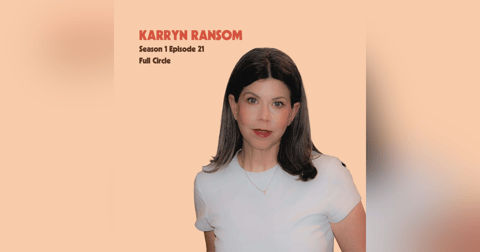


Andrea and Krista welcome Karryn Ransom on this episode of Half Betty. Karryn was a cast member of Degrassi Jr. High and speaks about her time on the series and how it shaped her future as a teacher. The conversation delves into the challenges and rewards of parenting, professional journeys, and the transition to 'empty nesters.' They emphasize the importance of modeling a full life for their children, exploring new passions, and accepting the different changes that come with midlife, including menopause. Karryn shares her dynamic teaching journey, methods to engage students, and the joy of returning to art and theater. They discuss the idea of bridging generational gaps through shared stories and mentorship, aiming to create spaces for intergenerational dialogue and learning. The conversation ultimately underscores the value of loving oneself, fostering authentic relationships, and finding joy and purpose in every stage of life.
Bio
Educator, artist and actor, Karryn helps people find their voice. She is an educator specializing in high school French, a watercolour artist, and performs in local theatre productions. In the 1980s, she spent five years in a TV role in the original Degrassi High series. That early experience showed her that giving voice to ordinary experiences through storytelling can be transformative. This, along with her experiences as a parent, artist, and professional leader, continues to shape her teaching practice, where she creates space for others to express themselves with confidence. And now, in midlife, she's standing firmly in her own story with clarity and purpose.
Karryn’s Five Words - Passionate, Compassionate, Focused, Creative, Determined
Sponsor Information
We love Voes & Co because they are the perfect mix of style, comfort, and sustainability. Designed to effortlessly complement any outfit - from casual to chic - they’re as versatile as they are timeless. Made with next-generation vegan materials, their footwear is soft, breathable, and built to last - without any cruelty. We want you to step out in style and comfort so that’s why we’ve partnered with Voes & Co to bring our subscribers 50% off any pair of shoes!
Please use this link to purchase https://voesandcompany.com/discount/BettyLovesVoes
Connect with us
Website link here
Instagram link here
LinkedIn link here
Facebook link here
Leave a voicemail for us
https://www.halfbetty.com/voicemail/
Founder/Host/Producer: Andrea Rathborne
Producer/Co-Host: Krista Gruen
Editors: Andrea Rathborne & Krista Gruen
Audio Engineer: Ryan Clarke
Episode sponsors: Voes and Company
Karryn Ransom
[00:00:00]
Andrea: Today's conversation is with someone who beautifully reframes one of mid life's biggest myths. The empty nest. For Karen, it isn't empty because she's still in it, and with two daughters now launched into their own lives, that nest has become a place to nurture the person who's long been set aside.
Herself. This new chapter has sparked a kind of rewilding for her, a return to what lit her up long before motherhood, art, language, performance, and creativity. You may remember her from the original iconic Canadian TV series, Degrassi Junior High, where she had a reoccurring role, an early life experience, that she now attributes to her chosen career in educating youth in a high school setting.
Most recently a return to acting. It's a full circle moment, like the shape of a nest itself, coming back to the center to what feels alive and exciting and holy hers. Here's to the courage of returning to ourselves. Let's jump right in. The conversation is already started and we don't wanna miss another second of her midlife [00:01:00] story.
Krista: So take me back before you popped your head out the of this Volkswagen Jetta.
what was happening moments before Ms. Karen Ransom.
Karryn: Our oldest daughters, they're oh, a year apart, but basically the same age. They were going to the same daycare, and Andrea and I were both, uh, equally pregnant at the time with our youngest. So we had sort of met in the hallway of this daycare, and we were trying to maneuver around our big pregnant bellies.
And I thought, oh, we're both expecting at the same time. That's kind of cute. And just overhearing the way that Andrea was talking to other people, I thought, wow, she seems really interesting I really wanna get to know her, but how weird is it to just be like, Hey, do you wanna go have coffee?
And then I thought, no, I'm just going to do that. And we were in the exact same stage of life and I said, you know what?
we should do this. And so we did. And now [00:02:00] Andrea's basically my children's second mom and vice versa. it's amazing. It's like having, uh, bonus daughters and bonus parents.
We are so lucky and their friendship is really beautiful.
Krista: did they end up going to the same schools after daycare?
Karryn: Well, yes and no. elementary school, yes. Um, but high school, no. And that was actually a really good thing
Andrea: Mm-hmm.
Karryn: to have separate lives as well, because basically our youngest,they're joined at the hip. So I think they needed to have that level of separation, especially at a pivotal time, like adolescence.
and it turned out to be really healthy for them because they had that life. And then they had their special, just them connection
Andrea: Yeah,
Karryn: and, they held onto that childhood for a long, long time.
Andrea: yeah, yeah. And
Krista: think that can get lost [00:03:00] so easily when, especially now when kids are growing up, everything's so fast and you gotta move forward and get things right now. AndI don't know, if it's society pressures of,
Andrea: Mm-hmm.
Krista: know, making sure that everyone's grown up and older and when they can hang onto those childhood things.
It's so special. It's so important.
Andrea: No,
Karryn: I've always said they've got the rest of their lives to be Adults.
Krista: It's true.
Andrea: it's so true. And watching them navigate friendship, taught me so much because of, the unique, quality of being together since birth.
They knew when to flex and bend in their time together so
watching them manage disagreements was like watching the most elevated [00:04:00] experts in conflict resolution.
watching how they navigated the friendships,made me a better person in all of my relationships because I. Took cues from what I learned from these girls and these children who are now young adults.
And what Karen explained with the families being so parallel but also Karen's and my kind of, um, professional, not just our lives as moms and partners and daughters and friends, but also our professional journeys.
we were able to be, on a path. Together a very different, professional path.
I felt like I had my person who I could parallel with through all of this and say, I don't know how to go back to work full-time and leave my children. I don't know how this works or how does [00:05:00] childcare work? Or, I feel such a heaviness of guilt. I don't think I can be a good person in my work.
I think I'm going to fail in my work. So then am I gonna fail both? all of these things just became such an enormous, part of, I believe, our own kind of friendship journey.
Karryn: Yeah. Oh, absolutely.
Even when our youngest, wound up at the same university, last year. Andrea and I both experienced that, oh my gosh, there are no children at home anymore feeling. Um, and I don't know if you realize how much you impacted my ability to navigate that, and that's because of what you've done with Half Betty.
it happened around the time when we became that horrible term empty nesters, I was so inspired by Andrea's decision to. [00:06:00] Pivot in her life and to recognize that this is not an ending when children leave your house.
That is a beginning. and to think of it as an ending and to think of us as empty nesters issuch a disservice. And, I'm a language person, so I truly believe that language is incredibly powerful. And so calling it empty nesters, it's like, how is it empty? We are here, it's not empty.
We are in the nest and we count, right?
Krista: And the little baby birds know where to come back home to, and they will.
Karryn: nest, it's an open door. And, it sends the message, I think to all parents, but perhaps especially to mothers, that if you are not actively nurturing and caregiving, you're just empty. There's nothing there.
And that is so damaging. So you know a lot of
Krista: actually think you're still being active [00:07:00] though. That's the, wild part, is that even though they're gone and they may not be physically there, you're still active and parenting, you're still active waiting, providing that space for them to come home to checking in with them like that never, ever stops.
Andrea: Mm-hmm.
Karryn: it never does. I mean, the second you have a baby, okay, this is now my priority for the rest of my life. Um, but I think we owe it to our children to model that our lives are beyond. Being mothers too. And, that's where both of you were so inspiring.
Um, just that we need to show them that just because that part of our life has shifted now to being always here, always providing to, okay, you have your life and that's awesome and amazing and I'm so excited for you and I have my life, and that's awesome and amazing and I'm so excited for me, like, what am I gonna do [00:08:00] next?
Um, yeah. So,
Krista: Oh, I love that. It's so important. My, my boys were four years old and I went off to Bowen Island to Produce this feature film, and the next four years of their life, half of their life I spent making a film.
I loved knowing that they were involved in my life at such an early age, and they understood that I was following my passion and I was fueling that fire.
And we do this thing where I stop saying we have to, I say, oh, we get to, I get to,go to work.
Andrea: I love that. Yeah.
Karryn: Yeah.
Krista: I have to go to work. I never want it to be a negative thing for them. I always want them to see my excitement and even if I didn't like my job, I'd still say that, but I'm very thankful I do.
Right. But I think you're right, Karen. It's so important to show them that you are a full human [00:09:00] being who,goes off and does the thing that they like or maybe sometimes don't like. And that colors our world and it ends up coloring their world as well.
Andrea: Mm-hmm.
Karryn: Yeah,
I think we often forget just how many little people are watching us and how much they take in.
Andrea: Mm-hmm.
Karryn: I sort
Krista: our actions.
Andrea: true.
Karryn: as an educator, I guess I'm a little more aware of that than I used to be because I am. Literally on display and they are watching and sometimes I can't believe that they've remembered something that I said three months ago because I always get the impression no one's actually listening to me in class.
But, but they are,
and that's both incredibly empowering and incredibly terrifying to think that someone is always watching.
Andrea: Mm-hmm. Mm-hmm.
Karryn: it's also like you say, Krista, you get to [00:10:00] be an influence. You get to be impactful, you get to model. And when you screw up, which you are gonna do, 'cause we all do.
You get to also own that and show that that's okay. Oh, look at me, I'm living my passion. I'm doing this and I fucked up massively. Okay. This is how I'm gonna take ownership of that. 'cause you are gonna do it too. And it's okay. So
Andrea: Brilliant. Yeah. So good. Will you take us on a little bit of like a journey around, your, as an educator, as a teacher, as a leader.
Karryn: I'd love to, I don't know if, uh, Krista you knew this, but I'm one of the original Degrassi kids from Toronto.
Krista: Oh yes,
Karryn: Okay. Well, It's my fun little factoid about me that, uh, my first coming of age was filmed for everybody, my awkward youth.
and I think one of the things that made that impactful on what I do now is [00:11:00] that, uh, the show was, it was produced, it was written, it was created by an educator who didn't like that so much of children's television programming was directed at adults solving problems for kids. Every show would end with the adult having the solution.
And she said, that's gotta change. We've gotta make it. So that it's the kids who do it for themselves, or the kids who realize that maybe something can't be done, that not everything has to end on a happy note because it's not reality and we just wanna reflect that. And we also wanna inject a little bit of empowerment towards kids.
And so I was too young at the time to really understand a lot of that, but since then, and it's astonishing how many of us Degrassi kids have become educators. Like we've never left school. Um, now that's something that is probably the [00:12:00] most important part of what I do as a teacher, is empowering my students.
It's not that I'm the knowledge keeper and I'm the wisdom keeper, I've always seen my role as holding up a mirror to them. Saying, this is what you actually can do, but I can't do it for you. And if I did do it for you, I'd be robbing you. Of all those wonderful experiences of figuring out yourself where you're going with this.
Uh, so that's, where I'm at as an educator. And I think in midlife, that's when I really started to realize I don't just show up and teach the curriculum and assess and report and go home. there is something that I do in here that's engineering of sorts that I didn't really articulate until midlife.
And that's when you stop and you realize, wait, what am I doing? What have I been doing? where am I going with all of this? And that clarity did transform my [00:13:00] practice. It, took the. Anxiety out of the minutia of what I'm doing and, and really helped me focus on big picture stuff.
Uh, so that, clarity does come from those early years realizing what was different about what we were doing for kids, even though we were actually kids ourselves at the time. It sort of,infused itself into us. Um, but I didn't actually set out to be a teacher at all.
Both of my parents were teachers, so I, I had the opposite. I was like, well, I'm never gonna be a teacher. and I, went to university and I studied drama and then I kind of fell into studying French as well, simply because I liked it. It wasn't that I saw a future in it, it was just, oh, something cool to have.
Um. And then I fell into to teaching. When I realized how much I enjoyed helping my friends who were taking language classes. I just [00:14:00] loved helping them. And, uh, and I also realized that being a professional in the theater world would be incredibly difficult and I'd probably be in school forever and, uh, would be living paycheck to paycheck
So teaching was a safety net that turned out to be my real passion.
Andrea: Hmm.
Karryn: I wound up getting my first job teaching job in a school that had a lot of challenges for the students. Um, it, that was probably my biggest education as a teacher, was working in that school and getting to know the lives of those students. Um, I spent six years of my husband begging me to switch schools because I would come home in tears.
But it, it was because I didn't feel like I could help, because there were so many things that I wanted to fix, that I wanted to [00:15:00] change. And it was that feeling of powerlessness. Like, I wanna help these kids. I wanna show them what they can do, but the system they're stuck in, I, I can't see how I can help them.
jump those hurdles. and it was very frustrating and sad. And we, lost one of our students, a 16-year-old boy was killed at the school. And that was the beginning of my big, I don't think I can do this moment, but, uh, I stayed and the next year, it was one year after his death at the school that a bunch of students were having a, a vigil in the parking lot where he had died to commemorate his death.
And a fight broke out and another student was stabbed. He did survive. But I was pregnant with my daughter at the time, and I remember this moment so clearly running to the parking lot [00:16:00] while I'm pregnant and looking at a 16-year-old kid bleeding. And I thought, I can't do this. I just, I can't, I can't do this.
And at the time I said, I'm done. I'm never teaching. I'm leaving. I'm not just, I can't leave, I can't leave these kids and just go to another school. Like if I'm done, I'm done. And, uh, that was devastating, but I did it. And I took some time to sort of think about what I wanted to do. And I, I went to some career placement, uh, type of organization where you do all these tests and then they analyze you and they tell you what you should do, like what's your ideal career.
And I went to them and I paid them a lot of money. And I said, I don't wanna be a teacher anymore. Help me find my real thing. And a week later they called me back and, uh, they, they said, we're gonna give you your money back. I was like, why? And they [00:17:00] said, because you are off the charts. You should be a teacher.
So we haven't helped you at all. And I was thinking, my God, have you ever helped me? Because when I was of the mindset that I don't want to do this, that was still who I was, that was still how I was presenting. So it was incredibly impactful to me. And it was Andrea who got me into this school that's really close to my house.
And I said, I don't know. I, like I've said, I'm not doing teaching anymore. And she said, just go, just have an interview. And as soon as I stepped into that school, I was like, oh, right, this iswhat I'm supposed to do. And, that was a lovely experience because I had kind of burned out in a, in a place where I couldn't have an impact.
And then I wound up in a place where I was able to have a much more gentle impact. And it re-lit the flame. Okay. So that's, that's my teaching [00:18:00] journey,
Andrea: And maybe will you tell us a little bit more about where you are now because you've really shifted it once again in this new chapter,
Karryn: Oh, thank you for saying that. Uh, I was 23 when I had my first teaching job and my students were in grade 11, so I was like eight years older than my students. And as a small person, they were all bigger than me and I was absolutely terrified. This was a, this was, I suppose, an inner city school.
Uh, I dunno. And there was a parking lot right outside my classroom and I would deliberately park my car right in front of it so that I could just, like, if I gotta go, I could just go. And that escape route was, uh, yeah, it was a little bit of a, I have options type of thing. Um. And yet realizing that, um, we always have options, but feeling so much more confident now.
Um, [00:19:00] so I, I'm trying to articulate this in a, in a good way, I guess that was in some way, uh, a coming of age, that early
Andrea: Mm-hmm.
Karryn: and this is another coming of age, and it's interesting to me that we as a society, so often focus on adolescents coming of age and young adulthood coming of age because, oh, the world is in front of you and you have so many opportunities, but we don't talk about middle age in the same way.
And we may not have as many opportunities as we had then, but we go into this with. So much less anxiety and so much less of a need for those props and those safety roots escape route. We go into it with a confidence and a wisdom and life experience. It's actually so much more pleasant. 'cause it's, that classic thing of, of not [00:20:00] walking into the room and going, oh, I wonder if they like me, but walking into the room and going, I wonder if I like them and if I do, maybe I'll stay and if I don't got my escape route.
I've been planning that for 30 years.
Krista: I wonder if I like them.
Karryn: Yeah. Oh yeah. Yeah. That's, uh, and I can't take credit for that expression. I, I probably saw it on TikTok, but, um, it's, it, I think it sums it up so perfectly, you know? Uh.
Andrea: does. And so, tell us what your life looks like now, some of the things that you are embarking on in this new phase, in this coming of age, this middle age coming of age.
Karryn: Right. Uh, well, my focus has shifted from my children. Of course, it's always still gonna be on my children, but it's focused more on the things that used to make me come alive when I was younger that I had put aside for quite a while. [00:21:00] And those two things are art and theater. So the arts in general. But being a visual artist is something I've done my whole life, but just sort of quietly, didn't really share it with anybody, but now I decided I'm gonna share it with everybody.
I'm gonna put it online and whatever. If you like it, great. If you don't, that's fine. And it's become a little. business for me. I paint commissioned, portraits for people and I do all kinds of little watercolor things, and my work is in a shop which is delightful. Um, and it's a passion for me.
It's something that lights me up and I love it so much. Um, but perhaps the bigger thing, because it requires massive amounts of time and energy, uh, is, is theater going back to the stage after over a decade of not being on stage and returning to that now, because I have to, I think, show [00:22:00] my daughters and my students maybe if they're watching, uh, that we are more than what we do for our career.
We are more than what we do on a daily basis. And the most important thing we can do for the world is what? What makes us come alive? What, what lights us up? Because, there's always that thing where we tell kids, uh oh, think about what the world needs. Like, that's what you have to do is, is do what the world needs.
Like maybe the world needs more doctors or the world needs more engineers, or the world needs this. And I've always thought, no. What the world needs is people who have found their passion, people who are alive, because that's a spark. when you see somebody who's like, yeah, this is what I love to do.
Doesn't matter if it makes sense to anybody else. It makes me feel alive. That's what the world needs. Am I making any money at [00:23:00] it? No. I'm a volunteer. I actually pay money to go do theater, but I don't care It. It makes me come alive. I love it. it's such a challenge that is so incredibly fulfilling when we put something together.
Um, and so that's, that's what I'm doing now in, in midlife that I wasn't doing before. I am, I am unapologetically pursuing things that bring me joy and, I know my daughters are not theater people. They have no interest in the performing arts.
Um, but I feel like I owe it to them to show them that this is what you do in your midlife. It's not the end at all. It's like, oh, wow. What am I gonna do now? And I'm gonna do it with maybe my knees hurt a little more than it did when I was 24, but now that I'm 54. I actually don't care. I'm just gonna do it.[00:24:00]
Andrea: I love, the story of, returning.
I really enjoy the word returning. Um, there's something, peaceful and, honest about the sense of returning. and you use that, a couple of times when you talked about, these things that you did when you were young, starting with your, early teenage years where you were,on screen bringing to life what adolescence looks like through, television and through, living that, teenage life in front of a camera for other teenagers to be able to see that this is what kids look like when they're teens and they're growing up in, in, you know, somewhere in Canada.
in the eighties. And so, returning to, performance, returning to telling a story to people, through performance or through art that then has them, relating to [00:25:00] that and connecting to that, that returning to me is so incredibly powerful. and I, I've always appreciated, your incredible self-awareness, this sense of returning to who you are and doing what it is that, lights you up is really inspiring.
And it's a lot, about what Half Betty is hoping to do for everybody. And that is. Share the stories that are gonna resonate with people. Some part of every person's story may resonate with a different person listening, but there's this honesty and this hope and this sense of returning to who we were and always have been when we reach a time in our lives where, we've been told that we are no longer.
there's something beautiful about I'm returning to exactly who I've always been and yet in a bigger and [00:26:00] better and more profound way.
Karryn: Completely. Yeah.
Andrea: thank you for using, returning and speaking of words, will you do us the great honor of sharing some words that you believe, describe Karen Ransom.
Krista: Oh, that transition. Andrea. Hello. Oh, well done friend.
Andrea: thank you. Thank you.
Karryn: gosh. I think, I think I have a little bit of, um, paralysis by analysis when it comes to this question, because I do find words so impactful. I was thinking, the word that I always think describes me is passionate. whatever it is that I'm in, I'm fully in it. Um.
And
uh, um, focused.
I can be very focused, creative. Um, there is a [00:27:00] word that I think has always described me through every phase of my life, regardless of what's going on. And that's determined. Uh, there's, um, there's a, there's a tenacity to me that, again, is a double-edged sword. It means I will work hard for something, but sometimes I will work hard for it, even beyond the point when I realize maybe this isn't quite what I should be doing, but I'm gonna keep doing it 'cause I said it would do it.
Um, so it, it can be to my detriment as well. But those are some words I would say. Describe me,
Krista: You've got two. I have. Passionate and creative is my five. Andrea wrote so lovely on the day of our launch. I think it was our launch or, anyways, she wrote mine here. And I have passionate and creative as as two of mine that match up with yours. And I love
Karryn: uh, in that.
Krista: [00:28:00] tenacity is like such a, it's such a powerful word and I love that you can recognize that it has two meanings
Karryn: Hmm.
Krista: you talk more about that?
Karryn: Well, my mom wrote me this beautiful letter, for my first mother's day. Um, and she talked about what I was like as a child and what it was like to raise me. And she said, your tenacity, you were so determined to conquer those three steps that you weren't ready for, but you were like, I'm gonna do it.
And it meant you fell on your face so many times. But she said, I've watched that determination at such a young age. Like you were barely two years old when you're like, I'm gonna do those steps. And she said, this is something I've seen in who you are, your whole life is that I might not be ready, but I'm, I'm gonna do it.
So I think having that from the perspective of a [00:29:00] mother who. Watched me grow for so long. Um, that's incredibly meaningful to me because she has that different perspective of course. And I don't remember what I was like at that age, but for her to say that you were so determined, that really resonated with me because I don't think I've ever stopped being like that.
Um, and it's, uh, one way in which it was not super positive was last summer I had to have major, um, surgery on my foot. And I was incapacitated for two months. I was just horizontal. and it was in the summer and everybody was out doing wonderful things. And I felt so sorry for myself and I was so determined to heal and I was like, I'm gonna do this.
And it was my body saying, chill. Um, you're gonna do it when we're ready for you to do this. Um, and That difference between what my mind wanted to do and what my body was willing to do was incredibly frustrating. [00:30:00] Um, and so I think that the mental aspect of that healing was so much more difficult than the physical aspect of that healing.
Uh, just accepting the fact that I would have to be immobile for as
Andrea: Mm-hmm.
Krista: That actually brings up a really interesting point. Like I know we're talking about midlife as but it has sparked this thing in me that I'd love to ask you, and that is, when you're thinking about that topic and you move forward into the years ahead, change can usually be challenging for us.
And I'm wondering how you think that will play a role as you get older into your next, decades in life because. Yes, our physical being will change. There'll be things that we won't be able to do anymore or not as well. And I'm wondering if you can talk [00:31:00] about how, do you plan it or maybe if you've never thought about it, if you can speak about what you think that might look like as you move forward in your years to come.
Karryn: Yeah, I actually try not to think about it because I, feel like that's go, given the experience that I had last summer, I think I'm gonna struggle if I shift that perspective, I see it in my father who's in his late eighties. And he has a similar approach in that. He's like, I'm gonna do it, I'm gonna do it.
And his body has said, no, you're not. And he really struggles with that. Um, and he will sometimes push himself beyond what his body should be doing. Um, and then he suffers for that. So I see that, and I don't wanna look at that as a preview of, of my life 'cause we're very different people. And having that preview might actually be, to [00:32:00] my advantage because I can look at it and say, okay, if I don't shift this perspective somehow, and I guess.
Develop more acceptance than I'm going to. I'm gonna be challenged by this. So I guess that's how I look at it as something that I really want to find the balance, that fine balance between that tenacity and acceptance. Because I don't want to just accept and say, well, there's nothing I can do. I need to accept certain things without giving up the tenacity of,what can I do and how can I do it as best as I
Andrea: I love that.
Karryn: can?
So I think that's gonna be my next big journey as my body changes, as our bodies change in midlife. That's been a thrill ride. It continues to be a thrill ride.
Krista: Oh, please talk more about that if you're willing to [00:33:00] share.
Karryn: Oh, sure. In fact, I was back in Toronto in March, and I met up with one of my old friends from Degrassi, and we were talking about that and we said, gosh, you know, we went through our awkward puberty and adolescence on film, and here we are now going through our awkward menopause.
We should be doing that on film too. We should be on the hot flashes of Degrassi Street. So, so I have no problem talking about it. Yeah. In fact, I think the more that we talk about it, the better because, um, probably a similar situation to both of you. Our, our mother's generation didn't talk about it, and that's very isolating.
Um, and as we've learned from half Betty, uh, women coming together and sharing is so powerful and so liberating, just to have that feeling of it's not just me. Something that for some reason we didn't talk about. And for [00:34:00] many, many years, women were dismissed by the medical community. And luckily the fact that we are now talking about it and sharing that voice, that's shifting.
But I also think that's our generation too. Gen X. I think we are the generation of women who, as young girls, we saw those feminists in the seventies fighting for equal rights and fighting for a voice. And, and yet we didn't quite see it in our moms. It might've been on the, on the peripheral with our moms.
But now we are those girls who were watching, remember we were talking about how there's always someone watching That was us. We were watching and now here we are. And we're like, Hmm, just a second. No, I don't accept that this is taboo. I don't accept any of that.
Andrea: Mm-hmm.
Karryn: I'm gonna speak about it.
Uh, because we need to speak about it. and I think the more, we do talk about it as just the way we talk about puberty [00:35:00] to help kids understand what they're going through, why should it be any different for us when we're going through menopause, we need to understand what we're going through as well.
And it's not just physical, it's also mental. Very much so,
Krista: So much of it. Yeah. Have you, read any books or watched any films or, has anything come into your life where it's, triggered you to realize, or maybe it's a conversation that you've had with your friendship circle, um, come to a point where you're like, oh my gosh, that's me.
That's me. I am experiencing in that too. Could it be this, could it be that? has there been like a moment or was it a slow, gradual realization that you were starting to change and did you embrace it right away?
Karryn: That's a really good question. I don't think it was any one particular event, and I think it, it snuck up on me. Uh, and I don't think I really even realized that I was in menopause until I had a check in [00:36:00] with my doctor. And, you know, she asked, well, when was your last period? And I thought, oh my gosh. Yeah.
Oh yeah, that's a thing. And then why am I getting hot, like crazy hot? Why am I enraged for no reason. Uh, and it was when she said, oh yeah, that's menopause. And by the way, we looked at your x-rays that's arthritis. That's when I was like, wait, what? That's for people who are old.
I'm not old. Um,
Krista: Oh my
Karryn: and that was tough because that's when I had to start that acceptance of, Hey, it doesn't mean you're dying. It means you are in a change. just like when you're, 12 or 13 and you get your first period, you're not dying, you're changing.
Krista: Yeah, yeah, yeah. And if you don't have that education and that piece of knowledge, and if we're not talking about it, it can be [00:37:00] really scary And, leave you wondering am I normal? that's always been a thing for me. I just wanna feel normal.
I was always so desperate before to feel normal. Am I okay? but sharing the perimenopause journey. Is so different for everybody. And so you were experiencing rage, you said, and hot flashes,
Not everybody even experiences those two things. for some, it's completely different. Um, but that realization of going to your doctor and finally having those conversations and connecting those pieces and in the perimenopause stage is so impactful. It's so important. And so after that, did you start to look into it more?
Karryn: Oh yeah,I am definitely always open to talking about it and I started talking to more friends and discovering, while we all have different manifestations of it, we are all going through this change. and I think we collectively, moan about it because it's not fun. Um, it's just [00:38:00] not, but neither is getting your period.
that's not fun either. Right. so I think just that recognition of we're all in this together is the most impactful thing of all. And when I found my husband reading. How about menopause? I was incredibly touched that
Krista: my gosh. Tell
Karryn: read about it.
Krista: What?
Karryn: Well, he,
love him and I haven't even met him. What's his name? yeah, his name's,
Krista: share his name? I.
Karryn: his name's Andrew.
Um, he's not a massive communicator, so it's not like he said, Hey, I wanna learn about this. Tell me everything. Definitely, I don't think he'd ever do that. But when I sort of quietly discovered, oh my gosh, he was just reading about menopause and it wasn't an article I sent him and said, you must read this and discuss it on a podcast with me. did it. He did it on his own, probably because he's like, wow, [00:39:00] my wife is unhinged. What is happening? It was probably a little more like, how do I survive this? But I prefer to think of it as. A genuine care and concern and love for his life partner who's going through some shit.
Andrea: Mm-hmm.
Karryn: and then the more, I realized, if he was going through something that was deeply impacting his life, I would read about it too.
It was just the fact that I just found out that he'd been doing that, that made it all the more, special to me. it was a very loving thing and I, I so appreciate it. Yeah.
Krista: Oh,
Andrea: is lovely, and I, and I so appreciate what you just said around, finding places where, we feel normal, So having Andrew reading something whereby it's giving him education, it's like a normalization and it's also [00:40:00] removing stigma because each time somebody who doesn't necessarily experience, what they're reading about.
And in this case, a man is not gonna have the experience of menopause or perimenopause, but by having people. Engage in the information and want to learn more, normalizes it and removes the stigma that somehow it's bad or it's somehow erasing or diminishing women.
So
Krista: Or annoying.
Andrea: or Yeah. Yeah. Exactly.
Krista: Right, because it can be annoying to people. Like, get your shit together. What are you doing? why are you behaving like this? Why are you complaining about this?
Andrea: It normalizes it. And I remember, um, uh, I don't even know how old I was, but probably about 13 and getting my hands on are you there? God, it's me, Margaret. And as you said, gen X and [00:41:00] growing up in very, small rural towns, um, I didn't have access to anything other than what I was given through.
Parents, um, and school, really, those were the two main sources of information. And because our collective moms were of an era where they didn't talk about, anything to do with the changes through puberty, let alone anything to do with their own experiences of perimenopause and menopause.
But that meant that our generation of girls had to try and find whatever we could that told us a story that at least normalized some aspect of what we were experiencing. And so for me, that book, Judy Bloom was my life raft because its very, Light touch on adolescence for girls and almost shifting the experience [00:42:00] of puberty into a celebration.
Um, and it wasn't until I had a book like that,and now fast forward that we have now access to conversation and information that we are getting to a place where we are slowly peeling back more and more of that, stigma. And we are rewriting, as a collective, as women in our midwives, this narrative that somehow perimenopause, menopause, and midlife is a time of, mourning.
Krista: ha I have to tell you, yesterday I was on social media and this image popped up and it's just words and it says, I wish Judy Bloom would write a book about Margaret going through perimenopause. We could
Andrea: no way.
Karryn: Yeah, absolutely. Yeah. I mean, [00:43:00] Judy Bloom was a life raft for so many of us, for the same
Krista: It's incredible.
Karryn: And you know, you mentioned the stigma and it, it, um, it kind of brought me full circle again, back to the Degrassi roots because one of the things that made Degrassi so impactful was that it did start to talk about things that were considered taboo subjects.
Uh, nobody had ever discussed teen pregnancy or, um, any kind of sexuality other than straight sex. Uh, that was just never done on television. And Degrassi was the
Andrea: Right. Right.
Karryn: TV show that said, you know what, this is real life. These things happen and we need to talk about them. Um,
Andrea: Wow.
Krista: maybe there's a reunion show that happens where I'm feeling like there's a, there must be some writers in the group like, can we figure this out? Can we get a reunion of all the Degrassi people that we're so cool and that [00:44:00] you're still in touch with, and then write a new series, just like the saying said, right?
I wish Julie Bloom would write a book about Margaret going through perimenopause. How about, I'm just gonna pitch it. We get all the Degrassi kids now in their midlife and we write a series about them going through midlife. Can we do that? Please. You have the power to make this happen, Karen.
Karryn: I'd love that. I'd love that.
you're right. it resonates this whole idea that when we give words to things, we take away, we take, well, I don't know. I'm saying it the wrong way because I think words have so much power. Um, but when something is affecting you and it's bothering you, if you can name that, if you can give words to that, you release it's hold on you, it's power over you.
even just something as simple as I'm experiencing some anxiety right now eases the anxiety in a very [00:45:00] strange and fascinating way. So to not talk about the things that we're going through gives them so much more power than if we did talk about them and say, oh yeah, that happened to me too.
And then it just eases it.
Andrea: Yeah, it's
Karryn: maybe that's why our daughters that we started our conversation with, they've navigated their lives so beautifully and so together. I think that they've done it as well as they have because there are no taboos with them. They talk about everything together.
when I hear especially our, our youngest, there is no subject that is off limits. and I sort of go, wow. I, I wouldn't talk about, but good for you. I'm so impressed.
I love that.
Krista: there's a lot to learn about the younger generation and so many of them don't wanna have kids. So many of them are so much more conscious about the environment. Um, there's things that we used to do that they're never gonna do and I think it's wonderful.
one of our goals for Half Betty is, we're starting with a [00:46:00] podcast, but there's so many more things that we wanna do with women in their midlife and just humans in their midlife. But we talk a little bit about our goal of bridging the gap between generations and, I hear you talk about your girls.
we're sitting here talking about our midlife and you've touched on your father how he's changing. He's still determined, he's going after things that he wants to do,
I'm wondering if you have any thoughts on how we can bridge the gap in between these, let's call them like three-ish generations, because that's something that we wanna do. we're gonna be looking into a mentorship program that bridges the gap between those,moments in time. And I'd love to hear.
you talk a little bit more about that.
Karryn: Well, I think it would circle right back to how Andrea started this. Andrea, you said that so many of our conversations. we have both left feeling more grounded, [00:47:00] more centered, more understood, more heard, more seen than we did before.
And so I think that's one way that we could do that is having the generations side by side in these conversations where they do share what they're going through. Um, and then the one who's in that generation ahead of them can share their perspective. And, both ways, like, um, even though I'm a teacher, I think that we can learn so, so much from the younger generation that they can teach us.
And when they feel that. When they know that we are asking them for their thoughts and their impact, I think that empowers them to really live in their truth and really step into that. so if it's set up in a way that's not just here, sit on this podcast and talk to somebody older than you and they're gonna tell you how to live your life, [00:48:00] no, that's not gonna work.
But if it's like, let's have a conversation and learn from each other,
Andrea: Mm-hmm.
Karryn: that's going to really open a lot of doors.
Andrea: Yeah, absolutely.
Karryn: you know, those conversations that you and I have had, Andrea, they're so wonderful and impactful, but I've also had those conversations with our daughters who have left me feeling the same.
Andrea: Mm-hmm.
Karryn: sometimes I still have that mentality of like, wait, how do you know this? Why you're so much younger than me? how are you this wise? But. Even though we have some impact on them in that we are raising them and they grew up around us, they are still their own people. Just like we are our own separate people from our parents.
and that is just the most exciting, wonderful thing that this unique individual, I get to share your life and what can I learn from you? It's incredible.
Andrea: It really is. as [00:49:00] we talked at the beginning too, I've learned much from being witness to the, relationships and the conversations and the learnings that have come from the younger generation, our girls and their friends, and likewise from being around, the older generation.
as an example, my mother-in-law and her friends, or my Mum , and her friends, and to hear their stories, which is, in large part a big part of the inspiration for recognizing the value in conversation. And when I say simply, I guess that's important to touch on because. I absolutely recognize the depth of value that comes from experts who are there for people as [00:50:00] professional psychologists, psychiatrists, counselors, therapists, all these people in the mental health and wellness space of helping people through, understanding what's going on for them.
there is that space and will always need to be teachers. There is that also always going to be space for, for family. whether that comes in the form of aunties, uncles, moms, dads, grandparents,
So family fillsanother bucket But I do think that there's a space that has not been necessarily filled,
We're not looking to create, reunions amongst family members to create conversation. We are actually pulling together diverse people at three different stages of their lives, to simply be in conversation with one another and hear. One another. And I think that's the [00:51:00] distinction, that, really is part of what we're looking at for this generational or intergenerational mentorship platform.
Because I know that for, from my own experience, I have a different relationship and conversation with somebody who is an expert and take great value. And then I'll have a very different conversation with a dear friend, either one of you or somebody else. I'll have a very different conversation, with my, sister-in-law, I'll have a very different conversation, all of them, deeply valuable.
But when I'm with somebody who is, a sage elder who and maybe a younger person, a young adult And the three of us, if we were in a conversation, what I would take from that is gonna give me something entirely different once again.
And I really value so much, the takeaways from [00:52:00] every conversation, any human contact. But there's something very special about being able to share our stories for the first time as well with somebody who's just wanting to listen. And I have to pause because I get so.fueled up around creating this space for our generation, for the young adults, for our parents who, have so much to tell because they didn't. And now where do they put that?
Krista: Oh, you just said
Andrea: are those stories, where are those stories going?
all of our elders have stories, but they didn't tell them when they were in their midlives and now their stories are sitting with them.
Krista: Mm-hmm.
Andrea: do they go?
Krista: Mm-hmm.
Andrea: So. this is what want to spark with what we're doing. And by [00:53:00] hearing from guests like you, Karryn who are able to so beautifully articulate those threads between the generations of, your girls, your parents, and Krista and I with, with our own experiences.
Karryn: Oh yeah. I mean, there's a reason podcasts are so popular. people are desperate for this level of connection. Even if you are just listening, you're not participating actively in a podcast. People are listening to podcasts all the time because they're hearing themselves in these conversations.
they're feeling a certain level of validation that in some ways I think might feel more accessible to them than an expert, quote unquote, or therapist or something like that. But these very authentic conversations are so desperately needed
Andrea: Mm-hmm.
Karryn: all kinds of people at all stages of [00:54:00] life.
Andrea: Mm-hmm.
Karryn: And we're fighting against, you know, with that generation ahead of us, we're fighting that. Um, don't talk about your feelings mentality or, you know, why are you talking about this? There are things to be done that, that is very deeply ingrained in that generation. Um, so, so you're so right, Andrea. Those stories and that wisdom that comes from that generation needs to go somewhere and it needs to be shared,
Andrea: Mm-hmm.
Karryn: is the perfect space for it.
Andrea: Mm-hmm. Mm-hmm. And
Krista: Yeah.
Andrea: we, we get to continue to foster the conversations both on podcasts of different kinds, including this one, but also in the everyday way that we're showing up as you dig even more deeply into your amazing career as an educator. As a person that [00:55:00] hears the students and is seen by the students, because Karen
takes this opportunity and this role and this space to a whole different level of engagement in helping find students. Find exactly where their sweet spot is and who they are and what they love and their way of learning.
And Krista, how she shows up in everything that she does
as a partner and a mom to two young boys that she's raising so beautifully with her husband, And, um, and then all the work that you do, Krista, to pull everything together and to make connections and to build stories and to help people feel empowered
It's through these kinds of connections and relationships, and really seeing [00:56:00] people and who they are and what they're capable of, that this is going to continue.
Krista: Well, I'm sure Karen and I could speak to the same about you, Andrea. The way you move through your life, your worlds, the people around you, you have. Uh, energy that is so unique and you're so curious and you're such good listener, and the words just seem to flow effortlessly out of your mouth and you bring comfort and care.
And, and I think, like Karryn one of her words is determination of making things happen. It's the same with you, Andrea, but what that instills in the outside circle of your world is trust so, I think it's a safe assumption, but I know it is true, Andrea, is that when you say you're going to do something, you do it.
And that engages trust within a relationship. And so that's another [00:57:00] layer. That pulls people into you, that keeps them there, that, maintains that care and love and support and passionIt's just big love fest over here.
Andrea: but it's important, isn't it? Thank you for saying. That, I also think that it is important for us to be able to, share amongst ourselves our depth of love and appreciation for people and for our friends.
we digest a lot of content that perhaps on the surface expresses these kinds of sentiments, um, to the point where it gets watered down and it loses some of its poignancy or its value. And I don't know if that means that we should quieten. In that sense, because then we're not trying to compete with the louder voices, but [00:58:00] I err on the side of no, I don't necessarily feel like I want to ever do things exactly the way that they're supposed to be done.
I think that we should be fully expressed in any conversation and how that kind of organically unfolds. And I couldn't have had this conversation today without. Completely being able to share my adoration for both of you and, uh, for this work and for this opportunity. And, maybeKarryn you are a catalyst unto yourself in bringing forwarda moment to land with what we're doing.
this conversation has sparked this noticing and this deep, deep gratitude for what we're doing. And that's exactly why this episode, which [00:59:00] wasn't necessarily planned at all, it was incredibly spontaneous, which is so very. Karryn in
Krista: Well, it was in the cards. We just
Andrea: it was in the
Krista: when it was gonna happen. We've been talking about having you on the show for a very long time. Karryn you might not privy to that, but I am.
Karryn: I am so grateful. I feel so, so heard and so seen, and oh my goodness, the way that you described me as a teacher, it just, that went right to my heart. It's the most beautiful thing anybody could ever say about what I do. I'm so, so grateful.
Andrea: Well, all of us are grateful for you and all of those kids out there that get to have you as a teacher. Um,
as we know, a teacher can be unlike any other person in a child's life
If they're fortunate enough to get somebody like you, [01:00:00] it can be the difference of one path or another
there's something different about, that one teacher that perhaps you have in your 12, 16, whatever number of years that you spend, learning that can be pivotal. So thank you for being a pivotal teacher to all the kids out there,
Krista: yes, yes. So important. And yeah, I hope that there have been moments or students that have come back into your life and told you and recognized, because I, I think it is kind of a. It's almost a thankless job. I, it must seem like at times. But I wonder if there's those moments or people that come back into your life and say, you know, I remember what you said to me and it just made me feel amazing.
there's that saying it's not what you said. It's how you made somebody feel. and that is what the potential of a teacher can be. so I think that's who you are. you must [01:01:00] have impacted so many students that you may not have ever heard, but they remember you.
And for the lucky few that have been able to cross your path again, I hope, and tell you in person, has that ever happened. Is there an example of one person or a couple students that have come back into your life and said, wow, like I wanted to share a story with you. 'cause you were amazing.
Thank you for what you taught me.
Karryn: Um, I am deeply grateful that there have been students who have written in a little card or even just on a scrap of paper. And I want any student listening to know that I have every single scrap of paper and card over the last 29 years.every single one. I have never gotten rid of them because to tell me that I've impacted them deeply impacts me.
You know, this is a two way thing. So, when I started teaching my dad, who was a teacher, he gave me the best advice of my career. And he [01:02:00] said, you have to remember how intimidating it is to have the power that you have. You can use it for good or you can use it for bad. You can make a kid, or you can break a kid.
Use your power wisely.
Andrea: Hmm.
and you had some of your former students show up and deliver. Tell us,
Karryn: Oh, yeah. So,
Andrea: what our listeners might not see is that you're holding up in your hands an enormous, classic yellow rubber duck with an orange beak.
Karryn: Right. Okay. So this is a bit of a, a bit of an ongoing joke, uh, with me and all of my students for the past 15 years. Um, 15 years ago, I decided to try this little thing because I had students, who were so nervous and embarrassed about speaking French in front of other people, uh, which I completely get.
Being a teenager is embarrassing. Um, so speaking a language you're not comfortable with in front of other people, extra [01:03:00] embarrassing. So what I did was, uh, I got little rubber ducks for everybody and I said, it's not you talking, it's the duck. And you just make a little travel journal. You can make a video, you can make a PowerPoint, you can do anything, but, but it's not you, it's your duck.
And they blew my mind with how creative they got the last project of the year, these ducks got married with a little Kleenex veil. They were hilarious and so entertaining. And the kids were so engaged and, my teacher brain was like, yay, they're using language at the same time.
So it started a long time ago, back when I was actually not teaching French. I was teaching English as a second language to, refugees. Um, so teenagers who had come from war torn places and they had no English whatsoever and I didn't know what to do with them. All of my teacher training wasnot helping.
So I brought in my drama training and I said, well, let's just make puppets. Let's just make puppets and then we can learn scissors or eyeballs. [01:04:00] Whatever. We just learned little parts of things and then I gave them a Robert Munch story and I said, it's not you talking, it's not you.
it's the story and we can't even see your face because we'll have this board here and then you have the puppet up, up above. And they spoke, they started to speak that way and they got so excited about their creations. They had made their own puppets. They had given their puppets voices. They may not have even understood all the words that they were saying, but they were so engaged.
They actually asked me if they could put it on for the school to show the school their show. And that was when I got this like, okay, we're onto something here. So, we went through a few iterations of my teaching career and then I came back to teaching language and I remembered. Those kids didn't wanna speak, but an inanimate object can [01:05:00] speak.
And so the creativity that has gone on throughout the years has just been absolutely astonishing. And I have, a couple years ago, my grade 12 class made an Instagram page just for their ducks. And they would take their ducks to concerts. They would take their ducks to parties with like big censored things on it so that I couldn't see it. And, and even now when I'll sometimes share some things, like this year, uh, a couple of my students redid the entire Titanic movie, but with ducks. Yeah, well, like, not the whole thing. They, they did, it was a very edited
Krista: my gosh. That is incredible.
Karryn: sang the theme song in French and they used a little white spot pirate pack boat for the boat. so when I share these things, I have students from 10 years ago say, oh my God, the ducks. I loved the ducks. So the ducks, they're a thing.
Andrea: and then they
Krista: is [01:06:00] like, we just need to play more in our lives. Right? Like, how impactful was it for them at such a young age? But I think what happens when we get older is that we lose that. So fun for you to bring that into their lives, but it's also very, very touching and impactful for you too, right?
And if we could all just play a little bit more, go outside of our comfort zone and just not be so self-conscious, I think that is a gift that midlife provides if we're willing to accept it too, right? Just play. Play more.
Karryn: Yeah.
Andrea: That's so good.
Karryn: play but still still save face, uh, literally, because that's not it. But all you have to do is watch a class of 16, 17-year-old kids watch their faces when they start planning these things and they start planning the stories of their ducks.
And that is one of my favorite [01:07:00] experiences as a teacher is watching that they get so alive and they're so excited to share what they have. They have this sense of play that we encourage so much in early childhood. And then as soon as they get to school, we're like, okay, now sit down and shut up.
We need to reverse that.
Andrea: Mm-hmm. And look at how you light up.
Karryn: Yeah.
Krista: Yeah.
Andrea: talking about what you love, this is so full circle. It's so full circle because you talking about the play teaching, finding ways to reach children and kids. In a way that serves them you light up
SoWill you share a few things that you believe are some of yourcore pieces of personal advice or anchors?
Karryn: I will share something that I am working on myself right now. I have not mastered this. [01:08:00] Um, and that's why it's so important to me is because it's the current lesson that I am in the process of learning and trying to master. And that is loving yourself loudly enough that it silences your insecurities.
And that's, uh, a quote from Louise Kaufman. Um, perhaps we should learn to love ourselves so loudly. It silences our insecurities. Um, and that's something that I don't think I ever, um, deliberately or intentionally have done in my life. I've always looked at my insecurities as they're there and there's something I need to fix.
And if I'm just determined enough to fix them, then they'll go away. And this very gentle shift into. Your insecurities are there for a reason and just focus more on, on what you [01:09:00] do love about yourself and love yourself. So that, almost like the way Andrea, uh, talks to her friends where you, you don't silence their insecurities, but you love them enough that their insecurities are silenced.
Andrea: Hmm.
Karryn: it's like I said in the beginning where I thought that my role as an educator was to hold up a mirror of the best possible version of you to yourself. It's not me molding you into someone. It's me showing you who you already are. And I think what I need to do right now, what I need to focus on, and the advice that I have for myself and I guess for others, is to do that for me.
Krista: Yeah. I think we all could take that advice. That's really important. Mm-hmm. And if we do that, I really [01:10:00] truly believe the world would be a very different place.
Karryn: absolutely.
Andrea: I recognize that we could probably continue to talk well
Krista: Yeah.
Andrea: probably in 2026.
Krista: Yeah. Sure.
Andrea: and, the great thing is that we can, and 2027 and 2054 and 2072, well, yeah. 2072, you never know. You never know.
Karryn: and
Andrea: As I knew, filled this conversation with your language, your humor, your depth of care for others, and for yourself, and I am incredibly grateful that you said yes today,
And you could say, absolutely no, And what you did was to say, I would love to, I would love to be in this [01:11:00] conversation. So thank you for everything and
Karryn: much.
Andrea: Thanks so much Karen.
Karryn: Oh, thank you both.
Krista: sometimes our listeners want to, learn more about you. is there a website for your art?
Karryn: Yeah. so Instagram, I think I've got some links on Instagram and, also, I have a TikTok, which my daughter runs for me
Krista: Oh my
Karryn: because that's the other thing.
Okay. Well that's the other thing from childhood that I loved was fashion and clothes. And then I sort of put that away thinking, oh, it's frivolous and silly. And then I, in my midlife I'm like, I don't care. I love fashion and clothes, so does my daughter. And so she is my social media manager. She does my TikTok for me.
And we do style and fashion, and that's called Lessons in Style. And that's on TikTok. It has nothing to do with my art or degrassi or, or my teaching or anything like that. That's just my little fun side thing. But yeah, for me [01:12:00] as a human, a more multifaceted human, I would say Instagram, Facebook, and all the links from there.
Yeah.
Krista: Okay. Amazing, Thank you for sharing.
Andrea: Shout out to our collective girls, Sophie, Bridget, Rachel and Nicola.
Karryn: Thank you again.
Krista: Absolutely. Thanks so much for joining us today. If this episode really resonated with you, please share it with someone else and be sure to subscribe to our Instagram and our YouTube channels. We're here for you, and we wanna hear what you wanna listen to next.
If you have a guest that wants to be on the show or someone that you'd like to nominate, make sure to keep in touch with us and let us know. Send us a DM on Instagram or reach out to us on LinkedIn as well. Can't wait to hear from you, and here's to the next episode.