

 Spotify
 Apple Podcasts
 iHeartRadio
 Amazon Music
 YouTube
  RSS Feed
 Claire Fitzsimmons: Still Becoming
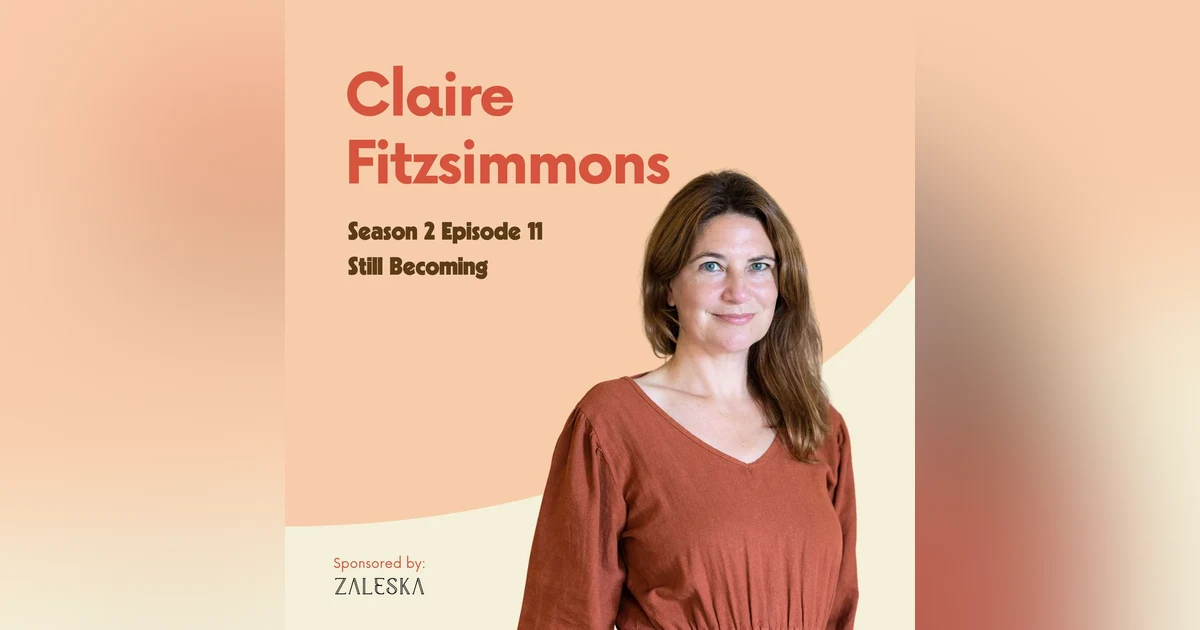
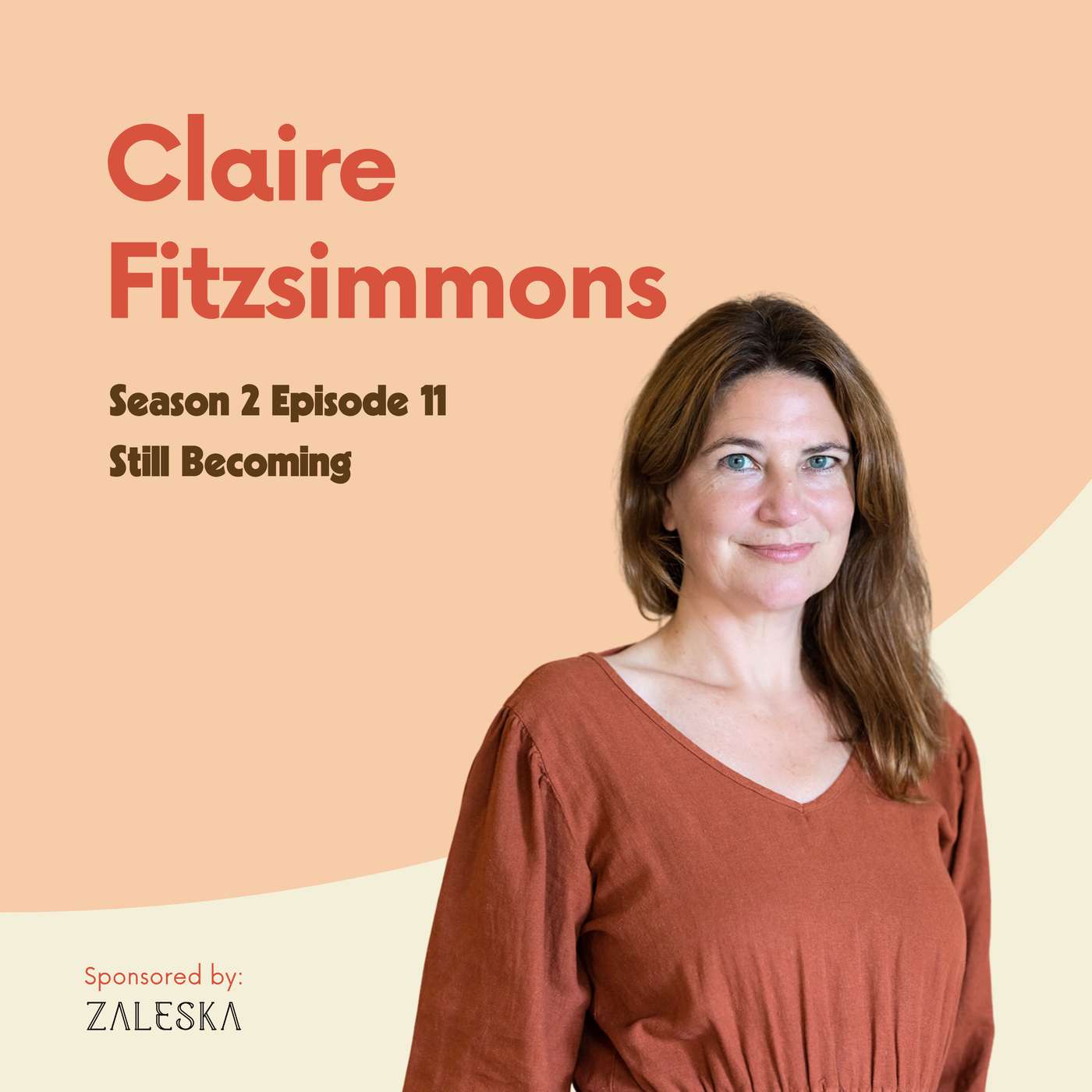
In this thoughtful and inspiring conversation, Andrea and Krista welcome their first UK guest to the Half Betty Podcast - writer, wellbeing curator, coach, and podcast host Claire Fitzsimmons.
Claire is the co-founder of If Lost, Start Here, a wellbeing company supporting people as they navigate life’s wilds with greater emotional honesty, clarity, and self-compassion. She is also the host of the podcast A Thought I Kept, where she explores the ideas, moments, and conversations that stay with us long after they happen.
This episode marks more than simply Half Betty’s first conversation with a UK guest; it feels like the beginning of a meaningful bridge between communities, cultures, and shared conversations around midlife, identity, growth and transformation.
Together, Andrea, Krista, and Claire explore the cultural differences between North America and the UK when it comes to visibility in midlife, emotional expression, and conversations about women’s evolving identities. They discuss the uniquely British tendency to soften discomfort with humour, the challenges of asking for what we need, and why so many of us are still learning how to articulate what we feel.
Claire shares her personal story - from witnessing her mother’s struggles with mental health in midlife to navigating her own experiences with anxiety and depression - and reflects on how these experiences shaped both her work and her understanding of whole and well-being.
This conversation gently but powerfully challenges the modern obsession with wellness hacks, optimization, and the endless pursuit of self-improvement. Instead, Claire offers listeners a more compassionate and sustainable perspective that our health and wellness may not be something to chase, but something that we shape within the beautifully imperfect reality of everyday life.
At the heart of this episode, there is a sense of unlearning of emotional courage and the moving truth that midlife is not a finished chapter, but an ongoing becoming.
Sometimes being lost is not a signal that something has gone wrong. But. simply the beginning of a new chapter. And, for some, an entirely new book.
Bio
Claire Fitzsimmons is a wellbeing writer, coach, podcast host, and co-founder of If Lost, Start Here, a wellbeing company on a mission to help people find their way to a better place.
As an ICF Associate Certified Coach and a certified Emotions Coach Practitioner, Claire works with women navigating change, burnout, emotional overwhelm, or an experience of feeling stuck. She helps people untangle what they’re feeling, find clarity, and create a sustainable wellbeing practice that fits the shape of their everyday lives.
Claire’s writing on mental health, emotions, and midlife wellbeing has appeared in Happiful, Breathe, The Simple Things, and others, with features in Stylist, Red, and Psychologies. Her first book, If Lost, Start Here: Wellbeing for the anxious, disconnected or uncertain, co-authored with Amanda Sheeren, is available now.
Claire is also the host of the podcast A Thought I Kept, where each week she speaks with guests from across creative, academic, business, and wellbeing fields about the ideas that stay with us for a lifetime. (Andrea was a guest on Claire’s podcast with her conversation found here: A Library made of Moments )
Book
If Lost Start Here - Wellbeing for the Anxious, Disconnected or Uncertain
Created by Amanda Sheeren and Claire Fitzsimmons
References
Website https://www.ifloststarthere.com/
Instagram https://www.instagram.com/ifloststarthere
Facebook https://www.facebook.com/ifloststarthere
YouTube https://www.youtube.com/@AThoughtIKept
Linkedin https://www.linkedin.com/in/claire-fitzsimmons-4130aa100
Podcast https://www.buzzsprout.com/2521342
Substack https://moregooddays.substack.com AND https://itsalotactually.substack.com
Claire’s Five Words
Emotional
Curious (thoughtful)
Creative
Loyal
Tenacious
Sponsor Information
Zaleska size-inclusive jewelry
Use the code HALFBETTY and receive 20% off your first purchase
Connect with us
Website link here
Instagram link here
LinkedIn link here
Facebook link here
Leave a voicemail for us
https://www.halfbetty.com/voicemail/
Guest: Claire Fitzsimmons
Founder/Host/Producer: Andrea Rathborne
Producer/Co-Host: Krista Gruen
Editors: Andrea Rathborne & Krista Gruen
Audio Engineer: Alex McCarthy
Episode sponsors: Zaleska size-inclusive jewelry
S2 EP11 Claire Fitzsimmons
[00:00:00]
Claire: I thought I'd arrive at midlife and there would be the endpoint. there would be, you've arrived, you're here, you've learnt everything there could possibly be to learn about the world and yourself and who you are, and I, I thought it was the end of the story.
Andrea: Hello, and welcome back to Half Betty. Krista and I are especially delighted to share today's conversation with you because this episode feels like a beautiful layer to all the wonderful voices that we have with our Half Betty guests so far. It feels, in many ways, like the beginning of a bridge, one built through shared curiosity, thoughtful conversation, and a mutual fascination with what it means to live well in a world that often feels anything but calm.
Our guest today is Claire Fitzsimmons, a writer, wellbeing curator, certified emotions coach, and co-founder of If Lost, Start Here, a company built around a rather refreshing idea: that wellbeing may not be something that we need to endlessly chase, but something [00:01:00] that we can shape within the beautifully imperfect reality of everyday life.
I first met Claire through the Do Lectures community and was immediately struck by her presence. She has this rare ability to be a voice of calm in the world's noise. In a culture that rewards urgency and certainty, Claire offers something much more interesting: steadiness, emotional honesty, and the kind of wisdom that never needs to shout to be heard.
In this conversation, Claire shares the story of her own becoming and reminds us that being lost isn't necessarily a sign that something has gone wrong. Sometimes it is simply where the next book begins. We are so honored to share Claire with you. This is Half Betty with Claire Fitzsimmons
The digital experience of the DO Lectures, which is where we initially connected,
That group that I was so honored to be part of, 'cause what an amazing experience at [00:02:00] just the right time last year. I had shared that Half Betty was a new experience and that it was focused on women in their midlives.
And, that channel literally blew up with women from mostly the UK, I think some of them were wanting to start parades. They already had all the swag designed. They had, conferences and gatherings. And
it felt like, wow, the British women in this period of life, they're all in.
This is a conversation that isn't, new, but it's really got major momentum. And I had shared with Krista the experience of being in that channel and hearing from all of these women who said, "Send us Half Betty things and we're gonna put them on our cars and on our computers and on our backpacks."
And I thought, "Gosh, this is really something that we need to, think about." [00:03:00] And then lo and behold, Claire became that beautiful thread
across the continents and the water to become our Half Betty guest, and to infuse it
Claire: Yeah, I really do remember that moment actually, because it was sort of-- that thread had this funny inconsistency to it. There was a moment that people weren't showing up. They weren't very visible. Occasionally someone would pop on,
The energy was very disparate. And I remember very clearly that moment because it was like, there is something finally to talk about. There is something here to hold onto. What surprised me is that I think until that point, I thought it was a lot of men that had a particular way of being in business, that sort of were all about, being creative, being slightly do- idiosyncratic, doing business in a very like, almost like on the edge of hippiness.
And I really thought that was the community I was in. And suddenly all these voices of these women came through, the surprise for me was midlife women, because [00:04:00] I remember showing up in that community being, "Am I too old to be here?" I absolutely had started to have that thought.
Like around my midlife, I started to have for the first time, "Am I too old to be in this community?" And it was so reassuring for me to see that just outpouring and all those voices and all those people who were really supportive and wanting to be visible and then wanting to identify with this.
Because it was a real marker of people saying, "I don't just want to sort of hear about Half Betty. I want to be part of the movement you're starting. I want to be visible. I want to help this. I want to support this. I want to make this happen for you because I need this. Like, I need this so much." And I remember that so much, that fizz of energy around it.
It was wonderful. It was so exciting.
Andrea: It really was. Andthough it's been tempered because of the work that Krista and I have been doing to build, it hasn't been, set aside as much as it's been held, it's been held in a special [00:05:00] place, recognizing that there's a time for it to to find its, momentum and its spark and its energy
And this is the beginning of that very thing, and that is having this conversation with you and hearing from you from Britain, from the UK, and, re-energizing that spirit that was there because we see and hear that this is a conversation that wants to be had.
We recognize that it is,is in another part of the world, and what's going on in the UK for women So there's this excitement around hearing from more voices of women of the same chapter, but with a different nuance coming from another part of the world.
And it feels like a very momentous for us to continue to, share and build [00:06:00] with all of our, guests and our listeners this movement of story and encouragement and the challenges and what we are all in together. So thank you for being the beginning of our UK movement.
Claire: That's very exciting. I feel like we should have a sort of an anthem or something, some moment of I don't know. There should be something playing in the background as you say
Krista: it
Andrea: Champagne. Cha- champagne flutes
Claire: A gin and tonic shared together
Krista: I love it. Bubbles, Or non-alcoholic if you choose. How about a cup of tea?
Claire: Do you feel the experience that hopefully you're connecting with in the UK, do you feel like that is remove to what you're experiencing or have been experiencing so far where you are and the guests and the conversations that you've had?
Andrea: Interesting. from where I sit and, and with a little bit of a, um, an injection of the UK, [00:07:00] my Mum is, born, raised in the UK, um, immigrated to Canada in her late 20s and stayed. Um, but all of my Mum's side of the family still reside in England. and so I've got, cousins who are my age or in their midlives over there, and then of course with yourself and the rest of the women that we heard from in that experience with the Do lectures.
I do think there's something... it's not that it's fundamentally different what women are talking about or the stories that are shared. it's the challenges and the unknowns and the big kind of disruptions that seem to occur in this period of time.
Those feel very consistent. But I think perhaps it could be more of a society influence or the influence of cultural and societal, [00:08:00] experiences. It could be access to information or, um, in the case of, of hormones or in the case of women's health, of course there's gonna be different experiences held by women in the US, in Canada, and in the UK.
And so I think some of that might be influencing some of the stories. Um, and I say this only as an opinion and as a feeling, less of being right But I find that the British tend to be, more irreverent and bold and, I'm gonna stay with that. There's an irreverence in the
Krista: less apologetic?
Claire: Yeah, agreed
Andrea: Canadians are, they're so apologetic, and they're toned down and always thinking, Yeah, I totally agree, Andrea.[00:09:00]
Yeah. I think there's a fire, in the Brits in general and I think we see that in women in their center lives or in their midlives in the bold ways that they're showing up and what they're saying without, to your point, Krista, without apology.
This is what we want to do, is to be able to infuse all of these things with one another, these ways of showing up that we perhaps need to be exposed to, to be able to see what is possible. So as Canadians, we would love to channel some of that British irreverence,
Krista: I can't stop nodding. I just like, yes, yes, yes, yes.
Andrea: that's,
Krista: everything you're saying, Andrea, yes.
Andrea: maybe that's why I've always had this deep sense of connection to Britain because I do, I'm, I, [00:10:00] personality-wise am effusive and I say things and I'm passionate on the outside and I express, and I think I'm a lot for many Canadians.
Um, and I think I'm not for a lot of Brits.
Brits
Krista: Canadian.
Claire: You're just here with us. I feel like you're naturally sitting with us very much so. That's such
Andrea: And not
Claire: reading of yourself. But
Andrea: So
Claire: Such an interesting idea, isn't it? That in certain cultures there is a closer alignment that you feel. And I was wondering, as you were saying that, I spent the first part of my midlife in California.
So I left California when I was 45 to move here, andI think my focus while I was in California, if there was a focus at all, was around not aging, was around not being in midlife. There was something to it that was, like, I was in Marin, it's very health-conscious. It's very much about how you show that you feel outwardly, maybe not about how you feel actually.
There's a real [00:11:00] contradiction there. I really felt that need to look after myself so I didn't age. And there was such freedom that I found coming back here because there was something about, it's okay. It's okay to be the age you are. Like, it's okay to be visible. And I would never say that I was ever bold.
But I would say there is something about being visible and being, not necessarily held within that culture, but witnessed and seen and present in that culture. That felt really refreshing, and I hadn't noticed it until I moved. And then I was like, "Oh, I'm allowed to age," which felt very, very taboo.
Like, I'm allowed to age. I may not like it all the time, and it doesn't make me necessarily excited, but it allows me to be where I am, and it's fun, like, witnessing what other women are doing with that. I like seeing, these extraordinary women [00:12:00] who are not-- Like maybe they're bedding down their lives.
Maybe they're in a period of transformation. Maybe they're just accepting something. But there are all these different possibilities for what that midlife can look like, and I love that. I love seeing that, and there's a certain pride in that, I think, of seeing that. Yeah. I really like it.
Andrea: What an experience to be able to have had a very different view from your time in the US, in California, and then back to Britain. it offered something that many of us often don't have, which is that perspective. Did you find that there was anything that you longed for that was in the US or in California and that experience that you wanted to take back with you?
Claire: Yes. I felt, um, and I think this is probably less around-- Well, I wonder whether it's less around midlife. I felt, um, [00:13:00] like I couldn't connect emotionally in the same way that I did before. and I don't know whether that was more important because I was new here, and I haven't lived in the UK.
Like, I was born here. Um, I haven't lived here for-- 14 years. So everything when I got back here was about starting again. There was lots of, like, finding a new home for my family, figuring out what I was gonna do, what the shape of the business would be. lots of big questions that I had.
But also, like, who are my people? And I'd left this really wonderful community in California, and I felt like I had my friendship circles. I knew how to show up emotionally with them. I knew what was allowed. I felt like I took up more space in what I was feeling there. And I re-remember coming back here, it was mid-COVID.
I was terribly excited but also sad about what I'd left. I was very uncertain. I was very confused about some [00:14:00] things. And I remember showing up at the school gates and wanting to connect, really wanting to be like, "Okay, who in this group of people, um, who are my people?" And I realized very quickly that the way that I was allowed to connect had very little to do with what I was feeling, and very much to do with, um, the sort of more surface level.
Like, what time are you dropping off our kids? Which playgroup? Like, all these different, like, outward things, and I just couldn't find that kind of emotional connection, and I think I was really longing for it. And it has taken me a while be, like, honest and open about what I feel here and for that to be okay.
That's the thing that I really noticed. And I don't know whether that's more acute because I'm, you know, I, I, I'm in midlife, so I feel a lot of feelings. There's a lot of things going on there. And constantly being, "But I'm fine," when you're not fine, or, you know, "Oh, I'm just a little bit busy," or, "Oh, I'm just a little bit tired."
Like, those things [00:15:00] that we mask what we're really feeling. I really felt like I had to stay at that level for quite a long time until I could, you know, deepen relationships. But I got to that place a lot quicker in the States, and I was there a lot longer. But here I found that quite tricky.
Krista: Which is interesting because I feel like it's a little bit of a contradiction of what you just said prior. So can you dig into that a little bit more? 'Cause now I'm curious.
Claire: Yeah, happily. So the contradiction is about like how you can be more visible and how it's less of a taboo being in midlife and all those things. Absolutely.Moment about, and I think this maybe happened just before I got here.
Um, do you know about Davina McCall and all her wonderful work around the menop- Yes. So there was a real moment that there was this documentary, people were talking about it, the conversation really shifted, and the word menopause was said aloud, and talking about HRT became something that people were able to share.
And so they're all [00:16:00] like, "Okay, what is menopause? What's happening around it? What's going on with HRT?" Like all those sorts of conversations. And that I think is really, really exciting. I think the piece we are coming to terms with, is that piece around emotions.
Because I think what the Brits don't do, I think we can do a lot of things really well, and also inherent in our culture is this idea that expressing emotion is itself It's not a taboo, but it is something that can be uncomfortable, and uncomfortable as we express it and as we receive it. And I think that's the piece of it that is still something to be looked at and explored
Andrea: Interesting
Krista: I wonder if that happens with humor. Does it, would you say? Because, British humor is the best. I love it so much, and I wonder if what you're saying, there's ways of dealing with emotions through humor instead [00:17:00] of really opening up and being vulnerable.
Claire: Yeah, absolutely. So I grew up in Manchester and, um, yes, yes. So there's a wonderful sense of humor. Mancunians are wonderful. They're very, very funny. That's the way that you show love. Like sarcasm is a love language. it just is, and humor is a form of connection. So absolutely, I think there's so much in that that's really exciting and really-- Like I find it reassuring.
So when I go up north, so I live in the south of England, when I go up north, I understand it, like I know how we're communicating. And also as somebody who is sensitive. I've always been that person who maybe there would be someone in the family that would say, "Oh, you know, it's not worth crying over spilled milk."
That kind of thing, right? Just any of those phrases or, "Oh, you're all right, love. Don't worry about it. It might never happen." That kind of s- Like there's lots of different ways of saying, "Don't feel what you [00:18:00] feel," and let's just move on and tidy it up and I think there's a lot of reassurance in humor, but it's also a distancing thing too.
Like it's something
Andrea: It's, yeah it's a protective,
Claire: can't fully occupy. Yeah. and I can see what that does, uh, the, you know, the opposite effect of that, of being like, I, I think I came to believe that being sensitive and feeling something and expressing emotion maybe wasn't always appropriate, and we should just shrug it off and just move on.
And, and I don't believe that anymore, and I think there's a lot of unlearning that happens in midlife around that too. And now when somebody does do the humor thing with me, so when I do go up north and there is that reassurance, there's also-- I find myself being like, "Actually, no. Like this is not the moment that we're gonna tell jokes.
I need to connect with you." And, and like that really came to the fore, um, we, our family experienced a couple of kind of devastating losses in the last couple of years, and it was really interesting having [00:19:00] to say, "I need to feel this right now with you. I need to do this and go through this with you," and push back a-against that.
And what was really interesting is how possible that can be and people that I thought couldn't meet me there could, but I had to ask.
Andrea: Hmm. That's beautiful, and it, highlights our opportunity in the world to seek out and learn from one another and recognize where there are experiences or interactions or connections that have been built upon something that perhaps we're not practicing.
And then to be brave or courageous, which to your point, I wonder if that's part of what is inherently infused [00:20:00] into us in midlife is this courage to ask for the things that we need, um, and to bravely push through social, um, norms
to bring something that we have experienced somewhere else and say, "Let's give this a try because I've seen it and it works."
Um,
it reminds me maybe
I am really, moved by the courage that it would take for you to go back to your home where you know that it is not socially the norm to be expressive and to be vulnerable, and to ask for what you need. That's so inspiring. I can feel how big that is,
I am [00:21:00] honored to hear your experiences through two different lenses and your bravery in the return. it's like you've gone back to the UK with these new ways of experiencing life and interaction and human connection, and you're now a champion to, to spread this and to, have people practicing it in so much as you also, have this amazing podcast, and it's really an experience.
I've been fortunate to, to have a connection to that, but was that born of some of this work that you're doing or some of this experience that you're having?
Claire: I think that came from a slightly different place. I think that came from more, uh, the, the wellbeing angle. So what I'd started to see, is that the sense of fatigue and overwhelm and disconnection that I felt [00:22:00] the women around me were experiencing, and that was, my peer group here, they probably range from, 35 to 60.
Um, and I would find that we're having conversations that were almost like this exchange of information. Like we'd say things to each other at the school gate usually. Um, "Did you listen to this podcast? There was this amazing thing about, you know, if I could only wake up at 5:00 in the morning like such and such person says.
If I could only hack my microbiome. If I could only,figure out the five things to do between 3:00 and 5:00 PM, then I will solve this problem of my life. Like, I will figure this thing out, and I will be a happier person." And maybe it wasn't articulated quite that way, but there is something here that this person, this expert, has to tell me about how I'm living my life.
And then we'd share the latest nonfiction bestseller, right? Look, I mean, the wonderful thing about being in the [00:23:00] UK is people communicate through culture. they communicate through books and exhibitions and art and music, and I love that here. There's a saturation of ideas, and there is so much that people want to talk about.
What people are thinking about, what they're putting out in the world, like that's the thing that feels like a coming home for me. Um, so we'd be talking about a nonfiction bestseller about mastery or about,the glucose levels or whatever it would be, and that would be that week's conversation.
And we would share these things like our form of connection. And the week after, they've gone. It would be like, "What's the next thing? What are we doing now? What's the latest thing that we're not getting to? What's a new thing that we should getting to?" And I felt like we're in something that is ever-changing and ever-evolving, and we're not finding our footing, and we're feeling worse because of it.
And we're berating ourselves that we are not doing life right. We're just not doing it the way [00:24:00] that we're supposed to be doing it. And I started to wonder what really stays. what stays with us out of everything that we consume and we absorb, and what are the things that genuinely help us? And they help us in a really positive way, so that thing doesn't become the thing that we beat ourselves up at, 3:00 AM.
It doesn't become the thing that, is another barometer that we could never, never, never match. Um, and I love books. I was a literature student, and I remember being 17 and reading Dubliners. Which is this wonderful book by James Joyce. And there was this moment, It's a series of short stories about people living in Dublin, and each of those stories is based around an epiphany, a moment of realization, a moment of being fully present and cognizant in someone's life and there being a before and an after.
And I was really wondering about whether we still have moments [00:25:00] of epiphanies. The things that really like, we have that aha, and then things, everything changes. And at the beginning, the podcast was going to be called "The Epiphany Diaries." It was supposed to be about this really intimate sense of the before and after moments of our lives.
I really liked that. And as I started to tease this idea around people, I realized that's not how ideas work. Like, often some people do have the epiphany. They do have the wonderful clarifying moment. They do have, you know-- Like you did this beautiful, detailed, textured, extraordinary scene in your life.
There is just something that was so visceral about that. But some people, they receive ideas in a really different way, and they have something that niggles at them, and they don't really understand it. But that will be the thing that they're like: Oh, I, I did read this line in a book, and I was 27 years old, and I didn't understand it, and I've thought about that line ever since.
And that's where I'm like: Oh, what is that thing?And then how does it help you? So each, each week [00:26:00] there are these conversations with different, mostly women, and these ideas are just-- It's almost like, um, I hadn't realized how intimate it was until I started doing this.
I thought it would be somebody saying, "There was this podcast and I heard it, and that was really wonderful." And it's never flippant. It is deeply thought through. They keep it like, you know, the, the visual of the podcast is a locket, um, because I love this idea about, the Victorian era and these precious objects that we have and these things that we keep close to our heart space.
And that's how I've found that people have received these ideas and these thoughts, and they hold them tightly, so tightly, and they change their lives. And we say every day, "Here's a podcast that will change your life. Here's a bestseller that will change your life." And so a little of it does, but some things do, and that's what I was really interested in.
Andrea: I [00:27:00] just had, and Krista and I share this quite often, so we sometimes have to edit it out because we say it so frequently. But, it's a sign of being moved and having a moment, which is goosebumps that occur. Um, and I just had full body goosebumps with this description of, finding something honest and meaningful and moving, amidst all that we're consuming.
That just landed so hard. I, I don't know if, um... I'm sh- I see Krista nodding on camera. But y- I just... It's
Krista: don't mind me, I'm just gonna be nodding the entire podcast.
Andrea: it's so
Claire: the moments, aren't they?
Andrea: Yes.
Claire: They are the moments. It's that moment that-- Like, I love those moments, that moment that you feel it and you don't-- You almost, there's [00:28:00] nothing to be said. There is nothing to be said. Like, it's just, it's there, and that's enough. And I really love those moments. And I also find that I have to justify those moments.
I have to be like, "Okay, so now that moment's landed, I have to say something meaningful or I have to make something of it." And I wonder whether it's enough to have the moment. Like, we're so hyper-productive about everything right now, and we have to... Like, I watch how my, my children consume information, but also how they put things back out there.
And there's so little space between receiving and sending something back. You know, there, there's a sort of, they will consume something and they will put something back out into the world. And that moment in between with the goosebumps and when something really lands, I love that moment. I want that moment more.
They're my favorite moments, you know? That's enough,
Krista: Do you think that's teachable to [00:29:00] kids? To sit in that moment? 'Cause I, I can relate to that, for sure
Claire: Um, I, I don't know. I think I, I would hope it is. I would hope it is, and
Krista: Maybe you have to catch it, you know what I mean? Like, you have to witness it and watch it happen, and those are rare. And then when they do happen, you're like, "Ooh, look at how you feel." for example, my one boy was having, some big feelings, let's call them,
We got him registered for a class, and He didn't wanna leave the house. Got him in the car. Didn't wanna get out of the car. Finally got him in. He did the class, and then he wanted to stay after and play at this gym that he was at.
And when we were on the way back to the car, he was so happy. His whole body was energized. His eyes were big. His energy had completely shifted. And as we were walking back to the car, I had this flush of memories [00:30:00] come through of what had happened just two hours ago, and I looked at him and I said, "Ooh, can you take a moment and feel what you're feeling right now?
Really, like, register it with your body and your mind, and just take a moment to feel how good you feel right now and how scared you were a couple hours ago?" And maybe not scared, but nervous would be more of the feeling he was feeling. And I was automatically thinking about the next week and if this was gonna happen again, and I offered, uh, something up to him just in the moment.
and I said, "Look, if you want, take my phone and record yourself talking to your future self and say whatever you wanna say to encourage yourself- And support that person in the future to know that you overcame that moment and you got through it and you did it. And he kind of smiled and he was like, "I don't know, Mom."
He's like, "Can I watch the videos you recorded [00:31:00] of me jumping into the foam pit?" And I was like, "Sure." So we did that for a second, andwe got in the car, and I was like, "You can just have a private moment. Take my phone, whatever you want." And He's like, "Okay, Mom, I think I'm ready to record."
I said, "Okay, you know how to do it. I'm just gonna be sitting here," in the driver's seat in the front. He was in the back. And he recorded the most beautiful, authentic, vulnerable piece of advice to his future self. "You did it. You got this. I hope you're listening." it was this beautiful, organic piece, and I thought, "What a lesson for me to learn." Cool that I was able to be there in that moment and capture and notice it for him. I think those moments are really rare. But I love what you're saying here.
it can be so beautiful if we allow ourselves to just have that moment.
Claire: That's an incredible gift to give him. Like, to really make that visible to him and highlight that and give him this idea that you can savor what you did. You can realize where you were [00:32:00] and what you achieved, and you can-- Like, the idea that he, he even has a future self as well. That's what I found really fascinating, too.
Like, that you can say to him, "You are in conversation with a future self, and there are things that you're learning now that you get to say to that person, because that person will be you in a week, and he'll want to hear what you have to say." And so you made that apparent to him, too. there's so much in that.
And also you allowed yourself to experiment with something as well. Like, there was like, "Ooh, let's just try this. Let's just see what happens." Like, that's really exciting. And I think that's a piece, too, with our kids, isn't it? Like, when you ask, "Do you think this would work?" Let's find out.
if that's something that we want them to have, let's find out if it does work. Because if they are on their devices and they believe that the world is an infinite scroll, let's find out ways to interrupt that and say, "It's not an infinite scroll." Like, there are moments that you can just be in the moment.
So [00:33:00] I love that experimentation and that try and what you offered him. That's incredible.
Andrea: Mm-hmm. And such a good, topic, Krista, too, is asking that question, is there something teachable in this? Because It feels as though there's so much accessible always that I don't know that we have the same curiosity or drive to be curious because it feels as though the answers already live somewhere, and all we have to do is just,be served up.
Um, and I wonder if that's maybe part of it is the teachable moments and the curiosity of not knowing. And I think, Claire, I'd love [00:34:00] for you if you will, share a little bit more around the experience that you're having in these conversations with people with your podcast, A Thought I Kept, which comes from a place of curiosity, where you're prompting people to recall and share something that doesn't exist anywhere yet, um, and what that perspective that's offered you through that experience
Claire: Um, if we stay with curiosity for a moment, I think curiosity is something that can, um, I, I find it very affirming and I think can be really terrifying for some people. And I say that because with the podcast, with the conversations I am having, [00:35:00] there is so much uncertainty there.
This is what I've started to learn. There is so much in the not knowing that is rich and beautiful, but so terrifying to people. And I'm someone who is naturally curious. I feel quite comfortable in that space. I never ask somebody beforehand. Or sometimes people volunteer it, but most people, I, I don't want to know what they're bringing.
Um, and there is something about the aliveness of curiosity that I really like, and there is something about the aliveness of their relationship to the thing, because sometimes what I've found is that people want to hold onto something and they think that's the right thing. But if you allow yourself to get curious and to get a bit uncomfortable and to mull over it and niggle at it, an hour before the podcast recording, you're like, "Oh, it's that thing.
That's the thing that's really stayed with me." And so I, I, I [00:36:00] think I'm really shifting, m- my idea about giving space to others and allowing space for ideas and allowing space for life. And that's really hard for me 'cause I think I'm someone who's also naturally quite anxious, and anxiety and curiosity don't sit well together sometimes, and that's how I know something's tipped too far.
So if I'm feeling curious and I'm excited, anxiety's out the room. If I'm feeling very, very anxious, curiosity is dead under the table. And so there is something for me, I think, in those conversations about not letting anxiety lead and allowing curiosity to lead, and to allow for that uncertainty to exist as well.
I'm not sure whether that really answers your question, but that's where I'd probably go with it.
Andrea: No, it absolutely does. That's, yeah, that's really
Krista: Yeah, it's really- It lands, for sure
Andrea: I was just gonna say such a landing with that.
Krista: Mm-hmm.
Andrea: And words are something [00:37:00] that are, held so beautifully with you and by you. And something that Krista and I have been noticing and reflecting on through, the evolution of Half Betty and the conversations that we're having with all of these different women, is the strength that comes from being able to share their words, the way that words mean something to them, um, the words that they use to describe their own stories, because it is unique, and maybe that's the thing is that it's that, agency, which is another word that we're seeing show up.
It's the agency of knowing that our words are our words, and that we get to have them and share them when we want to and we're noticing that when we ask our guests if they might share words that they feel connected to or that resonate [00:38:00] deeply or that they feel embody who they are, it really creates this interesting pause.
And to your point, sometimes they're uncomfortable. but it seems that if you give the space after asking people, "Do you wanna share a few words? Five words that you feel connected to." If you give enough space, every person has come to a place where they get excited, and you can feel their energy building as they're thinking about their words, and maybe the first word that they share comes out a little bit slowly, and then all of a sudden it's almost like this floodgate opens and people feel empowered to describe themselves through these words.
And it's a really [00:39:00] special opportunity for all of us to be given that space and to be offered an opportunity to express who we are through our words. Um, I love your, use of words, and I love your descriptions and the way that you handle words so carefully and beautifully.
And I wondered did you come with any words that you feel deeply connected to? and if so, would you be open to sharing?
Claire: I mean, words are everything, And I love how they set us free and they trap us, too. Like, I think there's just something... And I, I had that experience, too, as I was thinking about words. every word that I'm bringing that I have a real connection to, I also know where the shadow side of it is.
And so it's not a wholehearted like, there is this word and it's a big shiny word, and it means one simple thing. There are words [00:40:00] that I think I have been in relationship to my entire life, and sometimes that relationship has been a really good, healthy, positive, strong one, and other times it's been wobbly and tricky and difficult.
But those words still hold something for me. And maybe the first word to start with is loyalty, because I have a loyalty to words, I think. There are some words for me that I'm gonna hold onto for dear life, and I'm gonna wring the meaning out of them, and they're gonna be there for me. But loyal is a word that I really love, and I think in a sense maybe it has been displaced.
it has a sort of old-fashioned quality to it, I think. Like when we think about loyalty, it feels, to me anyway, of another time. and loyalty to me just means I love who I love, and I will love you forever. It's friendship, it is connection, it is deep needing to be alongside somebody for a very, very long time.
It's duration, it's permanence, it's all those things. and [00:41:00] I, I like how it makes me feel. I like who I am if I'm being loyal. I really like that about myself. Um, and also there's that doubt in that it's like, do we get to be loyal anymore? because of those changing circumstances, you know, I've ma- moved countries, I've moved careers.
Um, so loyalty is something that for me is a real anchor. Like, I get to change my life, but I get to hold onto the people that I care about. Um, so loyal is something that's really important to me. Um, but it also goes with my next word, which is tenacious. So I think loyalty is about other people. I think tenacious is about myself.
That's how I hold onto myself and what I care about. And I have had that word alongside me in various iterations, I think probably since my teenage years. And in those years it was something that was about fortitude and resilience. Um, I went to a kind of grammar school, [00:42:00] and it had this Latin saying with the coat of arms that translated as, "He who endures conquers."
So the idea that you keep going, you endure, and you're gonna get through it. This was a school that had lasted for 500 years. It had let girls in, I think, in 1987. Um, I was one of the earlier years. So it had this real sort of masculine side to it still, this real sense of like, you will step into this space and this will be who you are.
But it also really worked for me because I knew how to endure. I absolutely knew what that version of conquering meant. It meant, academic success, and that served me really well for a long time. And I've had to unlearn that version of that word because it got to a point that I was like, "I know how to, how to do academics.
I know how to perform. I know how to hit goals. I know how to be highly productive." And I [00:43:00] hit midlife, and I couldn't be consistent with my energy anymore. Like, I went through a period of chronic fatigue because of hormone imbalance that, I didn't understand that at the time. So I was deeply inconsistent.
I wasn't producing the way that I thought I should. I wasn't successful in the way that I thought I should be. And so that tenacity that I really prided myself on, I had to reframe and relearn that and make that word mean something else to me. And now, now that tenacity is about choosing intentionally what matters to me and allowing that its own aliveness and allowing that to exist.
And you said something about agency, and I really like that word, but I also like the word authorship. And so that tenacity for me is about how do I get to author now where I am and what comes next, and unlearn some of those messages that I have had from a very early stage in my life. Um, [00:44:00] so tenacious would be another one.
And last one, we can go with creativity. So creative, um, again, it's something that I have been alongside my life, and have never allowed myself to have. So creativity is like, the boy next door that you've loved forever, but he's gonna go off and marry somebody else, and you're gonna have that sense of longing and yearning.
And so From the earlier stages, creative w-was about, you know, it was an art practice. It was the person in the room that they're the creative person, you're the smart person. They're somebody that does creative things, you do, smart, practical, successful things. And the career I chose first for myself was being a curator, so helping other people with their creativity.
So I worked in the art world for 15 years, and my job was to help other people be creative, and I never understood that I was a creative person too. [00:45:00] And it was only when I left that world, and again, all this unlearning of midlife, uh, that I realized that I want to be the person that is creative.
Like, I want to be the person that is smart and creative, that is successful and creative, that the two can go together. And so creativity and being creative is something that I think I hold in my heart now. And rather than it be the person that's sort of distant from me, it's something that is, you know, we're holding hands and walking down the street and I'm like, "Creative is my person."
So I think they're the words for me, and I like how they have shifted and gone in and out of my life. But I love how in midlife I get to hold them differently. I really like that.
Andrea: I love your description of the way that those words have grown and shifted and changed and evolved with you. [00:46:00] Um, and you used a word that I heard a couple of times, and it feels, again, so important in this time, and that is unlearning. You talked about unlearning and how that became quite prominent in this part of your life. Um, do you see it showing up elsewhere?
Claire: Yes. Like unlearning for me is almost the biggest surprise of my midlife. It's the thing that I hadn't anticipated because I think I thought it would be, one of two things. I thought I'd arrive at midlife and there would be the endpoint. there would be, you've arrived, you're here, you've learnt everything there could possibly be to learn about the world and yourself and who you are, and I, I thought it was the end of the story.
And also, this is a beautiful contradiction as well,So my mum, when she arrived in midlife, [00:47:00] fundamentally changed who sh-she was, but in a way that wasn't of her own agency, and I've only come to understand it now. So she went through a period, um, of change then, and that's how it was described to her, the change.
Um, when she began to lose her mind, she shifted who she was. She got devoured by anxiety, um, and I think I was afraid of it. I was afraid that if I got here, then I might similarly lose my mind too, the way that my mum had. So there was both like midlife was an end of a story and what was that end of a story gonna be for me?
Um, and I've really grappled with those two things, and I think the surprise for me is arriving here and realizing that the unraveling wasn't going to be about my mind. The unraveling would be about so much of what I perceived to be true of [00:48:00] life until this point, and then that would be the next part of the story.
Andthat gives me so much hope, I think, about this period, that unlearning does open the next path, the next chapter, the next stage, and it doesn't have to be either of the other two options.
Andrea: Was that for you, um, a thought that you've kept moment?
Claire: So the thought I kept, there is, there's the happy positive one that you've kept, the one that makes you feel good and you hold onto, and the positive one. And there's, the shadow one, the one that-- And that would be interesting to ask people too, but I, I think that's a very immediately intimate conversation that maybe we don't want to go to, but maybe we'll do at some point.
Um, and I think the one thing that I have kept and still think about is I don't understand entirely what [00:49:00] happened to her,
Andrea: Hmm.
Claire: and it might happen to me. And that fear of madness, that fear of unraveling, that fear of anxiety that's-- Yeah, there is definitely something of, of that there. And I think about The time that she had experienced this, I wouldn't have understood what she was going through.
I was very much in my own world, starting a life, being a grownup for the first time. I didn't understand anything of midlife. I didn't understand what that was. I didn't understand h- what was going on in her body, in her mind, and also the people around her I don't think understood either. And so when I've prodded people and said, "Do you know what was going on there?
Did she see a doctor? Did she go on HRT? What was going on for that?" It was like, "There's nothing to see here. That's just what happened to women. That's just what women went through." Um, and now that I'm here, [00:50:00] I only understood what happened to her when,
It was the weekend before her funeral, and we were looking at, um, photographs that we could use for her, um, program, and we started to go through old photo albums. And there were images of us, you know, my mum when we were young. She was very glowy. She was exuberant. She had so much energy to her.
She laughed all the time. She was just the most wonderful woman, and I hadn't realized the moment that we had lost her, and it was only going over those photographs that I could see the dimming of her light, and I could see the moment that I was like, "That's where she's gone." And it was in midlife, and I was like, "That's what I missed."
I didn't know about that. I would never have thought about midlife when I was in my 20s or 30s. I just didn't even think about it. And as a woman midlife, [00:51:00] having gone through some period of chronic fatigue, having gone through a period of anxiety, when I did feel my lights, like I absolutely felt it in my body that I was turning off.
I was like, "I am shifting. There is something wrong here." And I got help really fast because I was so afraid. I didn't want that to happen to me. and it was seeing those photographs and being like, it happened in midlife for her, and her experience was so different
Andrea: Wow. The learnings of those moments, um,
Claire: our mothers went through, when you
Andrea: what our moms went through
Claire: like so much what they had gone through and how a whole generation, so much was missed. So much was missed. And when you think about what you're offering with the work that you're doing, you're offering this moment that we make ourselves vis- visible, but we make our mother's experience visible too.
Andrea: Mm-hmm,
Claire: And there's a real sense of connection, I think, with the generations that have gone before [00:52:00] us and to say like, "I understand so much more of who you were and what happened." And not everybody has my mom's story, but I think there are stories of women who left their lives in midlife, and now we get to see them again.
Andrea: Mm-hmm. That's so
Krista: We are experiencing, people coming forward that are, older, and they're coming forward and sharing moments, and they're opening up conversations, and they're more open than I thought they would be. And I do believe, what we're doing with Half Betty is allowing them to have a fresh perspective, permission, maybe.
Claire: Oh yeah, yeah
Krista: to listen and to think about what happened for them in their midlife, and now be able to share it openly because they feel safe, they feel trusted, they feel they have agency, [00:53:00] whatever that word is for them, authored.
It's really quite beautiful to witness and I would love to hear more stories from women that like, that are my mom's age and older, um, because it's such a powerful, beautiful thing that is happening. It's a funny thing with podcasts because and you could probably relate,we put these out into the world, and we have no idea how they're landing with people
until they're brave or bold enough to reach out or pass us by at an event and say, "Oh, I heard that episode, and I just wanted to say wow, thank you because now I'm doing this," or, "It made me think about this thing in my life differently and, and I..."
and it shifts something in them. It's just so cool but so bizarre that we're sharing these [00:54:00] stories, providing these spaces for others to,listen and share and yet we don't really know... It's not tangible in a lot of ways. we don't know how these stories are landing for people.
But those moments that we do hear, oh, they're the best. They're
Claire: Yeah, that's so exciting that, that you get that, that, that sense that they're in the room with you, isn't it? Because there is this moment and there is a sense that I always forget. I always forget there is a person listening. There is this, but also there is that moment of like
Krista: people listening. Like 70 countries. Like, it's wild. Like, we have no idea who's out there sometimes.
Claire: But this is really lovely idea when you think that like I, I do these podcasts at my kitchen table. I love that idea about the intimacy of it. And I really like the idea that there are all these people taking a seat as well around us. And not in a big [00:55:00] forum, like not in like a sort of a real, like the 70 countries.
That makes me feel like can't breathe. But just in the sense that there are people around the table,
any moment of dinner or gathering, there are people who are chatting, and there are people who are listening. And the one thing I did realize through, through, um, or thought I kept is, yes, there's the one idea that stays with people, but there's also this osmosis.
There is this sort of way that we are porous in ways that we can't even begin to imagine, and we take on these stories. And because we take on those stories, things do shift for us, and we may not even be aware of it. And because we're shifting, the culture is shifting, which is very exciting. Yeah.
It's happening.
Andrea: It is happening
Krista: I love that visual that you just created about being at the kitchen table. When we first started this podcast, you know, obviously we wanted to do all the things, and we still want to do all the things. But we were thinking, we've gotta do video, and where would we do it? You know, what [00:56:00] studio?
It's expensive. we need equipment, we need... Like, all these things were going through our minds. And we were sitting in Andrea's kitchen/dining room, and we were saying to each other, "Wouldn't it be great if we could just set up a camera in the kitchen, in the dining room, in the living room, wherever we are, to make it feel like we're just in conversation?"
You know? All the parties, all the house parties end up in the kitchen, right? We all know this. you just wanna be in the mix, right? And that visual of, hopefully one day, having Half Betty as a real video podcast as well and sitting in a dining room table or, uh, in a kitchen sitting up on the, table next to the sink or something.
that to me is truly what I wanna create for our guests at Half Betty. I really want them to feel like they're just in conversation and, have a cup of tea, a glass of [00:57:00] whatever you want. But, you know, that feeling of just friends sharing, moving through stories, and thoughts, And ugh, just that visual at that kitchen table just, ah,
Claire: I feel like that is what you're doing. Like if you can savor, so if you can pause and take that moment and savor it like you said to your son, like there is a-- I feel like that is absolutely what you're doing. Like you are at the kitchen table. We are at the kitchen table.
Andrea: We, we are at the kitchen table.
Claire: these stories, what you're sharing, we are together.
the three of us, we, everybody listening, we, the movement you're creating, you are-- that's happening. You are in that moment, and you're doing that
Krista: Thank you
Andrea: And likewise, Claire, when we had the opportunity to have a conversation, you from your table and me from my little desk tucked up in the old attic bedroom of my daughter, who's an adult now, um, I, in that conversation, it was more than just [00:58:00] a audible connection with you as you asked questions of me. There was a sense of true, t-togetherness and intimacy in the connection, whereby it made me feel entirely safe and comfortable and deeply heard. And I think that's one of the things that is so compelling about you and what you're doing, and you as a person, is that there is a deep level of presence and, care in how you are with, with people.
And, I love this description that we're all sharing with, um, creating the space in which this [00:59:00] happens, and knowing that we're right now on a video platform from two different continents, and yet there is a sense of us sitting together over tea around a table.
Maybe there's a peak of the English countryside out your window, and perhaps for Krista and I, a peak of the mountains and the light gray Vancouver skies. I thinkit's all of those details and those experiences that do bring people together. They're all important as well.
And I when you talked about, people sharing moments that landed for them. I'm reminded of, a little experience on my 10th birthday when... This is long before there was, any way of capturing the moment unless somebody went and got their great big camera with flash bulbs attached to it.
But, my dad [01:00:00] said to me as I got ready in a new outfit that I'd just gotten as a birthday gift. It was a pair of, olive green corduroy pants, flared, and olive green top with a tiny thin gold thread that ran through some, r- ruching
And I thought I was wearing the fanciest outfit. And I remember standing in the kitchen,
my dad said to me "I want you to take a snapshot of this moment right now." And I said, "I don't... What do you mean?" And he said,
"Look around and name the things that you're seeing. Name the colors, name what they look like, name what they are. Picture what you're wearing." And he said, remember what you're hearing, what you're smelling, what you're tasting."
And because of that snapshot, intensity of, really thinking about and [01:01:00] naming these different things I was experiencing, that has been the most visceral carry-through. Um, and maybe it wasn't like a pivotal awe moment, but it gave me something that feels more tangible than simply a recollection or a vague ghosty memory.
It's given me something that feels super, tangible and something that I can think about with all of my senses engaged. And all that said, I feel like my experience of your stories and of your descriptions of, moments and memories that you have shared or share, come with such depth of those notices and those, um... I think it's just [01:02:00] that noticing that is so, it's just so inspiring because it, it really gives you something that you can carry with you and hold onto andsettle into even when it's uncomfortable, it gives you something that feels yours and yours entirely. Um, and I would be curious how do you see or what do you see as you continue this journey and what's next
Claire: gosh. I often think about the future, not the past. I struggle with nostalgia. It's interesting, as you were saying that, like I have a real sense of scenes in your life, and I think that practice that your dad gave you, how extraordinary that he taught you how to effectively imprint a moment, and you've been able to do that ever since.
That's an incredible gift to give someone. Um, I don't feel-- We have a joke in the house. Um, [01:03:00] I don't feel particularly, nostalgic. I try not to look back. My husband is, so we have this sort of, our time frame don't overlap, and he is thinking like a smell will take him back somewhere, a taste will do that.
All the senses that you described, that will help him locate memories. I have a different relationship to my past, But I do know my future really intimately. Like my future self, I feel like we're always in conversation. That's where I'm much more comfortable. But I wonder if there's a displacement in that too, because I really like where she is, and sometimes she's in a nicer place than I'm at as well.
But I do have a sense that when I thought about, I think this idea about midlife and transformation, for me, is about the sort of settling into, and I know what I'm settling into. Like feel that I'm figuring out my voice for the first time, and I feel like I'm figuring out my writing practice for the first time.
So I have my first book coming out any moment [01:04:00] now. Oh. But I also hesitate to call it a book. I don't know what's going on with that. So I have been writing for a while, and I've been kind of niggling away at this memoir for a little while about unraveling in midlife and the overlapping of generational stories related to madness and anxiety and all those things, and that is not the book.
So that is the thing that I'm still working on. But as I was working on and coming in and out of that, and it's almost like touching the tender wound sometimes, that book. It's feels necessary, and I want it to exist, and it's also painful to do. I started to do the other project, and I have a business partner who's based in California, and Amanda is this amazing illustrator.
And we were just getting turned around in this whole wellbeing world, so we started to think about ideas and images and a journal around wellbeing. And so [01:05:00] our first book is this book, and it's, all about wellbeing for the disconnected and the anxious and the uncertain. But it does it in this really playful, creative way.
And there are essays and exercises and ideas, and the whole idea of it is that- You can get really playful with how you're in your life. Like, we bring so much weight and seriousness and heaviness to it, and we try to pick the right idea. And this book is about having fun again with it, like curiosity is being this guiding principle.
So that's coming out. And then my hope is that now that I feel more confident that I have words and a voice and something to say, that this other thing that's been niggling at me for years will be the next thing that I'm working on. So when I think about myself in the future, I think about myself as someone who is a writer.
That's my hope for myself, is someone who's a writer. That's where I really want to get to, I remember being in my teen years, and that's the thing, you know, what do you [01:06:00] want to be when you grow up? And it's like, I want to be a writer, but writing wasn't, uh, money, wasn't a proper career, you know, all those things.
So that sort of-- I've always written and it's always been somewhere, and my hope is that the next period for me is that idea about being a writer is something I get to have. Um, that feels very vulnerable to say out loud. Oh my
Krista: doesn't it feel great? I love this, this, um, relationship you have to your future self. It's really beautiful. It makes me think that, you know, a lot of things I always hear is like try to be present, try to be in the moment, don't think too much about the future.
just be in the moment. But w- why not think about our future self? I mean, goal setting and all the things, and imagining and that playfulness that you're bringing to it all [01:07:00] feels so natural for you. I love it. It's so cool.
Claire: Thank you. There is a
Krista: You are a writer, by the way. You, you are.
Claire: I mean, it's funny,
Krista: you could re- reframe it, right?
Like, maybe you could reframe instead of I want to, y- I am a writer.
Claire: I was speaking to a, uh, somebody this week, and I was sharing about the book. Um, and she was asking me about it, and she said, "You've written a book." And I I still really struggle to say I have written a book. I still really struggle with that, and I'm deeply, deeply proud of it.
But I do think that, again, it's words again. Who gets to be a writer?
I did a literature degree. you know, I have been around books my whole life, and books are dear friends, and they are-- like authors are, they're not real people. And actually, the gift of the [01:08:00] podcast is realizing that authors are real people for me, and they're not just static things on shelves.
Like they are people who have got up early, or they've gone to the cafe Waterstones, or they've had a child next to them with a migraine, and they've kept on writing. Whatever it would be, authors are real people who are just showing up each day and doing the work. And that has been a real learning for me, actually, through the podcast.
And that's really helped me, come back to the idea that I get to do that too.
Krista: Yeah. Uh, there's something interesting about, the perception that you have of writers and that the struggle is not relating completely to those writers. are there particular authors that you look up to that when you think about being a writer, that's the writer you picture?
Claire: Yes, but also that [01:09:00] has really changed. So I there are authors that I absolutely want to be, and I have met them, and I don't see that disconnect anymore. But that was only really recently.
Krista: Okay
Claire: And I think there has been a shift to, I always thought I was a reader. I was someone who studied literature.
I was someone who talked about literature. I would go to literary festivals. I would watch authors. And I remember the moment, and it was about three or four years ago, that I sat in a tent at a literary festival, and I thought, "Enough, I want to be the person on the stage." And that was a real shift for me. But that
Krista: I, okay,
Claire: shift for
Krista: There you go.
Andrea: Ja
Claire: because, yeah, because that was a moment of saying "Oh, it's possible." I get to change my role here, and maybe I don't, but right now my future self is very happily on that stage. Maybe
Andrea: Oh, you get
Claire: that. But, but right now, I think that's, that's the shift to saying like, who gets to...
Almost like we talked about earlier, who gets to have a voice? Who gets to author? Who gets to have agency? And I [01:10:00] didn't think I had agency in that part of my life until very, very recently, and that has been the shift. And now having interviewed authors and been around authors in a very different way, I fully understand that they are normal people too
Krista: What was that shift for you when you were sitting there listening to the...
Or what, what do you think that shift in that moment with that spark was?
Claire: Realizing that I had something to say too, and that what they were saying, although brilliant and wonderful and inspiring and all those things, that there was no reason that they should have a voice and I didn't have a voice.
And I've always struggled with voice. that's always been part of the whole thing too. Um, and that is also tied to something around I get to have a voice too. And so I think that's what it was about, like the realizing that I had something to say as well, [01:11:00] and not because they were saying something lesser or worse, but I also could say something too.
Krista: That makes
Claire: and also maybe it's about wanting to be heard. So there's knowing you have a voice and also there is something about wanting to be heard. And wanting to be heard wasn't something that was appropriate earlier in my life. Like, if you think about all the good girl conditioning and all those other lovely things we unlearn, having a voice was something that was about being difficult and being loud, being too much, which you shared earlier, Andrea, like that too muchness, and that- that's what having a voice was.
And now I think having a voice isn't about sound or, taking up space or being loud or taking something away from someone. I feel like I've realized that I can have a voice and someone else can have a voice, and this other person can have a voice, and I'm not taking up space away from something, and I'm giving myself the space that I [01:12:00] have probably been yearning for a while.
Andrea: I... That is so moving in a time when, this idea that things in life do not have to be either/or, which I think I grew up always believing.
I just felt like that was what... everybody knows, that it's either this or this? And I think of late, and it's through all these kinds of conversations and from learning from people and from hearing from stories, this sense of there being a place where multiple truths live simultaneously and not in conflict with one another, but actually as partners.
And maybe it's this authorship or maybe it's this agency, but all of a sudden it feels that there's this world where multiple [01:13:00] truths can exist, and it doesn't always have to be that it's this or that.
And I think that has helped me profoundly in many things where I thought, "Well, it's not me because it's them," or, "It's not me and it's her," or, "It's not me or it's him." And now it's like, it's me and her, me and them, and we're all in it together. And it just has created this opening or this revealed access to something that I don't think that I felt was accessible. Does that, does that kind of make sense?
Claire: Yes, because I-- yes. So someone explained this to me recently about this idea that, um... And it was around competition, but sort of int-internalized misogyny in a sense. So this was a little bit more directed at women, but because that person, that woman has this, that's taking away from you. And there is something in that that believes that [01:14:00] as women, we are in competition with one another.
And I hadn't realized that there is something in that that I think I possibly had believed earlier in my life, and that my school environment was very much you are in competition with each other. There's a scarcity resource. There's only one person at the top of the class, all this, ridiculous stuff.
but also if that one person gets a book deal, you do not get to be an author. If that one person gets to be a podcast host, you do not get to host a podcast. Or if that one person gets a promotion, you do not get to do that. And often that is directed at other women because that's who we see.
Like, I don't think we see... Well, maybe we do as well, but I think there is a definite bias towards that. And I absolutely agree with you. There is a moment when you realize there isn't the one place that we're competing for. It's a lie. It's not true. It, a ridiculous assumption that of course you
Krista: we've been
Claire: do this together.
Krista: so long. We've been- it's a constant, like, there's only room for one, and that means you lose, [01:15:00] or that means you're not wanted.
There is space for all of us to exist, for all of us to share, for all of us to shine in our own ways at the same time. And if we are in community together, w- you know, Andrea and I talk about this energy that if we could harness that beautiful, incredible, moving, passionate energy, we could run, the whole world's electricity, you know?
It's so powerful because for years we've just been told and we've believed that there's just this tiny little space for us to exist, and it's just not true
Claire: Do you think that's why in midlife it's happening because we have believed that and now we're able to believe something different, which is why we can come together? Because we now know that it's not about competition and we know absolutely in our hearts because of experience that we get to show up and support one another in ways that we maybe didn't realize before
Krista: [01:16:00] Yes, and all the women that have come before us that have taken action and been bold and brave to do the things without hesitation
Claire: Yes Yes.
Krista: Right? I mean, we can all think of a million incredible women that have just not wanted to be small, whether they were in their midlife. And we could probably look back and see a lot of them that happened forthem in their midlife. I mean, gosh, even Betty White, right?
I mean, the start of this podcast was looking at Betty White and all she has done in the second half of her life, how bold and brave and playful she was, and strong in her beliefs and who she could help in the world and be allies with, you know? I she's just one example, but there are a [01:17:00] million other incredible women who have come before us who have done bold and brave and wonderful things because they just didn't wanna be quiet and they didn't wanna be small anymore.
And so I truly think it's because of them we have been able to take chances or risks or whatever we're doing here. But like, why not us? Why not now? it's silly to think that we can't all be in the presence of each other and shine brightly at the same time, right? Like
Claire: Yeah. To. Yes. 100%. Yes.
Andrea: And I love how you shared that and it's like you can feel the energy that comes from those, women that have been those voices of inspiration. And then I think our opportunity now is to harness that boldness and courage and then [01:18:00] similar to what all three of us were kind of nodding and listening to one another share is, um, are the stories of the women, that came before us like, like my mom, um, Claire, you shared of your mom, and Krista, you referenced your own mom.
But that generation of the quiet stories that didn't get revealed because they didn't have the opportunity, they didn't have the support, they didn't have the space to share their stories. Their stories are as important and as impactful and as imperative for our generation to hear about and learn from and add in as a partner to all those that did have the capacity and the strength and the boldness to be able to be outwardly sharing of [01:19:00] their experiences.
It's those two. and so I think that's another really important piece is carrying forward the stories of the women that came before us that had only their own experience and didn't have the ability to get their stories out. It is almost upon us to now make sure that their stories are highlighted, um, as what we are now going to move away from having anybody to have to experience.
Um, because that's important for our generation, but also the generation of young people coming up beneath us.
Claire: Yeah, there's a real honoring in that. Like, as you were speaking, it made me think about, that reassurance I think that we can get in that generational awareness. And [01:20:00] there is something that I really like about honoring that past relationship or those past stories. But I also start to think about my daughter because I know that I am making visible my midlife to her in ways that my own mom hadn't to me, and I probably tire her out trying to change the narrative already for her about midlife.
Like, I don't want her to be afraid of it. I she's at early teens, and I don't want her to think that there is this moment out there for her that she may not understand, she may get lost in, she may lose herself in. I want her to see midlife as normal and rich and maybe exciting, maybe confusing, but there is something there, and I want it to be visible to her.
So I probably talk a little bit too much with her about, what happens in this moment and how it's not so terrifying, so hopefully our daughters as [01:21:00] well, when they get to arrive here, things have shifted already for them.
Andrea: Yeah, absolutely. And I guess in some ways, I can relate to that with two young adult daughters, but I almost have shifted to a place where I let them decide if it's too much. Maybe that just takes the guilt. I'm just like, "You know what? I'm just gonna share. I'm an oversharer, and you can decide if it's too much.
And If you do, just don't tell me, and then I don't have to worry about it, and I'll just keep going." So, bravo to all of us raising this next generation of men and women who are gonna have too much,
Krista: I love sharing midlife with my boys. It's the
Andrea: You know what? They can decide. They can choose what to hang onto and what to let go of, but if they weren't given it, then they didn't have the choice.
So
Claire: Hmm.
Andrea: at least we're giving them a whole lot.
Krista: Mm-hmm. Mm-hmm. Yep, they have a choice. Yep. [01:22:00] Yep. Oh, my goodness. How
Andrea: we could probably
Krista: Oh, yeah.
Andrea: what, where, what area of England are you coming from? You're coming from the
Claire: Just outside of Bath. Bath, so south. Yes. So I'm coming into my evening. The sun is
and it's wonderful. Spring is here. It's a wonderful time to be here. I love it so much. I love it. There's blossom in the trees. It's very lovely
Andrea: it's one of the best times of the year in England. thank you for jumping on this call and breaking into this new space of, women in another part of the world that we know that we want to connect with and continue to build with.
Um, and thank you for sharing so much in this time that we've had together. It's such a beautifully rich, authored, conversation that we are very, very grateful for, as we are you[01:23:00]
Claire: I feel similarly grateful for being here. Thank you for spending the time and sharing the space, and I'm really excited about those other voices from those other places and how you get to bring them around your table. I think that's really, really exciting. So thank you for having me here.
Krista: Yes. Yes, yes, yes. For, for our listeners who are being introduced to you for the first time, where can they learn more about you?
Claire: Oh, sotwo places. I have a Substack that's wellbeing ideas, like how to go through the exhaustion of it and to stay curious, and that's called More Good Days. Um, but I also have a second Substack, which is about being an emotionally exhausted woman in midlife. So that's about all the feelings, and that's called It's a Lot, Actually.
Um, so instead of saying, "It's fine, I'm busy," it's like, "Oh, it's a lot, actually." Um, so that's that. And then I also have the company that I run with Amanda, um, is called [01:24:00] If Lost, Start Here, and it's all about guidance for everyday life, and that's where you find out about coaching, our private sessions. You can find out about the journal there, which is out now.
That'll be on the website. So I would say those two places, Substack or the website, and just get in contact and find us and spend time with us. And my podcast, oh my goodness, yes. Um, it's called A Thought I Kept, and it's all about the one idea that stayed, and that's on all the different platforms.
Krista: Hmm.
Claire: It comes out weekly.
Um, Andrea had a wonderful podcast moment with me, and it's called, I think it's called A Library Made of Moments, that episode.
Andrea: 'Tis. It is
Claire: beautiful. It's, it's so beautiful. Yeah, start there. And the idea, they come out on Monday mornings, and the invitation is to try an idea on and see how it sits with you that week.
Um, so Monday
Krista: We'll, we'll link that, episode in our show notes, um, as well [01:25:00] as, uh, where everyone can find all of these juicy details of the writer you are and the creator you are. So thank you for, yeah, pointing out all those places where our listeners can find you and learn more and read and be inspired.
And of course, for our listeners out there, if you, want to learn more about Andrea and I, you can follow us on LinkedIn. You can find us on our website, halfbetty.com, on Instagram at halfbetty, learn more about our guests. And of course, if this episode hit you in a place where you are so excited to share it with somebody, please use it as a point of connection.
Share it with them. Talk about what you learned, what you heard, what you're relating to, and, um, and get together. Maybe, go for a walk. Talk about how this episode and the things that were discussed, maybe changed you or shifted things for you. Um, we really want to connect our community [01:26:00] together, so thank you for being here.
Thank you for listening from wherever you're tuning in from, and we'll serve up another episode soon. So until next time, thanks for joining