
 Spotify
 Apple Podcasts
 iHeartRadio
 Amazon Music
 YouTube
  RSS Feed
 Dr. Kelly Kasteel: Thrive Instead of Survive

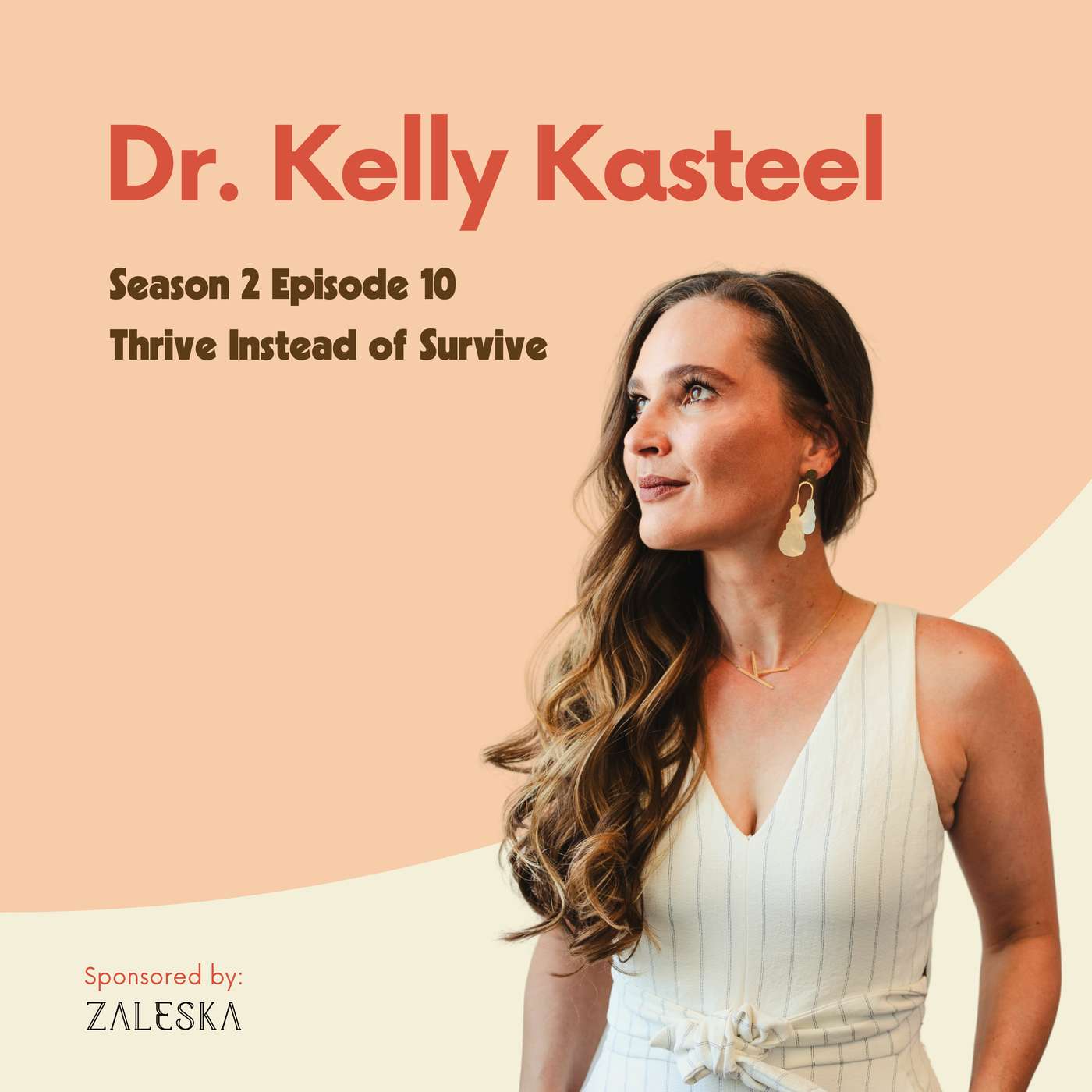
What happens when the career you’ve built no longer fits the life you want? This week, Andrea and Krista sit down with Dr. Kelly Kasteel—emergency physician, mom, and founder of Emerge Wellness.
After 17 years in emergency medicine, Kelly found herself facing burnout, questioning her identity, and navigating the very real challenges of perimenopause. She shares how the pressures of COVID, coupled with a traumatic workplace incident, became the catalyst for stepping away and reimagining her future.
What started as an interest in aesthetics quickly revealed something much bigger: women in midlife (including herself) were struggling to find support, answers, and care. Determined to fill that gap, Kelly immersed herself in learning all the information she wasn’t taught in medical school and now helps women navigate hormones, perimenopause, confidence, energy, and overall wellbeing.
We dive into the symptoms so many women experience but rarely talk about, the evolving conversation around testosterone, and why self-advocacy is one of the most important tools we have. It's an honest, empowering conversation about reinvention, resilience, and taking ownership of your health—because, as Kelly reminds us, no one's coming to save you.
Whether you're curious about hormones, feeling stuck in a season of change, or simply wondering if what you're experiencing is "normal," this episode offers practical guidance, reassurance, and plenty of reasons to keep asking questions.
Bio
Dr. Kelly Kasteel, MD, CCFP-EM, known as Dr. KK, is the founder of Emerge Wellness MD in New Westminster, BC, Canada. After 17 years in emergency medicine, she built one of the most in-demand aesthetics practices in Vancouver's Lower Mainland, the kind of place where you finally feel like you have a girlfriend who also happens to be your doctor. She's known for a boutique, natural-outcomes approach at accessible price points that leaves women looking like themselves, just better. She believes aesthetics and hormone health belong together, and her own perimenopause journey and testosterone therapy is what brought those two worlds under one roof. You can find her candid, evidence-based take on midlife women's health on her Substack, Dr. KK: Hot and Informed, and on Instagram at @drkellykasteel, where she shows up with the same warmth and radical honesty she brings to her clinic every day.
Website https://www.emergewellnessmd.com/
Instagram https://www.instagram.com/drkellykasteel/
Dr. Kelly’s words - Radically authentic, warmly disruptive, refreshingly real, unapologetically direct, brilliantly approachable
Sponsor Information
Zaleska size-inclusive jewelry
Use the code HALFBETTY and receive 20% off your first purchase
Connect with us
Website link here
Instagram link here
LinkedIn link here
Facebook link here
Leave a voicemail for us
https://www.halfbetty.com/voicemail/
Guest: Dr. Kelly Kasteel
Founder/Host/Producer: Andrea Rathborne
Producer/Co-Host: Krista Gruen
Editors: Andrea Rathborne & Krista Gruen
Audio Engineer: Alex McCarthy
Episode sponsors: Zaleska size-inclusive jewelry
S2 EP10 Dr. Kelly Kasteel
Andrea: [00:00:00]
In this episode, Krista and I are sharing a conversation we recorded with Dr. Kelly Kasteel, emergency physician, mom, entrepreneur, and the founder of Emerge Wellness, a growing women's wellness clinic. What makes this conversation so special is that it captures Kelly in the midst of a major evolution.
After 17 years working as an emergency doctor and carrying so much of the weight and intensity that came with that role, specifically through COVID, she began to imagine a different way of caring for women and a different way of living herself. What started with aesthetic treatments and her own experience of wanting to feel restored eventually opened the door to something much bigger, supporting women through midlife, hormones, perimenopause, confidence, vitality, and overall wellness.
And you can feel throughout this conversation just how deeply aligned she is with that new path. Krista and I talk with Kelly about identity, burnout, reinvention, beauty, women's health, hormone [00:01:00] therapy, and the r-
In this episode, Krista and I are sharing a conversation we recorded with Dr. Kelly Casteel, emergency physician, mom, entrepreneur, and the founder of Emerge Wellness, a growing women's wellness clinic. What makes this conversation so special is that it captures Kelly in the midst of a major evolution.
After 17 years working as an emergency doctor and carrying so much of the weight and intensity that came with that role, especially through COVID, she began to imagine a different way of caring for women and a different way of living herself. What started with aesthetic treatments and her own experience of wanting to feel restored eventually opened the door to something much bigger, supporting women through midlife, hormones, perimenopause, confidence, vitality, and overall wellness.
And you can feel [00:02:00] throughout this conversation just how deeply aligned she is with this new path. Krista and I talk with Kelly about identity, burnout, reinvention, beauty, women's health, hormone therapy, and the reality that so many women are trying to navigate midlife without enough information, support, or advocacy.
Kelly is helping change that conversation and doing it with intelligence, honesty, and so much heart. Let's jump right in. The story is already unfolding
Dr. Kelly: So nice being in charge, isn't it?
Krista: It's so good. Yeah. You know what that's like.
Dr. Kelly: Girl,
Krista: And then trusting, right?
Dr. Kelly: That the message gets out. I think the only message I wanna say to the ladies at some point is no one's coming to save you. You have given so much to everyone else at this stage in your life, for the most part. Whether it's [00:03:00] early midlife or later it is time to start taking care of yourself because no one's here to rescue you from it. And it is your life and you are going to die at the end of it. So how do you wanna make the most of it?
Andrea: Mm-hmm.
Dr. Kelly: It's so true. we get wrapped up in taking care of everyone else, and I think it's different for everybody. That turning point of when we start thinking about ourselves and then there's guilt and shame and weird stuff that happens.
Krista: Like, why? I don't know. It's so bizarre.
Dr. Kelly: It's messy, Why? Why am I owning this? This is garbage.
Krista: Yep.
Andrea: I wonder if it's because we become so very attached to who we've been for the vast majority of our lives, it is how we define ourselves as we walk through this life day to day that story of what we do, how we add value, [00:04:00] what people come to expect of us, how we show up.
And to change that would take something
Dr. Kelly: Mm-hmm.
Andrea: to highlight or shake up, or in some, in some cases, really pull the rug out.
Dr. Kelly: Yeah.
Andrea: To make it shift. And so I think in a perfect kind of segue, that is where Half Betty was born.
Dr. Kelly: Right.
Andrea: So I had a, as we do, I had my narrative. I was a creative and brand leader within organizations, building teams, building story, and having people stories showing up through the variety of ways that they can for those various brands.
And, and then I was a mama with children, a wife, a partner, a friend, a daughter, all the things. And that was my life. [00:05:00] And that's how I knew I stayed connected to this world
until I was no longer. Fueled, or I felt completely out of sync in the role that I was in until both daughters left home and were fledglings and out there in the world and not needing me day to day until, the sudden loss of a stepbrother, um, to the hormone replacement therapy that I started taking to the late ADHD diagnosis, and medication to health concerns amongst parents and family.
All of that catalyst of change forced a personal reflection of my story and forced in a beautiful opportunity for me to [00:06:00] take stock in who I am now, not who I have been, because this new chapter is just beginning.
And it had included the desire to show up completely, authentically myself. And I know that word is used a lot, but show up where and when and with whom I feel most alive and I feel most connected to. And I feel like I'm adding value and I'm also not compromising anything for who I am. And so being able to start Half Betty and then having Krista so quickly saying I'm all in friend, let's do this. And then having all of these amazing women from all over sharing their stories of that thing, that created an [00:07:00] opportunity to pivot and look at oneself and make a decision or a scary shift in what we're doing. Having that moment is what we're all talking about, and it seems very, relatable amongst every single person that I'm talking to, every woman, and oftentimes men, but in this case, women in their forties, fifties, sixties, and now beyond, are in that place where there are these big shakeups where it's like you're getting tossed around and having a moment where they're like, I'm going to do something for me.
And that's okay and it's gonna be freaking amazing. So I feel so many of these women, Krista, all the other guests that we've had, and then our audience [00:08:00] have been in their way, perfect examples with their unique stories, and you are absolutely amongst a whole crew of women with such a amazing, unique story of this chapter and your chapters.
And, as as family we have had the privilege of being able to be family for 20 plus years. And so we've watched one another and supported one another and advocated for one another through all of these changes.
Yeah. And so I just wanna say that I am so honored to be part of your bonus family and I am beyond proud of you as a sister.
Dr. Kelly: Aw, you're so lovely.
Andrea:
Dr. Kelly: so amazing to me. 'cause like you actually gave me chills when you were talking there, because that is the common thread, right? Like so many of us that are [00:09:00] just, you're feeling like pressure and uncomfortable and you're like, what is this? And I don't like it and I'm not comfortable, but this is my identity and I've worked hard to get here, so what do, do I just give it up and do something else, um, that makes you feel vulnerable and nervous and lonely and sad because you're leaving something that still is good, but it no longer.
It's like putting a round peg in a square hole now, and somehow you used to fit, it was fine before, but now you're just like, I just, I don't know. It's like I'm so uncomfortable that you're in that pressure cooker and it actually forces you into that change, into that
discomfort. And I personally, I tell students and all this all the time, I feel like the hardest moments in my life have always been the best launching points.
Like when I am struggling or suffering, I actually don't see it as that. I see it as I'm preparing, I am getting ready for the next thing because nothing [00:10:00] that takes change is super easy in my books. And when you said, you know, closing a chapter, I literally, I'm a little, a little creepy, a little weird.
I've had a few like weird visions in my life. And I remember sitting with an Emerge doc, like one of the chiefs of our hospital, and I was near the end of my career there, but I wasn't thinking I was gonna quit. And I remember seeing a book in front of me as I was talking to her and I said, I feel like I am I feel like I'm turning a page, like I'm into the next chapter. I'm like, I know I'm good. I know I'm smart. I know I'm kind. I feel like I know who I am to my core and all this bullshit around me. I'm done with it. Like, I cannot live in this space anymore because I don't feel authentic putting up with it.
And so, and so in that moment, I thought I was changing a, a chapter. And in hindsight, I feel like I took the book and I put it on the shelf and I was done with it. And you know, when you finish a really good book and you're like, oh, that's sad. [00:11:00] Like, I don't want to like as much as I'm done and I'm happy I did it. I don't wanna give it up. I'm not ready to give it up. You know? And so I felt like that moment of that transition where I was like, chapters closed. What are you gonna do, Kasteel? What's your next move? So yeah, the common thread is so cool. And that radical authenticity. I feel like you turned, you pointed that with me.
You were like, it's radically authentic. It's not just authentic. 'cause everyone's like, I'm an advocate, I'm authentic. I'm this, and it feels sexy. It's like, no, I just want to be so bold and comfortable in my own skin. I'm not trying to offend you, but I want to be okay with who I am always. And so I'm going to take the space that I need to take.
Andrea: Mm-hmm.
Dr. Kelly: I
Krista: I love that visual too, of like putting that book on the shelf right. And just knowing We can access it if we need to, but knowing that it's done and how exciting this new book and all the chapters within it are going to be, that's such a beautiful visual.
Dr. Kelly: and it literally, [00:12:00] it's kind of like creepy that I saw it, but, and
Andrea: It's not creepy all
Krista: don't think it's creepy at all. Yeah.
Andrea: It's actually, it aligns with being visual people as we are and in some ways, maybe having a sense of, agency over making that decision. So visually you're seeing yourself take that book and put it on a shelf.
And that gives such a sense of ownership over one's own life. It's not somebody else taking the book and saying Done,
Dr. Kelly: Yeah.
Andrea: which would feel terrible. And um, there's something very powerful with having a sense of being the one in the driver's seat, making the decision when something is finished or sunsetted for a time,
I love what you said, Krista, just like beautiful books that we read and they become like a little piece of us. We take good care of them [00:13:00] and we've read it and it's closed and it's put on that shelf, but we usually have them displayed, uh, we often have them in a place where they're kept safe and they're, taken care of in a special spot
it's, like a reverence of our lives and like a care for ourselves in that visual. So it's not weird at all. Also, being weird is awesome. So let's just also shout out weird because if I was not considered weird, I'd be feeling like I was failing
because
Krista: totally.
Andrea: always wanna live in the weird camp.
Dr. Kelly: Girl. Actually, one of my words is like,
Krista: Oh.
Dr. Kelly: to live on the edge of things, like push the boundary, be a little bit of the fringe, be a little bit of the like extra, be extra loud, be extra confident. Be extra comfortable in your own body. 'cause it's yours, it's not anyone else's.
Andrea: love,
Dr. Kelly: Yeah. I love that [00:14:00] agency.
Andrea: Um, would you take our listeners, 'cause I'm sure that people would be so fascinated to know a little bit around your story of where you were, And that moment that you were sitting with, uh, one of the other emerge doctors, and feeling like this is no longer serving me where I am.
can you tell us a little bit of the story of being there and what that career part looked like for you? And then bring us to where you are today and walk us through the chapter, the book.
Dr. Kelly: yeah. I love it. So exciting. Okay, so, um, I trained in emergency medicine down at St. Paul's Hospital. Um, back in 2004, to 2008 was my training after medical school and everything like that. And I went directly to Royal Columbian Hospital. I was the second woman in a group of 40 men. So, as you can imagine, sitting around that table felt a little different and a little intimidating.
And you have to [00:15:00] present differently, right? So you have to hold space in a different way. And, um, you know, I honestly, I loved, this career. it was my identity. Like I loved helping people. to be able to save a life is like, it gives me goosebumps now thinking about it.
And just holding the hands of people that are scared and caring for children that have a bead up their nose or anything like that. You just, it's this weird porthole into people's lives that you immediately get this authentic connection, relationship, and then you get to be a helper. And so it's such a privilege that job.
And I don't take it for granted that I had so many years of loving that job. Uh, sometimes I wonder if I loved it too much. Like if, if it was too much of my identity, too much my cloak, where It was the vast majority in my identity, um, and how I showed up in a space. Um, and it was slow. That change, you know, like, so again, loved [00:16:00] it, advocated for more women to join.
Now we have about 30% women in emergency medicine, which is a huge representation and we manage medicine differently. We just do, we spend more time with patients. We have lower bounce back rates. Um, we also don't get to see as many people and get paid lower salary for these fee for service environments because we like to spend time explaining things to people.
So years and years of emergency medicine, done it all like trauma hospital, right? So, so I am very comfortable doing all the things needed to resuscitate someone. Um, and then, and I didn't know if it was COVID or getting older. But I was just like annoyed. Like everything started to bug me. The dinging and the noises, people interrupting me, people talking to me.
Stupid administrative things that were placed upon us that we didn't have control over agency. Right. And I was feeling more and more like [00:17:00] is this the space that I wanna be in? And it was kind of funny 'cause they would move all the emergency doctors into one space to do their dictations and talk.
And I'm like, oh my God, I can't sit in there. I have to sit in this little, we called it the zen den. It was my little closet. It's the size of a, London phone booth. Because it would say do not disturb. it's like don't feed the animals. It's quiet.
But the way I function in the emergency department was changing, I think it was perimenopause. My, I had massive brain fog. I would walk into the room and be like. Why am I here? And then I'd be like, oh my gosh, Do I have dementia?
What is happening? And then you kind of like exit the room and think, okay, I could just collect yourself. But it was unnerving. It was weird because you just felt like you didn't have control of things anymore. And then things like, I wasn't sleeping well. I had a lot of anxiety. I could not drink alcohol anymore because one drink would wake me up in the middle of the night and then I'd be like, I'm a shit person.
I just didn't feel good in my own skin anymore. And then there were a couple [00:18:00] circumstances, so I do believe that COVID had forced a number of physicians out of medicine. Um, there was just so much unknown and so many directives we were given, take your mask off in the corner after intubating a COVID patient.
Oh, I don't feel like doing that. You come and do that first, and then I will do that. But there were so many times that we showed up in COVID, um. Trying to take care of us, but barely holding onto ourselves at the time. So I remember the very first day that, the world was shut down. I drove from my house to the hospital, which is a 20 minute drive.
I was the only car on the road. And I remember it felt like a zombie movie. I ugly cried. I thought I was gonna die and that my family would be left without me. And nobody knew what was going on. And all we saw was everything happening in Spain and the states and people suffering.
And so that was a very, tight time for all of us. And I felt, I think most of us felt comfortable [00:19:00] being around each other as a emergency family because there was a kinship there. Um, but it really, cracked the system. And I think a lot of physicians would say that something shifted, not in a good way.
Um, where we just felt like, okay, you put us out here. And we sacrificed for you. And we were in the trenches and we're still in the trenches. Like, help has not come. Nothing has come to rescue us or fix this or help this. And then I had a particularly traumatizing incident where I had a patient pull a knife on me and they were about six feet away from me, took their gown down.
It was concealed. They had already beaten up. Two police officers. They manipulated the nurse. They pulled a weapon and said, Blood's gonna spill motherfucker. And I was like, I believe you. And I had to run out onto the street and flagged down the police. And they had a gun take down. They didn't shoot the patient.
They had a gun take down. Patient went to the psychiatry ward. I wrote a big note [00:20:00] about how this was not alcohol. This is not anything, this person needs to be charged. No one came to debrief with me. No one came to talk to me. I just managed continuing to see patients after this traumatizing event.
But in my mind, what was worse than that is two months later, I was sitting at a desk like this, and 10 feet behind me was this patient. And no one alerted me. They had the same bag that they had their knife in, they had easy access to me. And that, I think that was the moment, even though I didn't identify it that day, but that was the moment that I was like, no one's gonna save me.
so am I willing to stay in this space where I am disposable? Or do I need to be in a safer space physically, emotionally, mentally, with all of that stuff? And so I worked a few more months after that, but it was a stirring, right? Like it was a stirring of you're getting signs, girl.
things are changing and you need [00:21:00] to change. So. I started floating it out there to a lot of people because I feel like I was the mom of the Emerge group because I had been there for so long and that I had a responsibility to stay and show these women what other women are doing and that I owed it to them.
And if I left it was like weak or that I was quitting and I'm a quitter and I can't handle it. And it's not that I couldn't handle it or that I was burnt out, but I was just, I was fed up, you know, like I was over it. So I had been injecting aesthetic stuff, Botox, fillers, that kind of stuff, um, for a while, but just casually.
And I started kind of moving one step closer that direction. And it's funny 'cause a lot of people would say. Oh my goodness. Isn't it like so shallow, it must be miserable, hanging out with all those women. And one of the cardiologists pulled me aside and was like, really, this is gonna be your career moving forward.
And I was like, you have no idea. It is literally like hanging out with friends and there are so many normal women that want to [00:22:00] feel good. They don't wanna be 20 or 30, they just wanna feel good and look good in their own skin as they show up now. And it's actually a very empowering situation for both me and them to be in.
They have agency over what they're doing with their body. Uh, if their partners don't like that, they're doing it, they don't care. It's their body. And so it's really neat to be in that space. And then it's interesting in terms of like the book that we talked about, I thought I would just do fillers and Botox and creams.
And as I started being in this space with all these wonderful women. I was like, oh my gosh, there are still so many more women suffering. Like we would talk about my own hormone journey and I would hear about their hormone journey and how their GPs would say, no, you're still getting your period. You don't need to be on hormones.
Uh, no, maybe that's depression. Why don't we start you on an antidepressant when they're like 50 years old and having all the [00:23:00] symptoms of perimenopause, menopause, um, or yeah, hormones might make you feel good, but crack cocaine does too. And I'm not gonna give that to you, like, who says that to a patient?
Um, so that pissed me off and when things piss me off, I make change. And so I started training, like training in, courses and conferences and, certificates, to get hormone certified for women because I just thought it was nonsense that they couldn't access it. And I'll be honest with you. Does not pay the bills at all.
Um, it is something I do because I care for the people in front of me, but our government has not made it so that it is an easy thing to provide care to women with the time that they need and the symptom management that they need to get their symptoms under control. So yeah, so I slowly started migrating over to that space.
I took a sabbatical [00:24:00] year and through that year I just was like, is this, is this how normal people feel? Like we don't always have to feel like this all the time? That vibrational energy of like fight and flight and, and just seeing that I could still have a huge impact on people's life without being in that emerge world, but it still was just as meaningful, if not more.
Um, and I feel like I see more of a ripple effect from this stuff. You know, like when you do something for one person that's taking care of them. They then had possibly a bit more bandwidth to do that for the people around them. So yeah, I didn't see this coming. I literally never thought I would leave emerge.
I would tell people for years, I'm, I'm not leaving. I'm not leaving. And then like, slowly but surely that identity started to change and I felt more comfortable not saying I'm an Emerg doc, because that was sad for me to give up. Um, but now I'm, I'm really at peace with where I'm at and there's just so much opportunity to help [00:25:00] women.
Krista: Oh my gosh. That is a packed story. Thank you for sharing that in such a authentic way and so concise. Actually, that was a lot packed in a tiny little bit of time. I'm sure we could dig into several pieces, including that piece of not feeling safe, that is scary when you do not feel safe at work.
I can see how that would start to really change your perspective and make you wanna get out of there. And the fact that you expressed that you felt like the mama bear. So there was that feeling of wanting to take care of others as you do in the job, but also at work, you know, in that family that you have surrounded. Um, what's really beautiful that's coming up for me right now is [00:26:00] that you were helping people in emergency and now you're helping mostly women it sounds like, but I'm sure there's some men too that you're helping and the women, the people, your clients, your friends are coming back to you because they feel great or there's something else that needs an adjustment, and you can tweak things along the way, I would imagine.
But what a different way to experience your days, right? Like you talk about, that fight or flight moment going in, what's gonna happen next? Not knowing. I'm sure part of that was probably some of the excitement of doing what you did, but at the same time, over years, how draining that could become.
And now that shift into still helping people, but in a positive environment. So I'd love to hear more [00:27:00] about. that piece of it, knowing that you've, made that decision now, you've opened the clinic and what kinds of things have come up for you now that you're in this and how long have you had the clinic for now?
Dr. Kelly: So as much as it sounds brave, I dipped my toe in and then my foot, and then my ankle, and then my knee. So I was a full-time emerge job. We also were building this house at the same time. My parents were sick, and I started slowly adding days. So I started just one day a week renting a space in a cosmetic clinic. And then I rented a space from a plastic surgeon, and then the busier I got I just decided to rent my own space because I wanted to be independent.
And I did that. And then slowly over four years, I've had my clinic open, but maybe two days a week with my staff, because I was still working full-time emergency. Um, and I do BC ambulance, critical care, transport advising.
So [00:28:00] two days a week that I did there. And then slowly but surely until my sabbatical year, which was about just over a year ago, I do four days a week in clinic. I work from home one day a week. And yeah, it's just been like phenomenal and not only me taking care of the women. But I've collected other women in my team that are equally as passionate. Like this isn't just let's make you pretty, let's get some money. No, no, no. You come to the chair. I love the newbies. 'cause it's kind of like my experience with my hormone doctor when she's like, Kelly, you don't understand when women start hormones, things change.
Like you no longer are okay with the things that used to serve you. And that's what I feel about when women come into my chair. I'm like, you don't know it yet, but you are making a little trajectory adjustment to take care of you, prioritize you and all that other stuff. So I love my first timers 'cause I can't wait to see them when they're at.
I always see them two to four weeks later. I just wanna see how they feel, what it looks like, if [00:29:00] they're comfortable. I just want them to know I care about the process and oh my gosh, every time,whether I need to tweak anything or not. Just that light in them is so worth it.
It's fabulous. Not that the medicine unlocked anything. They have unlocked something for themselves and I am just the tool that helps that so they feel more like themselves and that makes me happy. And again, it might not be for everyone. I'm fine with that, but I can meet you where you're at with whatever you wanna do, however that looks.
Krista: Oh, that's so good. I'm wondering, because so much of this, it sounds like it came from a curiosity of you, like the injectables you started talking about, and, and then you did that slow progression of a day, two days, getting that space just for you, figuring out the schedule that worked for you, but also all of this education, you talk about your doctor and how that's influenced your [00:30:00] personal life too.
The discovery, the education that you've layered on top of your already incredible career of educating yourself and helping others. what kinds of things were you discovering about yourself that you started to lean into and you wanted to, use that information to help others.
Was there anything specific that you didn't know before? I know, for doctors to talk about the lack of education for menopause, for example. Um, I don't know if that's the road you wanna go down and talk about, but I'm curious to find out what were the things that you were personally curious about, that you felt, you know, I wanna help others and here I'm gonna try it on myself maybe, and then I'm gonna, figure it out for everybody else.
what did that look like?
Dr. Kelly: Yeah, so I've always been a hustler. Annie would know that about me. I am like eternally curious. So as you mentioned, hormone care in medical school, we [00:31:00] got zero education, and this is not unique to where I trained. This is across the country, across the world that we just haven't given care to women in this stage.
We give lots of care to, you know, when we're pregnant But hormone care had exactly, well, I don't know, maybe one hour, but all I left with that was. Wow, this is the easiest block ever. You literally don't do anything for women in perimenopause and menopause and you just let them ride it out.
And that's what I was left with. So having to educate yourself on hormone care hasn't been easy. Of course. Like, 'cause there's no, there are lots of independent practitioners now providing resources. There's a fabulous group of women in the states that I admire and I've been kind of trying to train under them doing their courses.
'cause they are, they are leaders, they are game changers. They are challenging the FDA on things like estrogen, black box warnings. So I have done those [00:32:00] courses, but no, there's not a course that exists currently in BC where a doctor can go, oh yeah, I wanna learn menopause and get specifically, you can do it through, there's like extra testing and stuff, but, but doctors don't have the time or energy or even money 'cause it's cost thousands of dollars to do a lot of this self-initiated education, but because I am so curious and so I just like to master things. I find that it's like a puzzle that I spend a lot of my time, like ask my husband when people are like, what do you do for your free time? I'm like, oh yeah, well I was listening to this podcast on menopause, or I was researching something on menopause, or I was like, yeah, I would like hundreds and thousands of hours watching Botox things in the beginning.
Because again, you get a weekend training, but you are not a master when you do that, right? So you have to like literally throw yourself into it. And if this isn't about making money, this is about how do I help those people around me?
How do I help make [00:33:00] this be the best thing possible for them? And I think when you look at that lens of like, I just wanna be educated so I can help others who can ripple out to others, then that's where spending that time doesn't feel like work or effort. It. It feels fun. So,
Yeah. A lot of self-education, a lot of hours, a lot of motivation.
Krista: I don't know what the education system is now to become a doctor and if there is more training on things like menopause women's health, I would hope that that is changing now. Please tell me that is, but then also where and when in our world will it be a dedicated degree that we can have available for people to, learn
Dr. Kelly: honestly, because of so much conversation of people like you, people like me, I think there's many pieces of the puzzle. We're all holding a different piece of it, and we have to reach out to the people [00:34:00] that have this influence. And even, last night, one of the doctors that was working with me on my panel. I mentioned that we do need to get into the universities and say, so this is actually important. This has major health impacts, not just for how women live and thrive and survive in their second years, but also like healthcare benefits or, Healthcare spending.
So our health minister will save a lot of money if they can provide hormones. That's why they did it. This is not just them being generous. This is a business case, If women are on hormones, we can continue to be in the workplace. We can be preventative from having bladder infections, which can land us in hospital with kidney infections.
We won't have hip fractures. That one outta three women will die from that hip fracture in the next year, and the other one will never get back to functional capacity. And then it lands us in old age homes more with dementia, more so if we can [00:35:00] cut those things off at the knee and the answer is not exclusively hormones, but maybe a big piece of it is, why wouldn't we be doing that?
Because we will be saving women and the win-win is they will be saving money in the long run by helping us.
Krista: So what I'm hearing is the lack of, funding from the government in making this type of education mandatory, right? Because it has to be mandatory
Andrea: Yeah.
Dr. Kelly: They have to prioritize it. So as we know now, med school is still not getting hormone care. Um, even in residency, I have recent friends who are obstetrics gynecology graduates, and they don't get called up more than a month in hormone care.
so yeah, we need to include it in a more meaningful way. Um, and we also need to allow the current doctors that are out to not feel so nervous, like, you are
Krista: Oh yeah. Oh yeah.
Dr. Kelly: it's estrogen. Like, [00:36:00] we've just been so afraid of it
for so many years that
that narrative continues. And I think we're really trying to bust that narrative so that it's, it's commonly talked about
Krista: Mm-hmm.
Dr. Kelly: And that the people that are the providers can have the right information to share with patients but I would honestly say at this point, I think the everyday woman going through perimenopause and menopause might know more about herself and her hormones and her body than her doctor ever will. Because she's more invested in it. So
I hope that catches up in time. Um, we are advocating for that at the moment.
I hope it's not even two to three years away, but I think we definitely need to push the envelope.
Andrea: Mm-hmm.
Krista: The shift is happening, that's for sure. Um, yeah,
Andrea: It's momentum. It's about traction and momentum and having the voices that have been so singular, all forging together to [00:37:00] have a bigger impact. and something that you've mentioned a couple of times and I wanted to touch on it 'cause it's a bit of a thread through this
One is how you have said, Your career path, your life path has included this, draw towards helping people. And I've witnessed that in you and I see this, amongst women, who are not necessarily in the medical world, but across all fields.
And to me, there's something about this energy of women at the stage where their hormones are all over the map or they're completely dropping out altogether that something is happening where this, urgency to build together, advocate for one [00:38:00] another and create a shift in, the narrative that has been lived for so long that people just have accepted that that's what is.
And so I see your journey, your experience, your path, your story it represents this shift that we see happening in the hormone world in women's wellness. And we specify hormones 'cause that's what is at the center of it. But it's so much more.
perimenopause would focus in on your uterus or ovaries. And yet our hormones are surging throughout our bodies, found in every aspect of our beings,
Dr. Kelly: Every tissue
Andrea: every tissue, every bone, our brains, everything.
And so for your [00:39:00] explanation that the narrative that has existed has been Operating from this two foot level, which has been two feet into the reproductive organs, um, and barely there when what should happen moving forward is to jump up to a hundred foot level or a thousand foot level and look at this holistically across the world with what would shift mentally, physically, emotionally, spiritually, what all those things for the world's population of women, if only they were to recognize that it's education, understanding um. You know, researching, working with hearing from women and applying all of that information to a new realm or a new way of behaving, or a new narrative. And I see that you've, you're, you're like a, a [00:40:00] bold, wildly amazing leader of that movement to voice that. And you are applying that not only in the time that you were in the ER, saving lives in an immediate and urgent way, but you took that into your clinic when you recognized that supporting women in how they feel didn't just affect how they looked,
but impacted everything in their lives and then made them have possibility again. I've had the privilege of hearing some of the stories about women who have lived facial scarring that they've lived with and covered up and hidden behind, or stayed away from experiences and how some of the treatments that you have
are taking away or reducing that scarring to get women back out there [00:41:00] and living a life that they had never dreamed that they would ever have, or women with, um, you know, extra, extra, extra skin and, and movement in their body faces, what, what have you, that is due to something outside of their control
Dr. Kelly: Yeah.
Andrea: To me, it is recognizing that supporting women's hormones. Puts women back into the space of possibility and all the boldness, and all the doing, and all the making and all the leading that they were born to do,
Dr. Kelly: And are good at.
which, that's what it's doing, is we're born to do that. It's interesting when you said, this hormone movement, which for 20 plus years has really kept women down with this completely false narrative. Isn't that kind of the same as what we were talking about, living in a space where you're just held down [00:42:00] and I feel like hormone movement, we're like jumping on the springboard right now.
We're testing it out. We're seeing how strong it is. And it's really exciting because so much is happening pressure wise that the launch from here and who knows how long it's gonna take or how quickly, but the launch will be huge and women will benefit. And I agree with you. It's about the coming together, the sharing stories, the helping each other where we can, where that piece fits.
Um, so even though we have been in a tough place, that's not forever for us. You know? Like I don't own that. I'm not gonna stay in that space. If it's not good for me, I'm leaving. So I just love that you were like, this is, it's the same.
Andrea: It, yeah. I love the way that you frame that and that resonated for you. Did it like that, that, that, that resonates. I can see it in your face and I can see it
in your whole being.
Dr. Kelly: I am not a family doctor. I'm not an OB gyne. I'm not a urologist. I'm not any of these things that you would think you should be [00:43:00] taking the lead on this.
But when you look around a room and you're like, no one's taking the lead, who takes the lead? And then you think, okay, well, so there's that imposter syndrome. As you know, all of us still struggle with that kind of stuff of like, will I be called out? Am I allowed to do this? But like, if not you, then who?
So I feel like as long as you can get those boots on the ground, do your due diligence, read, learn, write, talk to people, figure it out, then you are qualified and honestly. In the emergency department I had no idea that these middle aged women that were showing up, I didn't serve them well for years. So like rotator cuff problems, that's highly estrogen dependent.
Achilles tendon problems, hip fractures, bladder infections, palpitations. Women in their forties would come to the emerge often late at night, palpitations, like fast beating hearts anxiety. And we'd be like, I'm so sorry. Your heart's fine. It's just anxiety. They're there [00:44:00] now. And we couldn't identify, have you ever stopped to think this could be your hormones? And so as an emergency doctor, I was missing out on a huge amount of diagnosis. Now that I know better, I can do better. But in that space, I think it just, no one was familiar with it. So, so yeah, it's kind of weird to be like, I'm a hormone specialist. 'cause I certainly am not in the world of it. I'm an enthusiast.
I am. I am a receiver and giver and it's just done so much for my life that I, I honestly, like, I think I said last night When I was at a party with my friend and she said, kk, why are you not drinking alcohol anymore? And she is literally like a liquor rep. And I was like, oh, well, you know, it gives me anxiety and I can't sleep.
And I know it used to be fun times, but not anymore. And then she's like, have you thought that this could be perimenopause? And I was like, no. And I was 47, like I was quite young, so I was like smack dab in the middle. And then like a month [00:45:00] later, my gp, who's wonderful, was like, no problem. Here's your estrogen progesterone. And I know that I'm not common that I can walk in. Not everyone can do that with their
Krista: Yeah. Yeah.
Dr. Kelly: And then two weeks later, 'cause I said to her in the appointment, I'm like, I don't know that I'm not that bad. Like I'm, I don't have hot flashes and I'm not 50 and I still get my period, so maybe I don't qualify of course, we always apologize for being there and taking up space in that room. And she was like, no, try it. And two weeks later I was like, oh my God. I had no idea how bad I felt until I felt normal again. And then I felt sad because I was like, holy shit, how did I let you fall so far and not realize that you needed help,
Like I would say something to a friend, but I wasn't doing something to myself. So there was that weird like, oh my God, I'm feeling better. How the hell did I end up in this space? So, and that's the part that I'm like, how can I be that friend to other people? And also the helper to write the prescription if need [00:46:00] be you don't need to feel this way.
And maybe it isn't the solution for everyone. Maybe there are other things going on, but can we just acknowledge that it's real and that we can try? And worst case scenario, it doesn't work. And then we look for other solutions. But why are we not looking for the solutions,
Krista: Hmm.
Dr. Kelly: in front of us? It's obvious.
So.
Krista: One of those solutions could potentially be testosterone.
you speak about that because you know, there's conflicting information, emotions. Uh, please enlighten us
Dr. Kelly: okay. I, I would love to, and hopefully I don't ramble too much about this 'cause I love it so much. And again, not the fix for everyone. So my story, as you heard, um, my menopause specialist was doing a functional assessment on me. So she was on the phone with me. Um, she looked at my vitamin D, which by the way, 80 to 90% of us are deficient [00:47:00] in, in the lower mainland.
So need vitamin D replacement. She looked at my B12, she looked at all these different things, all my hormones, I didn't even know she was testing my Testosterone. And embarrassingly, I thought testosterone legitimately was a boy hormone. Like I knew I had a little bit, but I didn't know that it was in a significant way affecting my body.
So we're on the phone together. It's like November, I'm 47. I've been on my estrogen progesterone for a number of months. I feel good. I, I don't think there's anything to change, but I'm like, well, she's a specialist. She says to me at the very end, well, Kelly, I'd like to know where's your testosterone? And I said, Natalie, if you turn to page two, it's at the bottom. And she goes, no, no, no. Where in your body is your testosterone? And I literally, I felt like my brain was cracking. I'm like, what are you talking about? Like, is this a thing? And so she said, oh yeah, absolutely. She asked me about my life. I said, oh, I'm not sure my husband will want me to be on testosterone 'cause he already thinks I'm a [00:48:00] dynamite stick with a really short fuse.
So like, this might not go well for our marriage.
Krista: Your perspective of what it could do was not correct.
Dr. Kelly: all these biases
in
Krista: Oh yeah. Stereotypes..
Dr. Kelly: About what it, it's male, it's aggression, it's hair, it's muscles, it's all the masculine stuff. And it's not just that, right? So she put me on the testosterone and I don't know, six weeks later, it's like the dimmer, uh, it's bizarre. Same visual thing.
I was sitting, the auditorium, at my kids' Christmas play. Oh my God, I hope my kids don't watch this. And I was sitting there, they're in their Christmas play and I remember thinking, yeah, I should have sex with my husband tonight. Boom.
Because like, I never thought that way before. It was list like number 527 on shit I needed to get done. And it, it just. Who cares if it rises to the top. Don't touch me, don't look at me unless the dishes are done, [00:49:00] everything's fine. And it's like a weekend off. I'm not interested. And so, and I hear this all the time in the clinic, right?
Like it's, common and people are like, I love my husband dearly. It's just not the head headspace that I'm in. So libido, yes, it did work for me. Does it work for everyone? Not necessarily. but there's a lot of discussion about that. Um, and so here's where the research doesn't say yes, it's sufficiently improves mood. It will prevent hip fractures. It will give you more energy, it will give you better lifting in the gym. But the stories you hear from the women like myself are like, well, yes it does. And had I not lived this experience, I wouldn't have believed this experience. But I'm living it and legitimately it a hundred percent changed my life.
I have not grown facial hair, I have not gotten acne. My voice is not lower than it normally is. it's coming [00:50:00] behind estrogen and progesterone, but the narrative still, especially in the medical world, is that it is fringy, right.
And these women should be on an antidepressant or should be exercising or couples therapy or you know, have you ever thought of Yes, I've thought of it all. I've tried it all, and I still don't feel like myself. So there are testosterone receptors similar to estrogen in our brain, in our tissues, and for a lot of women that are low.
And I will tell you, when I do blood tests on a lot of women, everyone is low. That.
Krista: So you can find that when you have a blood test, you can find your testosterone level.
Dr. Kelly: Yeah, so here's the thing. There's like your total testosterone, which is like the umbrella, but it's not all available to the tissues all the time. There's little things that mop onto it and hold it from being active. And so, so even though you can see it, for me, it's not what we call a red light or green light for starting people on it.
If you're having these symptoms, I'll do it as a [00:51:00] baseline to see, but, and again, everyone's low, so it's been easy, but it might still work for you. So will a trial hurt you? No. So is it worth it? Let's have an educated discussion about it, talk about it, see what you think, have agency over your body, and then you decide.
So yeah, it's been a game changer for me. I'm big fan.
Krista: I'm so happy to hear that. I, I think part of, the thought of making that happen is also directly connected to the dose. Could you talk a little bit about that too?
Dr. Kelly: Yeah. Yeah. So as most things in medicine, um, so there was a very, we start with this one, Krista.
Krista: I know it's loaded and we really need to have like a three hour conversation or
Dr. Kelly: I know. We're running out of time. Okay.
Krista: day.
Dr. Kelly: they did a big study back when this WHI study was done for hormones on testosterone. It was proven to be [00:52:00] safe in both men and women back then. Testosterone has been around many, many years. 50, 60, 70, 80, whatever we give it to, um, men completely safely.
We don't give it to women easily. Testosterone in Canada is not FDA approved for women. FDA approved means that the FDA has said specifically, yes, they may have this particular medication for this particular indication, 20 to 30% of medications that are written for patients are not FDA approved for that reason.
So we do not have an FDA approved female dosed testosterone. What women are having to do is use a male dose at 10, the dose. And so we're guessing a little bit, we're trying small doses, but we use male medications for females, it's the same medication. It's actually approved in, the, uk Australia, New Zealand, and I think South Africa for women.
So it is [00:53:00] coming and there's a lot of advocacy on it, but technically it is not FDA approved. And when doctors hear that, even though they're writing prescriptions for things that are not FDA approved birth control, unless you're using it for birth control, you're using it for acne, Um, uh, controlling your periods anything else that's not on label unless you're giving ozempic to a diabetic that's not on label. So there are an antidepressants. A lot of the them are given off label, so we need to be careful in how we choose our words about this is illegal versus this is completely if given within physiological ranges normal.
It might not be FDA approved, but you can still have a benefit from it. So it requires monitoring, but a lot
Krista: You for the clarity on that?
Andrea: no.
Dr. Kelly: That study that they did on testosterone 20 years ago, it was like, this is safe for everyone. Like everyone it's fine.
It, we can give it. Um, the FDA looked at [00:54:00] it and said, well, women have breasts so we should do another study. So they wanted them to do another billion dollar study that was gonna be another five years. And so guess how many pharmaceutical companies signed up to do this?
Krista: Not one.
Dr. Kelly: Not one. Because women aren't the priority and they've already spent the money proving it. We just didn't accept it.
Krista: Mm-hmm.
Dr. Kelly: yeah. Yeah, the data is quite safe as to whether or not it's as robust as it is for everything that, you know, I feel in my body. I can't say that, but
Krista: Mm-hmm.
Dr. Kelly: it's fascinating. I'm curious to see where it's gonna go over the next little while.
Andrea: wild.
Dr. Kelly: if it's safe, I'm not as, until I'm told it's unsafe, I will continue to do it for people. 'cause I've seen what it can do for people
Krista: Yes. Thank goodness. Thank you.
Andrea: You've lived it yourself, because that's what you do as well. That I always love. Every time that I've thought about something where I'm like, oh gosh, I wonder how that, how that might be [00:55:00] experienced medical or whatever. I'm, I think to myself, oh gosh, I need to talk to Kelly. 'cause surely if, if I, if it's something to do with like, all of this wellness and health and, and hormones and stuff, I'm like, oh, well, if she. Um, is, is working in this, in this field. She has done this for herself before she even takes it out to anybody. And that has been a game changer in my brain because you are a walking advocate for others and for yourself, and you're sharing information that is both from deep education and personal experience.
And those two combined are priceless. So thank you for always being your own person.
Guinea pig. Um, and I was gonna ask you, is testosterone now, legal in the US? Prescribed?
Dr. Kelly: FDA, Still physicians there that, um, not everyone's super comfortable doing [00:56:00] it. a bunch of wonderful names. So, one of the docs that I love who's very evidence-based, who has challenged the FDA, who is a huge advocate for women is, Dr. Kelly Caspers. She has a
Andrea: Dr. Kelly Casperson.
Dr. Kelly: Many things and she has also been a huge advocate for testosterone in the right setting for women. Um, but she does it in a way that is, so informative and educational and research-based that, um, that it's hard to argue that this is dangerous for women. So
Andrea: And is she in the US?
Dr. Kelly: She's in the US
Andrea: She is. Okay.
Dr. Kelly: Yeah.
Krista: You know what I'd love to do if, if you, um, could you give us some. Tips, some resources, some like maybe two or three things where our listeners could be like, okay, I've never ventured into this. I'm hearing all the things. I'm curious, like what are my first steps when I haven't done anything, but I know I have [00:57:00] to do something I'm not feeling right.
I wanna feel better. What are the first few steps that someone could do that could help them on their journey? Because it's scary and there's, like you said, there's not a lot of education, and if they're not getting the answers from their GP, I mean, yes, they can come to you, which I want them to, but overall, like a general feel, right?
What are some really smart, helpful tips? Maybe two or three tips that they could take away today to just start on their journey to help feeling better.
Dr. Kelly: Totally. Yeah, it, it's not an easy answer, Krista. I wish I had, I wish I did. Because I would say, start with your GP. What they're doing actually now they're starting, now, they're learning, they're listening, they're educating, talk to their friends, see what they've done, and then go to your gp. There are lots of different people online, whether it's, the Mary Claire Habers or the Shirley Weirs, that's menopause chicks, that they have written substack documents that you can bring to your family doctor to say, [00:58:00] listen, I'm 49 years old. This is what I'm experiencing. I can identify this as a hormone problem. Are you comfortable writing a prescription? If so, um, may I have it? If not, could you please refer me to someone who can? Um, there are other places online, um. I know industry and medicine, we have this little fight where we're like, oh, well you're industry and you're making money and that's not fair.
Well, guess what? Industry exists because medicine is failing. And so there are online platforms that are providing hormone care, especially in Canada, um, that you can access. Yes, you will have to pay, but, and, and some of your benefits will cover it. But like, how much is your health worth, right? Like how much is feeling more like your self worth?
If you can
spend that day on a dinner, on a piece of clothing, why wouldn't you even invest in yourself? And the cost is not huge. And now, as of March 1st, in BC we have our prescriptions covered for, at least for people like me who had to pay out of pocket before. Testosterone is not one of them that's covered, [00:59:00] but estrogen, progesterone are, um.
It should be easier to access those things. So there's also naturopaths if that's something that you have benefits for, you can try to access. I actually believe them and nurse practitioners are more open to the hormone conversation and probably more leading the way than most medical doctors. I personally don't believe that you need blood work in order to show it.
I know there's a difference in the different medical approaches to it, but at the end of the day, helping women and providing what they need at the end, I don't care how you get there, it's just trying to find the resource. And unfortunately, I would say be persistent because you're gonna get a few nos and that doesn't mean you're wrong.
That just means they might not be up to speed yet. And so it's frustrating, but if you feel this, you're not wrong. just find a helper, whether that's your friend who can help connect you, talk to people about it, try and connect to what these things are that are available. I mean, wait lists for ob gys are [01:00:00] all honestly like a year or two, so you shouldn't have to suffer that long.
I would go to one of these online platforms in the meantime, um, that are Canadian based, that are established, um, because there's, there's safety there, there's guidelines, there's protocols, um, and they can at least get you started so that if you get started and then you take it to your family doctor and you say, listen, I've been on this.
I'm feeling great. It's working well, can you continue to write it? I would bet you more than 70% of them would continue to write it for you. They just don't know how to start it for you. So
Krista: Right. That's really good.
Dr. Kelly: like a concept of proof. I'm
Andrea: Yeah, exactly.
Krista: Right,
what I'm hearing is like that willingness to try because it might not work the first time. Probably won't. But if you can have a smaller dose maybe, or Right. Is that, is that right?
Dr. Kelly: I tell people it's, it could be six months of bumpiness it, like your hormones are already doing a lot of wacky stuff. And so whether you get some wonky periods or you get some nipple tenderness, 'cause [01:01:00] maybe the estrogen is a bit too high, you get a bit of bloating, just stay on the track.
It is like everything in life, good things come to those who wait, just hold the course and it will smooth out with time. Um, and it took a while to get this bad, so it's gonna take a little bit to get better too. Not all of us are gonna be like me where you're like two weeks in, but I do have to say, do you progesterone, you know, really quickly, like possibly the first night, sometimes within a couple weeks
yeah, to be able to sleep again. There's studies showing that like, it's not necessarily the hormones that are reducing Alzheimer's, but because we are woken up so much in the middle of the night, our broken sleep is affiliated with that. So if we can sleep better, we might not have all these problems and be in care homes for the last 10 years of our lives suffering instead of living a better life.
So there's, there's so much opportunity
Andrea: so much. I want to ask you, because I think this is also something that our listeners will appreciate. Tell us the age [01:02:00] range of taking care of your hormones applies to.
Dr. Kelly: So, um, it's much younger than we would think. Um, so women even in their late thirties, can be having these perimenopausal changes. That does definitely require a medical doctor to run the other tests. Like, let's look at your thyroid, let's look at your Ferotin, look at your vitamin D and your B12.
Like, let's look at all the other things and make sure we're not attributing it to the wrong thing. And then after that, having the conversation again about it and saying, okay, well will this harm her? No. Can we trial something? Sure, why not? Um, but certainly women through their forties, they say the average age of, uh, perimenopause is like 45 to 47.
It's probably earlier, we just haven't identified it as much, um, up easily until you're 50. Average age of menopause, when you have a year with no periods, it's between 50 to 52. Um, so easily those women can be included in [01:03:00] hormone care. Um, it's a more nuanced discussion after you hit 60 or 10 years after you've missed that period for a year.
Um, because it's based on your risk benefit. So this is all based on studies that were done 20 years ago where they only looked at the age of 60 year olds. It doesn't mean you may not have hormones after 60. It just means this is a particular discussion that we need to look at your risks and benefits more closely.
And then again, you have agency over your body. If your hot flashes are so bad that you can't sleep at night and you're 65 and you're willing to take the small risk of anything else, why wouldn't I write you that prescription? I let you take risks in every other part of your life that I'm not in control of.
Why would I try and control this for you? That seems way too paternalistic for me. You know, like why? Can we just agree that women, when they have the right education and conversations will make the right decisions [01:04:00] for themselves. Worst case scenario, it doesn't work, and then you quit and you're back to square one, not the end of the world.
Krista: Women are resilient,
Dr. Kelly: We are, that's part of the
Krista: it out.
Dr. Kelly: right? That's part of the problem is we're so resilient that we have suffered through this, but we don't need to, we need to thrive instead of survive. Right? Like we need
Krista: okay to ask for help.
Dr. Kelly: Mm-hmm. Yeah. We don't need like the resilience. Yes. It's amazing that we are, oh, do we need to be all the time? Like, can we not just take it easy on ourselves for a
Krista: Yes, please.
Dr. Kelly: Yeah, yeah,
Krista: Yep. We're giving you permission, friends.
Dr. Kelly: We are getting permission, ladies, honestly. Yeah. It's, it's, it's so disheartening for me to hear honestly that whole conversation. so I'm not a family doctor. I, I did train in family medicine and then I did a year of, uh, a year of emergency and worked in emergency. So I, I can't just be a longitudinal [01:05:00] family doctor, so anyone that comes to me like, I just want hormones, I can't do that.
It's only in the space of this aesthetic clinic. It's really, I am providing aesthetics and, um, kind of lifestyle care. And if hormones support that, then we can introduce that to you. But, um, I will not be the right fit for most people that aren't interested in the other part of the journey, I would love to be all things to all people.
I would listen. Maybe let's launch into the universe. I'll be a part of that, right? But for now, I can do this, but I have vision to do more, so,
Krista: I love that. And
Andrea: Well, you
Krista: a great way to, yeah, that's a great way to segue into just finding some more information. Where can our listeners go to find more information about you and your clinic
Dr. Kelly: oh, yay.
Krista: and your staff and all the amazing things that they can come to you for?
Dr. Kelly: so my main platform is Instagram. Um, it's half entertainment, half education, showing up real life when sports bras and workout [01:06:00] gear and just saying the things that hopefully resonate with people so that they feel informed. So my Instagram is @DrKellyKasteel. Um, I'm sure I can give you the link, uh, tons and tons of education on there.
Krista: And then my website is EmergeWellnessMD.com. And I'm so grateful that you guys had me join you here. 'cause I think getting this word out is so huge for everyone. I think, um, I think there might be some part twos and part threes with, with you,
Dr. Kelly: right. This is a menopause moment. We need a menopause movement.
Krista: Yes. It's, no, it's happening. It really is. Yeah, it really is. But let's, let's revisit more conversations with you in the near future to, give permission for people to ask the questions andbe willing to try and be bold and brave
Like, no one is coming to save
no,
Dr. Kelly: you wanna show up better for yourself and your family, it is necessary for you to do this for yourself. This is not selfish. This is selfless for you to take care of yourself so you can take care of [01:07:00] everyone else. It's mandatory for you to take care of yourself.
Krista: thank you.
Andrea: I am just gonna do a highlight reel. That's gonna take me one second Krista. Words.
Dr. Kelly: you got? Mm-hmm.
Andrea: agency, weird, fringe extra, bold, curious, mastery, motivation, help, kindness. If not, you, then who? Thrive instead of survive.
Dr. Kelly: You know my words for me
Andrea: Thank you. Thank you. Thank you
Dr. Kelly: Thank you for showing up for real
Andrea: So helpful for so many.
Dr. Kelly: Awesome, K, Love to you
Andrea: Okay.
Dr. Kelly: Bye.
Krista: and of course, all the listeners back home, wherever you're listening to us from, whether that's on a a run or a workout or in your car, wherever you are. Um, please join us on Instagram @HalfBetty and our website, halfbetty.com. We're also on YouTube, just audio [01:08:00] for now. We're working on the video portion of it.
Andrea and I are also on LinkedIn. You can find us there. Andrea writes a lot more than I do. Very cool, interesting thoughts inside of her head exposed on LinkedIn. Go check us out over there, Friends, I know this episode will resonate with you. I'm gonna just say it.
It will, so share it with somebody else. Start the conversation, ask questions. Get curious and trust in the system. It's there for you, it's there for us, and we can feel better. we owe that to ourselves. So go out there, have a chat, find your community, and make sure to follow us for lots more information.
And love, love, love, love. Thanks for tuning in guys.