

 Spotify
 Apple Podcasts
 iHeartRadio
 Amazon Music
 YouTube
  RSS Feed
 Patti Henderson: Starting My Third Life
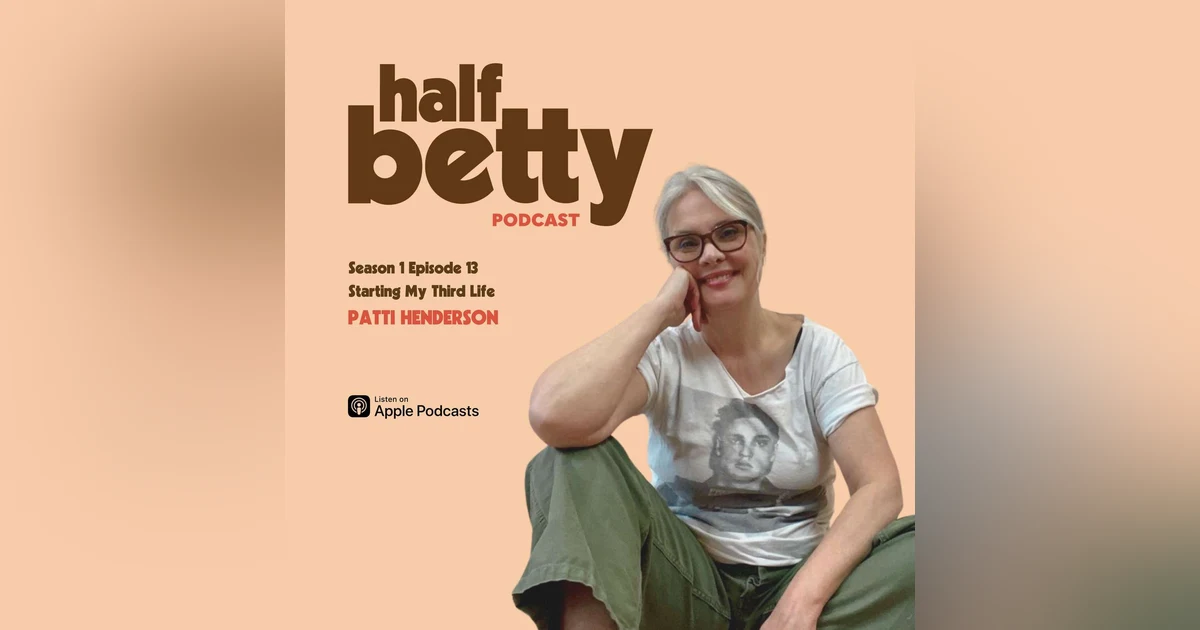
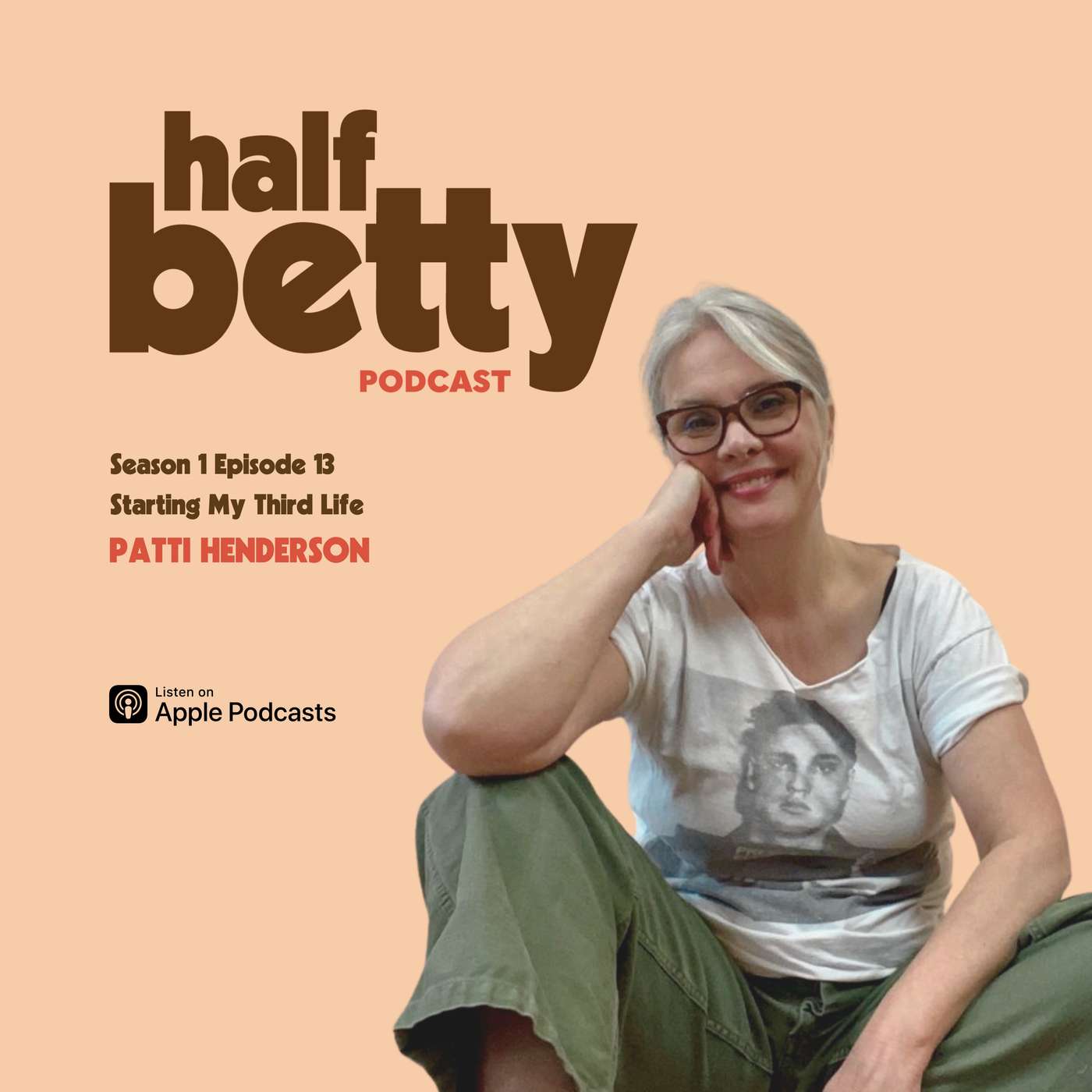
Some people play it safe. Costume designer Patti Henderson has built her life on anything but.
In this episode of Half Betty, we sit down with the celebrated film and television costume designer whose work has been featured at Cannes, Sundance, and Tribeca Film Festivals, and on productions for Amblin Entertainment, Amazon Studios, and Universal Pictures. Patti’s credits include Under the Bridge, Flag Day, Totally Killer, and Nobody - but her most captivating stories happen off-screen. Along the way, she has found inspiration and connection with remarkable women, including her neighbour on Vancouver Island, Pamela Anderson, whose own journey of reinvention after heartbreak resonated deeply with Patti, and Diane Keaton, whose collaboration and creative influence during Patti’s early film work left a lasting impression.
Patti has lived three distinct lives: first as a stay-at-home mom, then as a creative powerhouse in the entertainment industry, and now as a woman embracing midlife reinvention and self-discovery. She shares how boldness shaped her career - and sometimes cost her work - and how on-the-job experience became her film school. We explore her views on feminism, industry double standards, and how recovery transformed her leadership, her creativity, and her life.
Whether you’re curious about the art of costume design, the resilience it takes to thrive in the film industry, or the courage it takes to start over in midlife, this conversation is filled with inspiration, creative insight, and the reminder that it’s never over until you say it is.
Bio
Patti Henderson is a highly accomplished costume designer in the film and television industry, known for her work on various notable projects that have been featured at Cannes, Sundance, Tribeca and Toronto Film Festivals . Some of the studios she has collaborated with include Amblin Entertainment, Amazon Studios and Universal Pictures.
Patti’s current credits include "Love Hurts" the action packed feature starring Ke Huy Quan and Ariana DeBose for 87North Action, “Under the Bridge” for Hulu starring Lily Gladstone, where Patti’s costumes contributed to the film's gritty atmosphere and character development. Patti’s period costume designs were featured at the 74th Cannes Film Festival’s 2021 world premier of “Flag Day” where she attended with the film’s star and director, Sean Penn. Additionally, her creative vision was instrumental in shaping the aesthetics of the Amazon Pictures dark comedy "Totally Killer." Patti also designed the action thriller "Nobody" for Universal Pictures featuring Bob Odenkirk, where her designs further accentuated the film's intense and thrilling scenes.
Patti’s versatile and skilled approach to costume design across different genres has reinforced her status as a respected figure in the industry. Her costume design work has been recognized with nominations for excellence in period costume from The Gemini Awards, The Canadian Screen Awards, The Golden Scythe Awards and The CAFTCAD Awards.
Full project information is available on IMDb.com under Patricia J. Henderson.
Representation by Julian Savodivker, EVP & Head of Production, Independent Artist Group.
Linkedin - Patti Henderson
IMDB - Patti J. Henderson
Website - PattiHenderson.me
Instagram - @pattyhendersoncostumes
Patti’s Five Words - creative, leader, bold, feminist, faithful
Sponsor Information
We love Voes & Co because they are the perfect mix of style, comfort, and sustainability. Designed to effortlessly complement any outfit—from casual to chic—they’re as versatile as they are timeless. Made with next-generation vegan materials, their footwear is soft, breathable, and built to last—without any cruelty. We want you to step out in style and comfort so that’s why we’ve partnered with Voes & Co to bring our subscribers 50% off any pair of shoes!
Please use this link to purchase https://voesandcompany.com/discount/BettyLovesVoes
Forget the cheap plastic cases — Loba is designed with high-end finishes and customizable LED lights that glow when it’s time to take your pills. It connects to WiFi through the Loba App, where you can set daily reminders and let visual cues do the work for you. Inside are 7 daily pill pods, making it easy to stay on track without the mental load. If you take vitamins or supplements, Loba is the upgrade your wellness routine deserves. We partnered with LOBA to offer our subscribers 10% off!
Please use this link to purchase https://shoploba.com/HALFBETTY
Connect with us
Website link here
Instagram link here
LinkedIn link here
Facebook link here
Leave a voicemail for us
https://www.halfbetty.com/voicemail/
Founder/Host: Andrea Rathborne
Creative Producer/Co-Host: Krista Gruen
Editors: Andrea Rathborne & Krista Gruen
Audio Engineer: Ryan Clarke
Episode sponsors: LOBA and Voes and Company
Patti Henderson Ep. 14
Andrea: Some people play it safe. Patty Henderson is not one of them. "Perfect is boring" she told us when we sat down together, and if you've seen her work or heard her story, you know that she means it. Patty has built a career and a life on bold choices, creative risk, and the courage to start over.
She's a celebrated Costume Designer whose work has appeared at Cannes, Sundance, Tribeca and on screens around the world. She's dressed stories for studios like Amblin Entertainment, Amazon and Universal shaping characters in movies and films, including Under The Bridge, Flag Day, Totally Killer and Nobody.
But the real story is behind the scenes, the three lives that she's lived. First as a stay-at-home mom, then as a powerhouse in film and television, and now as a woman redefining herself in midlife. Along the way she's faced industry politics, spoken truth, when it cost her work, navigated recovery, [00:01:00] weathered heartbreak, and found herself again.
With courage, humor, and a fierce belief that it's never over until you say it is. In our conversation with Patty, we talk about feminism, resilience, reinvention, and why midlife might just be the pause we need before our next great chapter.
Patti: Thank you for
Andrea: Yeah.
Patti: inviting me. I've got my five words that I've been thinking about and I've been listening to your other guests on the show and. You guys have done an amazing, amazing thing for women. Thank you. Thank you
Andrea: Thank you. Thank you. That means a lot to us.
Krista: And
Andrea: you.
Krista: that you came prepared. You've done your homework. I love this
Andrea: know. It's so good
Patti: Well, part, part of listening to it was some, one of my words specifically came from your podcasts thinking about it.
Krista: We can go. Let's go. [00:02:00] Let's jump in.
Patti: my, my first word of course is creative because I am, I am a costume designer in the film and television industry. prior to that I was a stay-at-home mom that had to be very creative with two little boys. And, you know, not just creative visually, but mathematically with finances and things like that.
So, creative to me, spreads over a broad spectrum of meaning. I have been working in the costume department since 1997. 1998. Around there. I was working for Peter Nygard.
And, I sold off the fabric bolt ends And there was beautiful fabrics and notions and things left over. So I worked there and I also managed, a fabric lounge, part-time,
Andrea: mm.
Patti: at, um, I had two little kids.
Uh, I was also creative in paying the bills because on weekends I was working, um, catering and in the evenings and on Saturdays during the day I worked for Neiman Furs. I felt like a used [00:03:00] car salesman when I was out there selling. Fur coats to, you know, it was the nineties and early two thousands at that point.
People, people didn't really want them. Um, but, and then someone came along one day and said to me, Hey, there's two shows coming to town. I was in Winnipeg and not enough crew. Do you think you might wanna come and work as our truck girl on a, a TV show for kids? And I was like, I have no idea what that is, but sure, sign me up. And, uh, it changed my life. It absolutely changed my life. there was some rollercoasters of emotions and things with my kids and stuff like that, but it gave me freedom to do what I really wanted to do. I actually wanted to get into theater. I wanted to be a Stitcher. 'cause I also, in my spare time when the kids were little, um, sewed my own clothes and I, I did alterations for neighbors and, uh, I made Halloween [00:04:00] costumes for all the kids in the neighborhood kind of thing. so sewing was something I was born with. and I wanted to get into theater and sew for them. I just thought it would be a great job and they wouldn't hire me. So, um, well, years and years
Krista: Why, why wouldn't they hire you?
Patti: I didn't have the experience, I'd been a stay at home mom for 10 years. And even though I had this home-based business, if you will, sewing for everybody else and creating and all that, it wasn't. I didn't have references, I guess, in the industry. Does that make sense? And so then when this woman, asked me if I would come in and work in film, I was like, but I don't even reference, I don't experience, all I knew was that film was not shot in chronological order. 'cause my dad had told me that once.
That's all I knew. And so I became the truck girl and the Adventures of Shirley Holmes. It was a, a show for YTV back in the late nineties. [00:05:00] I did that for two seasons, and the truck costumer position is kind of on the totem pole. It's near the bottom. I thought, okay, my paycheck started coming in. It was like, oh.
Because when I was working for Fabric Land I was making $5 and 5 cents an hour. That was it. And film offered me 17.75 an hour and, time and a half after eight hours. And so my paychecks were pretty good back then. And I can remember sitting at the dinner table, one day with my then husband and going, Hmm, I'm leaving you.
And I did.
Krista: Wow,
Andrea: Wow.
Krista: that gave you so much strength and confidence and security.
Patti: it absolutely did. And I became a single parent of these two boys working in the film industry, which, you know. hindsight [00:06:00] is 2020. I do things differently, of course. Um, but I made it, and kids went to Disneyland. They had, skateboards. They had snowboards, they went to football camps.
they had everything except their mom at home, which was what they were used to. So that was a huge shift for them. And they still talk about it. My sons are now, 33 and 36, and I, I have a grandson. He
Krista: Oh, congratulations.
Patti: thank you. He's a year and a half. He's just a little bug.
Andrea: so sweet.
Patti: so I feel kind of like, I've had three different lives.
I was the stay at home mom. I was the film person, and now I am, finding myself in a totally different situation as a grandmother and leading a bit of a different life again. But, so that was.
Krista: yet, and yet still working in film.
Patti: Absolutely. And that's where the, the creative part took me is all these out of town designers would come to Winnipeg to work on these Mws movies of the week. And [00:07:00] the people that I was working with, there were mainly theater based. Like they had been raised up in the industry in the theater. The film industry was quite new in Manitoba at this time.
And a lot of those people like to stick together and, and work on the smaller Canadian shows together. And I was the,kid that didn't really fit in. So I worked with these out of town designers as their assistant or their truck person, or their set supervisor or whatever, doing breakdown alterations.
They would hire me. And, uh, I learned so much and I realized, one day that while the rest of them had all gone to school, I think there was a, a program at U of M at that time, I don't remember what it was called. Human Ecology, I think it was, but I didn't have the ability to go to school. I just dove in.
So my film school was learning it on the job.
Andrea: Mm-hmm. Mm-hmm.
Patti: this project that I am currently on is my 81st project. So I
Krista: Well, I'm snapping fingers and applauding 'cause [00:08:00] that is no small feat
Oh my gosh. That is incredible.
Patti: what I had done is I'd gone to, Red River. And taking my business accountancy certificate or whatever you wanna call it, while my kids, no, I was pregnant when I did that. So I had a little one and I was pregnant. But that is what paid off. 'cause I can do budgets, I can do cost accounting.
which is one of the reasons why I do get hired because I come in on budget or under budget and I know how to spread the money around, which is very, very important in this world today. The film industry has recently lost a lot of money
Andrea: Mm-hmm.
Patti: figuring out how to recoup from those losses.
Andrea: Mm-hmm. It's really
Krista: producers must love you.
Andrea: Yeah.
Patti: um, they do. Well, not all of them. Not all of them. which takes me to my next word,
Andrea: it's fascinating and I love how you wove. Creative all the way through that with, it being the first word that you [00:09:00] shared. Being creative is very topical today. there's a lot of conversation around, what is creativity, how does that, show up for individuals and.
How do we retain and support and advocate for the creative community? and women in creative roles is a huge conversation, as we all know. And. With, women being in so many creative roles across so many different industries and finding the challenge of midlife and their creative role, and what does that convergence look like?
Patti hearing your story, of your, start. The creative industry and now 81 shows later and spanning You [00:10:00] tell me, but I'm thinking like 35 years. 28.
Andrea: 28 Okay. So spanning 28 years. Um, it's really powerful to hear how you navigated a career in the creative industry.
And I really loved when you said that you had to get creative
to make the money work for your family, and then you channeled your creativity when you had autonomy because you were making your own money and the decisions that allowed you to make, and then you went on years later to take your accountancy certificate so that you could actually once again apply the creativity of numbers and the creativity of budgeting to increase your value in your role and what you could bring to your creative role. It's just fascinating how you wove that all together
Patti: It was the best thing I ever did and I didn't even talk about what I actually do for a living, which is, design costumes for actors to wear on camera. [00:11:00] Um, I create character through the art of costume. That is what I tell people
Krista: That is so special. can you dive in just a little bit to that? Because, when a lot of people that aren't in the film industry, they're watching a show, and they're taken away to this beautiful world, I think sometimes it's really hard for them to pinpoint what's going on.
It's really well done, right? But when all of those pieces and all of those heads of departments are experienced and knowledgeable and passionate. All of those pieces come in seamlessly, and it's such an art and it's so creative, but the stories behind the wardrobe is, I mean, we could do a whole other like, Ooh, I just got goosebumps.
We could do a whole other series, right. About characters and, and storyline. Right. So yeah, if you wouldn't mind indulging just a little bit and then we'll get back on track on the words.
Patti: So I start with a script [00:12:00] and I do an interview process. A lot of times, I am with companies that know me and they just offer me the job, which is what I prefer, but it doesn't always happen that way. I'm handed the scripts, uh, and I break them down for character as to who are these people, what are their backstories, what are we trying to tell about this person?
And it's a culmination with, the actor too and their performances and how they're gonna play something. So, for instance, if I have somebody that's going to the Met Gala, I have to put them in something that's red carpet ready and we might build it, we might borrow it from a design house.
We might buy it. but there's the collab that you have with the director, the showrunner, the actors, hair and makeup, like you're saying. It is a collab. But then what happens if, say I have, um, an unhoused person that's living on a street corner, and how am I going to [00:13:00] tell that person's backstory?
It's about the clothes that they've probably been wearing for weeks at a time that they haven't had the opportunity to clean properly. We age things. We over dye them. We, we tell that story. for instance, I did Under The Bridge for Hulu,
Krista: So well done. Such an
Patti: It was
Krista: an increadable series.
Patti: it. Thank you. I, I was really grateful to be part of that. It was a hard story to tell, but it was an important story to tell. But it happened in 1997, which, you know, people don't think of his period that is period. Anything, 20 years and older is period. But I went down to the, flea market in Pasadena, um, which I love to do.
And the vendors there, I'll call them ahead of time and say, I'm coming. 'cause I did an eighties show the year before that. And they all pull together their eighties or nineties or whatever I'm looking for. But, Under The Bridge had a specific look to it. Not only was it 97, it was teenagers, [00:14:00] but it was Vancouver Island.
So the fashion on Vancouver Island is completely different from what you see on the mainland or in the rest of North America. It's island it's. It's a
Krista: I grew up there. I understand.
Patti: you get what I'm trying to
Andrea: style. Yep.
Patti: it's a lot of polar fleece and hiking gear and all of that kind of, but there was the Mayfair Mall, And that's where these girls shopped and I don't remember what the stores were. Probably Smart Set, Susie Sheer, that kind of, you know, when fast fashion first started to come into
Krista: right. Oh, another,
Patti: Mariposa. Exactly. Um,
Krista: tweet.
Andrea: Whole other series. Yep.
Krista: Oh my gosh.
Patti: I often say that's like 70/30 of my job, 30 of, you know, the design. The other 70 is managing a department of sometimes 25 people and making sure that, the cutters cutting what I've asked them to cut the stitchers are helping them build something. [00:15:00] Uh, I just finished two shows for 87 North.
they're a stunt action, group. I've worked with them three times now, and I, we did Nobody, with Bob Odenkirk and we just finished doing, Nobody 2 with Bob Odenkirk and the whole gang. There was a lot of builds that we did because we couldn't get clearance on Hawaiian shirts. Um, we had to make our own Hawaiian shirts, and because it's a stunt show, you want 8 to 12 of each of them.
So we had to have worked with a graphic designer who designed the Hawaiian shirt. Then we had another company print that design onto fabric. Then we had, the breakdown artists kind of age the fabric a little bit, and we had the stitchers go in and build these shirts. Then we had fittings with the actors.
So it's not just going to Walmart and buying a Hawaiian shirt. So
Krista: and you also have to have those shirts available, like if there's any, rigging that needs to be done or anything that they need to wear [00:16:00] underneath. Like the stunt category with wardrobe is a whole other thing.
Patti: you know, uh, Love Hurts is another project I did last year with Ke Huy Quan, who won an Oscar for Everything Everywhere. And Ariana DeBose, who won an Oscar for, West Side Story. So we brought in, Daniel Wu, who is like butter, I dunno how else to describe this guy. he's a Chinese, karate expert and actor and he and Ke were doing all these fights that were just so think Bruce Lee, but so choreographed in and beautiful, but we had to put Gussets in the armpits of their suits. like Daniel was wearing a full on three piece suit, so four way stretch in the armpits, in the crotches. We had to allow for, stunt rigs to go underneath because they would do flyaway pulls when they punched to make it look bigger than it actually was.
And yeah,You collaborate with the stunt team, you collaborate with, your stitchers to make [00:17:00] sure that all of this happens,
Andrea: Again, that's that creativity again, finding its way in your work because you have to creatively problem solve for movements. You have to anticipate what might happen. You have to understand not only the technical aspects of fabric and its behavior, but then you have tocreatively imagine how that's gonna then respond.
So it all comes together, doesn't it?
Patti: It all ties together. And you know, a lot of it is not just collaboration with some of these teams, it's by making mistakes and learning from those mistakes. So when you go on to the next one, oh yeah, I didn't do this right, right. I should have thought of this and, and I learned something new every day.
Andrea: I love that.
Krista: I love that too. it's something like raising my boys now and seeing one of them is just so persistent in making sure that [00:18:00] outta the gate he does everything perfectly. And his kindergarten teacher was like, no, uh, perfect is boring. and then we take them to the skate park and they see all these teenagers or even older fall.
And I point it out and I say, that's how we learn. That's how we move forward, right? We learn by observing, we learn by doing. And we pick ourselves up and we do it again.
Andrea: that's right.
Patti: it's very true. Which, you know, leads into my next word,
Andrea: Oh, I love this.
Patti: which is leader. Um, I, I feel that I am a leader,
Krista: You are a leader, my goodness. Yes, you are.
Patti: Sometimes to my detriment. Uh, I talk too much and I overthink things sometimes, but, every morning with my team, I have, a meeting. I don't have as big a team on this show, as the last two shows, but it talks to what you were talking about before, Andrea, regarding [00:19:00] the creativity that I use with my leadership. So for instance, I have this team that I just spent a year in Winnipeg working with, on two different shows. And these women are 30 somethings who are having kids. So I became very creative and it was very important to me because I didn't have this when I was coming up in the industry.
I would take my kids, I would make sure they got to football practice, I would make sure they had food in them. I would go back to work while they had practice, and then I would go pick them up, take them home, make sure that they were, homework was being done, whatever. And then I would go back to work when they went to bed.
So I didn't have somebody to spell me off to help me. So we've been doing job sharing and uh. I'm not finding it on this show. Oh, I had the line say to me, oh my God,I've never seen so many costume department members in one crew.
It's ridiculous. And I just paused. 'cause that's another one of my favorite sayings, [00:20:00] is to pause when agitated.
Krista: Mm, Yes..
Patti: And you take that deep breath. So I paused and I looked at him and I said, David, these women are job sharing. Rachel does eight hours a day because she goes home and has her son at home.
Casey starts at seven in the morning and only works till three. 'cause she's gotta pick her daughter up by 3 30, 4 o'clock. Hillary comes in later because Hillary stays with me for the night shift. You know, I'm there the whole time. But it allows these people, these women. Um, so far it's been women.
I haven't had to do this with a man yet, but I hope I get to, um. Have a, a work life balance and be able to be there for the kids. Because one of the most hurtful things my elder son said to me when he had his son was, Mom, I wish you were more present. And you know, I had some personal trauma in my life that I was dealing with when my kids were really little that I wasn't dealing with properly.
[00:21:00] And I threw myself into my job. And yeah, I should've, coulda would've, I would've liked to have been more present as well. But, um, their dad wasn't participating financially, uh, whatsoever. And they had a roof over their heads and they had food in their stomachs and they had extracurricular activities.
They got to have friends over. Um, I did the best I could. There's no rule book. There's no rule book about how to do this. And I kind of took that in my leadership. With my department as, head of department, um, we all sat down and started talking about it before I moved out here to be, I've been in BC going on seven years now, but started talking about this back then.
But when I said this to that line producer, he shut right up
Andrea: Mm.
Krista: Well, it's also saving him money.
Patti: indeed,
Krista: they're not going into overtime. So, you know, you have to like, okay, I'm gonna explain and now I'm gonna tell you how I'm actually helping you, and you're welcome.[00:22:00]
Patti: Yeah. He would, what did he call me? Um, an arsonist fireman. And I'm like, what?
Krista: What?
Patti: I'd never been called that before. And he goes, yeah, you come in here with this big, huge problem, and then you put it out by the end of our meeting. I said, no, I don't. I come into the meeting telling you the issues that I'm dealing with in my department or on set or wherever, and these are the ideas I have to solve it.
Andrea: hmm.
Krista: That is what a good leader does.
Patti: That's right.
Andrea: And a leader who has taken from their own experience. And applying what they've learned and creatively coming up with new ways to solve for the challenges. So uniquely based on who you are, your experience, your life, your own, like what you know, you [00:23:00] would have loved yourself.
Patti: Mm-hmm.
Andrea: You are now applying and advocating for with your own team as an amazing leader.
Patti: Is trying to figure out work life balance. And the producers that I'm working with right now, the Vancouver based ones are, um. I've been trying to work with them for about six years because they have a mandate. they don't care, where I am, what I'm doing, as long as the job gets done. So, for instance, I could take this in the middle of the day.
Tomorrow I have therapy at 9:00 AM online therapy, which I can do. And the team that I have in Vancouver here, I say I have two teams, Winnipeg in Vancouver, butI'm not sure I'm going back to Winnipeg in the near future. But anyway, it's about work life balance. And the next two weeks as they look at my calendar, pardon?
Of me starting, yeah, starting the next Monday, we're gonna get slammed. And so I've been letting them go home a bit early, go have dinner with their friends, with their family, walk their [00:24:00] dog, go to the gym, start a bit later, or you got a dentist appointment, do it this week. Because the next two weeks are
Just gonna be, ah, and that's where we pivot and we go into 12, 14 hour days to make sure that things are ready for camera and that, we're good to go. And we don't hold anybody up on the day.
Andrea 2: responsible, accountable, applying that leadership and that creativity. there's so much to take from all of that. And we're only two words in, gosh.
Patti: well, my, next word is bold and bold has gotten me in trouble sometimes. Uh, it's gotten me in trouble a lot in, I wanna say the early to mid two thousands, because I would speak up and there was a producer, a female line producer in Winnipeg that didn't like to hire me because I was too opinionated.
I had too much to say. And I spoke up against a male that I was working with, that [00:25:00] I'd worked with for many years who was treating his team. We all work on walkie talkies, uh, when we're on set. And he was saying things that weren't really nice to his team. Um, they were very homophobic things that he was saying, and he just, he didn't treat women with respect.
Uh, he didn't treat many people. He didn't treat himself with respect. It was really sad actually, But I spoke up about him and I didn't work for almost two years because I spoke up. I was bold, and it was before the me too movement happened And. I suffered for it, but he suffered for it too because there were people that listened, listened to what I had to say, you know, and I do these budgets and he wasn't giving me the information that I needed in order to have correct numbers, accurate numbers, and to be able to perform my job to the best of my capability.
And he just didn't see how the two intertwined. 'cause he wouldn't listen. [00:26:00] And, um, one of my characters on the show I'm doing right now is a woman in a man's world and she sits down at the table and she's the only female there. And the showrunner and I were having a conversation the other day and my lead actor and I had one yesterday and I told them, I said, I was always the only woman sitting in the room.
Very rarely maybe there was a female producer, but, or a female makeup artist, but very rarely more than three of us in the room. And it was definitely a male dominated world. And I said, first thing I do when I sit down at our round tables, which we don't have as much anymore. 'cause of COVID, everything goes on Zoom.
Um, there's more and more women that are making films and producing and directing and, DP work (Director of Photography). I love it when I get to work with lots of women. They're not always the best. You know, sometimes women are a little harder to work with as a group, but it's a good challenge to face.[00:27:00]
But yeah, I, so I, I speak up. Um, I think my next, how do you say it? A iteration of this job might be producing or directing. I don't know if I survive that long. Um, what, there's a company that I work with quite often, and they do a lot of things at once. So sometimes I step in, um, where I normally wouldn't, uh, but just to make sure that things are happening, that the right people are being spoken to, um, that the, the wheel is still turning so that hair, makeup, and wardrobe can do their jobs properly.
And we're not waiting for answers, which is, you know, sometimes a producer job, but, um, if they're not there or they're in a meeting on another show and they can't be there, I take charge. And I'm bold in, in that. I'm, I'm bold in sharing my, my history of my life sometimes too. Um, I've been in recovery for 15 years, going on [00:28:00] 16, and that was something that helped me with my leadership, that things in my father passed away when I was quite young and I never dealt with it.
And I got married at 20 and had kids really young,
Andrea: Mm-hmm.
Patti: and that marriage was not a good marriage. And, uh, I never dealt with things. So as things, uh, alcoholism is progressive and that's what happened to me and I kind of let it get away. Um, but I ended up going into recovery and I live a pretty wonderful life as a sober human being.
I wasn't sure if I was gonna be bold enough to tell you that today.
Andrea: Hmm. Hmm.
Krista: I really appreciate you sharing that, Patti.
Andrea: Mm-hmm.
Krista: it's a big, that's a big part of your life.
Andrea: Mm-hmm.
Patti: It is, it's a really big part of my life. And when we moved out here, there was the marijuana gummies and I did try them a couple times, but realized this just wasn't for me. it wasn't how I wanted to [00:29:00] live my life and to alter my brain all the time. And you know, there's people I'm sure that are on them all the time at work 'cause you can just take this gummy now and you don't have to smoke it anymore. But, no. So, you know, a lot of them call themselves California sober. And I didn't wanna be California sober, I just so, so there's that truth too is I did try that,
Andrea: Mm-hmm.
Patti: but a I haven't had a drink in almost 16 years.
Andrea: That's, that's amazing. What a journey do you think Patti does the word. Courageous
Patti: Hmm.
Andrea: show up for you maybe similarly to bold. Um, does that resonate for you?
Patti: absolutely. I've been very courageous in the past year. Um, uh, oh boy, you guys, I'm going through a divorce, um, after being married to someone for 15 years, well, married for 14 together for 15. [00:30:00] Somebody that I met. We went to high school together, but we met again in the rooms of AA and we broke all the rules.
'cause you're not supposed to date in the first year of being sober. You're supposed to work your program. And, and, uh, we didn't do that. And I sobered up. It was it December of 2009 and he was, I think February of 2010. And we were married by August of 2011. So it moved very, very quickly.
And uh, it was New Year's day this year, uh, he realized I realized that something wasn't right and I said, you know, we need to talk. And also, I had been traveling a lot for work and we moved out to the island. Almost seven years ago. And for some reason he thought that I was gonna work on the island all the time.
And I'm like, that, no. Like, it doesn't work that [00:31:00] way. they do car commercials there. They do the occasional movie of the week that's non-union. Well, they do quite a bit of them and they do a lot of Hallmark, and that's not what I do. Um, I'm a, I'm a feature film and television series director.
A director, pardon me? Across from designer director one
Andrea: You are manifesting. You're
Patti: Manifesting. Yeah. So not to get into the nitty gritty of it, but you know, he told me he didn't wanna be married to me anymore, so I had to be really courageous and figure out what my next steps were. And it was, it was, I think when I first talked to you guys, I was still a little shaky, but I didn't show it.
I tried not to show it. My life today, five months later, is. My life. It's, uh, it's my money. It's my bedroom, it's my apartment. I can eat when I want. I can do whatever I want, when I want. I can visit who I want. I, this is [00:32:00] my third, third life, if you will. Um, and I'm gonna make the most of it,
Someone sent me a post or you know, a meme or whatever that Carol Burnett and she was talking about how she was married once and she said basically some of the same things I just said. She said, and you know, if I ever got married again, he'd have to live next door. And that's exactly, um, for the first time in my life at 57, um, I've decided that I don't wanna ever be married again.
And, dating doesn't even cross my mind. I'm learning to love myself and to love my life and to enjoy my friends and my family and, uh, not have to worry about someone else and their drama.
Krista: Oh yes. What is it about midlife where we're making these bold, uh, decisions and standing strong, in our [00:33:00] feet and being able to move forward in this way?
Patti: Which leads me to my next word.
Krista: Yes.
Andrea: I never thought I was one. Um, but I am definitely one, uh, I'm a feminist
Krista: Yes, yes, you are.
Andrea: Tell me more about you didn't think you were one.
Patti: Yeah. Yeah. Uh, the industry for sure. I remember when I was younger watching Gloria Steinem and her movement speeches in marches and things, not quite understanding it. Now, I was born in 67, so, you know, my younger years in the seventies and then my teen years in the eighties, I always saw them as battling against men to be better than men.
And I didn't understand why there couldn't be equality. Um, that was from a young age, and I just didn't understand it. Maybe it's more the reason I didn't get it. And I grew up in a home where on the Ottoman, Playboy, [00:34:00] Penthouse, Hustler were magazines that were just out for anybody to see.
And I thought of these women as beautiful. And I thought for sure it was something that they had wanted to do.and so I didn't understand why there was the big battle against that. Um, I worked in a nightclub for years before I had my first son, and I wanted to be that beautiful person.
I can remember Playboy would come to Winnipeg once a year because Grand Beach is known as one of the top 10 beaches in North America for women. For women finding women. Yeah. Um, it was rated in Playboy magazine
Krista: Wow, I've never heard this before. The, so pe what, what? Keep going.
Andrea: What is Grand Beach? Grand Beach is the, is the nightclub.
Patti: Grand Beach is a beach.
Andrea: Oh, is a beach
Patti: It's a beach and it's where anybody that was, anybody in Manitoba [00:35:00] would go hang out on the weekends and where you would parade around in your bathing suit.
and I was a bartender, at the hottest nightclub in town. So it was also like you were a rock star. They recognized who you were, and it was all about appearances. And, one of the scouts came to me and asked me if I was interested in sending photos, but they would have to pay for me to have a boob job first.
And that was when I kind of started taking steps back, from thinking about being a feminist. And, and maybe this wasn't so good. And then Linda Lovelace wrote that book about her experience, uh. Can I say it on the, the film Deep Throat and what she was put through and, and then we had the Me Too movement in the industry in the two thousands, and I worked with quite a few of the women who started that [00:36:00] movement.
I experienced some things, uh, in the industry that are not cool. Um, that happened to me. Uh. And it doesn't matter if it's a grope or if you're actually assaulted, it's still sexual harassment. I was never, um, full on assaulted, but a lot of things happened to me in dressing rooms and dressing actors.
That should have never, ever, ever happened. And I started to understand being the only woman in the room and how we were kind of being pushed down. And then the Harvey Weinstein thing became. Huge. And the Bill Cosby thing became huge. Um, and I started to realize, and my husband didn't like it because I started speaking out about feminism, and he would make jokes or his friends would make jokes about things.
And I would say, that's not funny. you don't understand what it's like to be a woman and to be put in those situations and Oh, you're overreacting. Those were the [00:37:00] comments that I, oh, for God's sakes, you're a fucking
Krista: Gaslighting
Patti: gaslighting, you're a, you're a fucking feminist is what I just swore on your podcast.
Andrea: That's okay. happened before.
Krista: It's rated explicit. It's, this is why we do this. This is great.
Patti: It's, um, and then, I just started to pivot again, I use that word pivot, um, to switch into supporting women. I always talk about work because I spend so much time at work, but even with my friendships, I have friends that, um, I still hang out with that we, we started being friends in nursery school and there's five of us that still see each other to this day.
But there's always, there was always the battle with women and not supporting one another. And I realized too late in life, unfortunately, that I needed to, instead of be putting what, putting women down is to be supporting them and helping them grow and teaching them things that maybe they won't have to go through the bullshit that I went through and they [00:38:00] can be stronger and they can have
a bolder face in these meetings and be able to say what they wanna say without retribution, which is, I have that now. I'm grateful for that now. Um, and still people don't like it, male or female. It always amazes me when it's the women producers that don't like it when another woman is speaking up. But I remember a couple years ago, um, I think it was Hulu, put out the series Pam and Tommy, I think it was, or Tommy and Pam.
Pam and Tommy.
Andrea: Mm-hmm.
Patti: And, um, wow. I know Pamela hasn't watched it and she has no interest in ever watching it, but I did watch it. And essentially, here's a couple that had their private sex tape stolen from their,safe in their house. And you know, it's published worldwide. It's sold worldwide, and the male becomes a rock star. Oh my God. He's got a big [00:39:00] dick. He's so awesome. He's fantastic. He's hot, and the woman became a slut. Um,
Krista: Labeled. Labeled as that.
Patti: and that really resonated with some of the ways I'd been treated in some of my relationships. I've had a lot, a lot of relationships, um, in between, um, the first husband and the second one I lived with three different guys. You know, I just, I could never figure it out, um, until now when I know that, uh, I just need to be on my own.
Andrea: Up until now.
Patti: But Pamela lives quite close to my house that I have on the island and. When she did this transformation she stopped wearing the makeup and I took, for the first time in my life, I went to a movie by myself and I went to see The Last Showgirl.
And that just spoke to me in volumes of feminism and how we need to, uh, stick up for each other and look what's she is, I [00:40:00] think she's a year or two younger than me, but her life is just starting.
Krista: Yes. Ooh. I just got, Ooh, that was a full body. Yeah. Yeah.
Andrea: uh, what resonated just now too is.
Krista: Oh.
Andrea: if I, if I may, I draw a parallel, because you've described so beautifully how you see your life in three different chapters, or three different stories, three different books, and so in many ways it feels as though you describing Pam's life being just starting.
It feels in many ways, like you are in your third chapter, third book, and it's
Patti: I am, it is just starting and I'm super excited. I can't wait to get my,
Andrea: I can feel it.
Patti: I, I just, I can't, because we weren't working. I, I sold some things that, um, like some family things just to pay the rent. I'm paying a mortgage on a rent right now. 'cause [00:41:00] the house is up for sale and the market's really tanked on the island.
So, you know, um, the house will sell. They all do. But it's, I had to sell all my clothes and at when I did it, I'm a huge Magnolia Pearl fan, which is, a very expensive addiction. And she's an artist out of Texas that does these incredibly bizarre clothes and I love to wear them. But it gave me the chance after selling everything to start over and, hey, maybe I wanna be more like Caroline Kennedy Bassett and be a little more streamlined and basic, um, I said to the actor and I were talking yesterday about being a basic bitch, but um, but I get it fashion wise 'cause a lot of basic bitches don't get it. It's about power and it's about um, being able to inject yourself into a room full of men because I am just wearing a t-shirt and an over shirt and I'm not covered in makeup and my hair isn't all over.
I just cut my hair off because I [00:42:00] just wanted a simple life.
Krista: looks gorgeous. Yeah, that's freeing too. there's something about a fresh haircut and a fresh wardrobe and a fresh start that
Patti: Yeah.
Krista: gives all kind.
Andrea: And the simplicity.
Patti: Yeah.
Krista: Ooh. Yeah.
Patti: They say not to do it right away when you get divorced 'cause you might, so I waited, I waited four and a half months before I did it, you know, no rash decisions in the beginning. But yeah, life is looking really, really good and I've got really good people around me.
Andrea: I love this. I love this for you, and I love how you graciously felt connected to the word courageous. Um. That's what was was coming up for me as you were describing bold. It was bold and courageous. Um, and then your way of weaving into this kind of realization that though you thought that perhaps you were a feminist as you were [00:43:00] growing up, you weren't quite clear on what that meant that you were, or what you stood for, or what you understood, and then how that revealed itself to you to a place where you realize the true meaning of what that is
Krista: And not only just for yourself, but how you're Yeah.
Patti: Uh, you know, pay par, pay parity is a huge thing, uh, in my industry. And during COVID I had, uh, worked a couple non-unions where they paid me less than I've ever been paid as a costume designer. But it was like, you should be thankful that you're working. And I was thankful 'cause I'd been at home for eight months as the rest of the world had in seclusion.
And then, I tried to fight for more. And then the same company after COVID had ended and I started doing features again, hired a fellow that had been my assistant, and they paid him $500 more a week than they paid me with no questions asked. And I was just like, [00:44:00] you've got to be kidding me.
And we're also looking at pay parity between production designers and costume designers, no matter what the gender is. but there needs to be something. Yeah. Not just in, in the film industry, but in every industry where women are respected and paid properly, in accordance to what, men are paid.
'cause we're just as smart. I'm not gonna say we're smarter because that's not true. You know, we're all just as smart as we train ourselves to be. We're all the same.
Andrea: we're all humans at the end of the day.
Krista: you're talking about right now, and I don't know if you want to go into this and maybe it's a part of the catalyst that we could ask you, but it's interesting to me how the older we get, the wiser we become, the more educated, the more experienced. And yet there is still, a [00:45:00] perception out there that doesn't equal strength and knowledge. as you get older, you're actually thought of less than and you know, you can't keep up or you can't, I mean, anyone that's older, not just women, how we're perceived And I'm wondering if you could speak on that, because I have a feeling you've got a lot to say.
Patti: I do, um, we have this conversation at work quite often. I have hired, uh, on this current show, there's three of us that are around the same age, and the rest of them are a bit younger, I could be their mom. and there's the balance there of, learning from them and. And, them learning from us.
But it gets harder and harder As I get older in this industry, I let my hair go gray, um, because I wanted more respect and I didn't wanna pay for the dye jobs anymore that weren't lasting or were turning orange, but I realized that I was gaining a bit of respect.[00:46:00]
But as I get older, the people that are entering my industry are younger and younger and younger,
And they look at us as the old dinosaurs in the room And I had an experience recently where I interviewed for a show and they held me for weeks at a time, basically telling me that the show was mine and that I had done, I do these giant look books, so I'll read the script and put something together visually that tells the tone in the story of the costumes or the characters themselves, so
Krista: is be, this is before you even get the job. This is like prepping for the interview.you do all of this work and you don't get paid for it.
Patti: I don't get paid for it at all. None of us do. Production designers occasionally get paid to do it, but, and the other thing is, is you're up against a whole bunch of other designers, so you may not get it. I look at it as um. every time I do one of these, I get better and better at doing them.
but anyway, so my [00:47:00] boards went to the studio heads in LA and they had a Gen Z on the council, if you will, that was looking at everything. And this 20 something person voted against me because they thought that I didn't know the difference between a millennial and a Gen Z and that I didn't know the difference between skinny jeans and mom jeans.
And that's what it came down to. Um, in the end I realized it was nothing to do with me personally, but it was an age thing. where. they felt that they knew the fashion better. Clothes. Everybody has an opinion about clothes 'cause everybody wears them, right? So I'm finding more and more of that.
And I have a friend who no names mentioned, but uh, also in the industry who was hired. Um, she's older than I am and she was, um, showing her age a little bit. And she was hired and she went onto a Zoom. And these two Gen Z guys, she saw them [00:48:00] go and drop their jaws when she came on the camera. And the next day she was removed from all email threads and, they had the other producers had to call her and tell her that, they, they decided to go in a different direction, but it was so blatantly obvious that these two young guys saw her. You know what she did? She went out and spent thousands and thousands, 20 something, thousands of dollars and had a complete facelift in a neck job and a hair thing. And I, I wanted to cry for her. I did cry for her because it was a, this stupid thing called Zoom has taken out a lot of, personalities that you get to meet in people when you first meet them in a room. Um, you, when you get to meet them and you find out their strengths and, and what they have to say and the experience that they have to share.
So I am finding [00:49:00] more and more of that in my industry as a whole. I'm finding as I age, um. Um, my husband wasn't interested in me anymore because I got old. And, the younger generation, you know, a lot of the men in my life, are looking towards the younger women. It's just like really?
Um, we still have a lot to offer you, It is called companionship and working towards a goal to retirement to look after each other in our old age,
Krista: it's tricky too because then, you know, perimenopause kicks in menopause and there's so much that happens that, I mean, we, that we don't even know what's going on. And here we are experiencing all these things and we're in relationships and regardless of who your partner is, it can be so extremely challenging.
And, you look at these relationships where the person ends up leaving and the, oh, well, you're just not doing it for me anymore. Or if, like, if that is [00:50:00] actually the case and the reason why a partner would leave you, it's so, it makes me so sad because I feel like there's a lot of misunderstanding.
I feel like not only of ourselves and what's going on, but also of our partners in the world not understanding what's going on and the lack of information, however. Things are changing and there really is a movement, and there
Andrea: we're talking about it.
Krista: and there's more research being done finally on women.
Patti: I was gonna say we're, we're talking about it and we're sharing it, and I just want you to be to, to make sure you know that I'm speaking about myself. I'm not speaking generally about everybody and I'm speaking about my own experiences and,
Krista: keep hearing you correct yourself instead of saying we, I and I, I just, I wanted to acknowledge that. 'cause I, I think that's, it's important that we speak of our own experiences, so thanks for recognizing that.
Patti: um, the one thing I had an opportunity to work [00:51:00] with Diane Keaton. Um, and I dressed her for just a couple days, and this was when, it was probably in my early forties. And just the words that she shared with me about feminism and we talked about Annie Hall and, you know, things like that.
Um, I think a lot of Diane stuck with me, and you can see it in, in my hair
Krista: She is. She is so incredible
Patti: clothing choices. But, some of these women that are older in the industry, you look at Helen Mirren, who's just making a comeback and what is she, 70 something and you can't turn on the TV without her being in some fantastic show that Taylor Sheridan is doing.
Or she's in Guy Richie's latest, which is Mobland and she's so good.
Um, I had the opportunity to work with Diane Keaton, And, I had worked with her sister-in-law, Shirley MacLaine, um, who hadan unpleasant experience with a very unpleasant experience with, it was interesting. Diane came up to me, um, and that's how I became her dresser for a couple days. I was just, I had come in to fill [00:52:00] in for people and I guess somebody obviously had told her what had happened to me. And, um, Shirley MacLaine hit me in front of a room full of 300 people.
Uh, I was her dresser. And yeah, it was, that's another lifetime, um, which helped me find integrity. Yeah, it was, it was awful. Uh, I mean, you know, when you're standing at the grocery store and you read those trash magazines there, there I was, not pictures of me, but the story of, because Entertainment Tonight was there doing the backstory on the show that we were doing, we're doing the Mary Kay story.
But anyway, I won't talk about Shirley. Um, I'll talk about Diane. Diane came up to me and she said to me, darling, I just need you to know that the Beatty's are not very nice people. And I paused, went, oh yeah, Shirley MacLaine is Warren Beatty's, um, sister and Diane Keaton was partners with Warren Beatty for many years in the seventies.[00:53:00]
Uh, so that was my first nod into feminism with somebody famous and talking about what, working on Annie Hall in the costumes and, and how the masculine appearance that she wanted to put forward, um, to be bold and to be a woman in a man's world again. But I take my fashion sense from Diane to this day and, uh, the glasses, everything.
I need to get them tinted. I think she said, you tint because it, it doesn't show the bags under your eyes.
Women like her. And then I started to talk about Helen Mirren
This is a woman in her late seventies that's making a comeback and she is a superstar and she's starting her career all over again too. Sort of, not really like, know, she was in Caligula in the seventies and has done things here, a character actor over the years. But she's really, she's really out there again, and I really respect her.
But these women, something I've learned [00:54:00] about listening to them and watching them in their interviews, they do not suffer fools. And that is something that I am learning as I get older, is I do not suffer fools anymore. I don't have time for it. Um, my marriage in the end, I was suffering a fool. And, um, I realized, which leads me, are you ready
Andrea : Yeah.
Patti: to go into my last word?
Which is faithful. Um, faithful means so many things to me. I was suffering this fool who just couldn't figure out his life and who I had been faithful to for 15 years. Um, and turns out he was not so faithful to me. But in turn, it taught me that I needed to learn how to be faithful to myself and to be faithful into what I believe in, what my moral compass is, what my [00:55:00] moral standards are, if you will, the direction that I'm going in life.
Um, the friends and family that I have around me that are. Going through, everybody's going through hard times. Everybody. I, you know, it's the world that we're living in right now. And people may not be talking about it. They may not be sharing their stories, but it's, I gave up cable when I moved to Vancouver 'cause I didn't wanna see it.
I didn't wanna hear it, I didn't want to figure out what was going on from day to day and what these men, these oligarchs were doing to our world as a whole. Um, but I did put on the news last night and watch the King speech. Um, not the movie, the actual King speech.
but I listened to him and he gave me faith. Um. I am learning faith at an at an old age. I don't believe in the Christian God, but I am [00:56:00] really learning to believe in, as they say in my program, the higher power or the faith in other people or your surroundings in nature, you're always where you should be.
At that moment, even though you think you shouldn't be there, I moved from a really beautiful home on the island and gave up this marriage that, you know, he tried to come back and, um, I was like, absolutely not. You can't say things to people that you're supposed to love and, and be best friends with and be married to and expect me to never remember those things and move on like nothing happened.
So that's where the courage came into, was to take a stand and sell everything I possibly could sell. And I moved from this grand house to a 570 square foot apartment in Vancouver. and I woke up every morning having panic attacks. Have I done the right thing? Am I in the right place? But I had faith and I had gone [00:57:00] to, in AA we have something called birthdays where they give you a cake for however many years and.
I hadn't been to AA in many, many years, probably seven or eight. I had done a couple meetings online during COVID just to stay in tune with my program, but I'd really kind of given it up. And when all, when I got here, I realized that I couldn't always rely on my friends here. I had to work my program again.
And I started going to this women's meeting in the area, and they had a cake night and this woman was taking her seventh cake. And, in this particular group, they allow themselves to choose the topic. And she had chosen the topic of faith and it blew me away because she speaks for a little while and then it goes around the room and you get to share for a little while, and then she's presented her cake,
Um. But all the people in the room shared about how they either didn't have faith [00:58:00] or how they were learning to find faith or what faith meant to them. And it made me take a step back and really, really acknowledge that I didn't have faith for quite some time, and that if I was gonna survive in this world, I needed to be faithful, to myself and to my life and to where I am going next, which I don't know, but I throw it up to the universe and try and be, I'm not always good at it.
Um, I struggle with that anxiety sometimes, as a lot of us do. But, uh, I have a, an invisible tattoo here that says, pause when agitated. And I just remember to look at that part of my arm and, and to pause and to breathe and to try and find some faith in where I am today. And what's, whatever the universe is gonna offer me next.
So, and that's my last word.
Andrea : how fortunate are we for you? Full stop.[00:59:00]
Patti: Thanks. I haven't cried and I haven't cried since all of this started. I haven't let go. Don't make me cry, please, even though I know I need it.
Krista: It's that fear of stopping and letting go, and can we gather ourselves back again because we are so strong.
Patti: yeah. I don't wanna ugly cry on video.
Krista: Hmm.
Andrea 1: Your story. Is a catalyst in and of itself. I mean, we're talking about catalysts, but you being able to courageously, courageously share your story, the impact that it will have on so many is such an incredibly profound gift. So
Patti: Thank you.
Andrea: [01:00:00] I am forever grateful for you
Patti: I'm so grateful that you guys
Andrea: in the conversation.
Patti: have this program so that women like myself or women that are not like me, um, can share their happiness, their struggles, their strengths, their futures, or what they see for their future.
Andrea: So well said. 'cause that's what it's about. It's
Krista: Yeah,
Andrea: this not being a stop. Maybe it's a beat or a pause or a breath like you described. And maybe that's what this is. Maybe that's what midlife is. Maybe midlife is the pause, right? Maybe
Patti: I think it makes you
Andrea: a beat.
Patti: a reflection on what you've done thus far. And I [01:01:00] loved in your promo when you, who is it that has the same birthday as Betty? Which one You, Andrea, and how you talked about, you know, all that she'd done when she hit 50 and the look at all she did from 50 to 99. And that was just like, there's. There's hope for me. It's not over. It's not.
Andrea: Is
Krista: It's just the beginning.
Patti: Yeah. I started listening to you guys and I started listening to Mel Robbins and um, a lot of insight coming from both podcasts.
Krista: Aw. Yeah. we're so connected. You know, we all are so connected if we allow ourselves to, listen to each other, and it's important that we have people on our show that are just like you and just like me and just like Andrea, we all have a story to tell. Each one of them is so important and they all make us reflect, and they all [01:02:00] make us realize that we're all meant to be here.
There's a purpose for all of us, and this is just the beginning for so many of us. It's exciting. where are you going now? I mean, after the show. Not literally, but like you say, directing, you say producing. I mean, you are a producer. You are in, in every, every bone of my body I hear your stories and me being a producer, I hear those qualities and those strengths.
So I know that you're already a producer, um, but directing, what does that look like? You mentioned that,
Patti: it's, I'm not sure. I, you know, I've got some family stories that, um, need to be told, uh, that I start writing, and then I, there's a final draft class here in Vancouver next weekend that I think I might take. Um,
Krista: Oh my gosh, do it. I challenge you.
Patti: I, I thank you. Uh, [01:03:00] I kind of see telling that story. Uh, this is a whole other story that I'm not gonna get into about my grandfather and the things that he went through after World War II.
And, um, I, and then on the other side of the family, I inherited some letters from that had been written between my great-grandparents, uh, from 1906 to 1913. Uh, and my, their children were going through something medically horrible that they couldn't figure out what it was. And a lot of the letters are about this because they'd taken the kids down to the Mayo Clinic in California.
It ended up being polio in the end. But I think that there's some really beautiful stories that could come from both of these things that only I can write and only I can direct and I can produce. 'cause they're really important stories to be told. And, um, I also see myself helping others, [01:04:00] like part of my program is to give back, and I haven't figured out how to do that yet because I'm so busy when I'm working that I don't take on sponsees.
I I don't go to the roundups and things like that because I simply just, I have to prioritize my life. And right now my creative being is I love my job and I love what I get to do every day, and that's where my focus is. But. I've realized within the past couple weeks that, um, I've had a really hard five months, the last five months mentally, and sometimes physically it's been hard to get outta bed, but my friends have stood beside me and have been there for me, and now it's my turn to get back.
And I'm noticing some of my friends struggling around me and, you know, they'll come to me and they'll wanna talk about my shit. And it's like, you know, we're, we're done with that. Let's talk about your shit and how can I be there to support you and help you get through whatever it is that you're going through that you may not want talk about.[01:05:00]
Um, I, I kinda see that as part of my future. Uh, I don't mean getting into therapy or anything like that, but you never know. Look at Mel Robbins. She didn't start till she was, what, 50?
Andrea: never say never. It's all possible. And can I offer an observation?
Patti: Mm-hmm.
Andrea: You are entirely giving back in every single thing that you do as a leader, a compassionate leader, as a feminist, as somebody who has faith in the goodness of people, and what people are capable of in leading teams. In passing along all of your techniques and all of your teachings. Everything that you're doing is already giving back. that's an observation. It's an observation in what I've heard you share in your own story [01:06:00] As somebody hearing that story and recognizing how frequently, I thought to myself, oh my gosh, Patti is the most phenomenal teacher. she is a wise, wise teacher. She is a sage of life experiences that you want to pass along so that others can take from that and maybe not experience something that was challenging.
it's so incredibly generous and it's not having to apply it to a specific role that has a title that says volunteer. You know, counselor, right? It's all woven into what you're doing every day. And to me, you are the most generous sage you're living it. You're living as a bold and courageous and [01:07:00] advocating teacher.
So that's my lens of how I see you.
Patti: Thank you. I, I really appreciate that. I'm so hard on myself, especially these days, and I'm trying not to be, but you know, as women generally, I think a lot of us are hard on ourselves. It's, but thank you. I really appreciate that.
Krista: Sometimes it's hard to hear those words and really take them in. It's hard to say thank you sometimes when people are being so generous and telling, telling us what they see and what they're observing, I just feel so happy and thankful that we got this time with you.
I know how busy you are and I know how busy you were about to become and, yeah, we're just really grateful for your time, Patti, all your stories and This, this is just the beginning for our friendship too.
Andrea: Our paths all collectively are going to cross. They're gonna continue because they've already intersected. So now it's just the weaving of our lives. Right.
Patti: Agreed. Agreed.
Krista: Patti, sometimes [01:08:00] people like to follow up I know people can go to your IMDB, and look up all the incredible work that you've done. Um, but is there anywhere else that you want would wanna share, um, what you're up to?
Patti: I'm actually, Patricia J. Henderson on IMDB because there is another Patty Henderson that works in the film industry and she's here in Vancouver too. So I had to take my full name so that we weren't being, we still get confused all the time, but yeah, it's Patricia J. Henderson. I do have a website that, shows a little bit of my work. if you wanna see some of my projects and some of the imagery from what I've done, it is PattiHenderson.me. And other than that, um, you can follow me on Instagram @pattyhendersoncostumes.
Krista: Wonderful. And we'll keep up on all of your ventures and of course, everyone listening, you can head over to halfbetty.com and keep in touch with us. DM us on Instagram, also [01:09:00] on @halfbetty, and we're on LinkedIn as well. Um, that's a great place to reach out. We tell a little bit more stories actually Andrea does. She's amazing. She's such a good writer, so grateful. Um, and of course, um, thank you for listening and thank you for being with us today. I hope that this has inspired you and if there's someone in your life that you think, oh my gosh, they just have to listen to this episode, please forward it to them.
Use it as, um, a catalyst. Use it as an opportunity to talk to somebody else about these stories that we've shared today and these journeys that we're, all kind of going through. So thanks for being here today. And Patti, thank you. Thanks so much for your time.
Andrea: Thank you
Patti: Thank you for having me. I really appreciate you both.